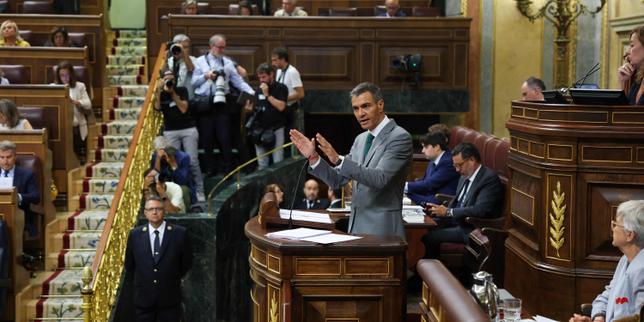
When thousands of migrants rushed the border at Ceuta, Madrid panicked. Spain faced a massive security shock. Prime Minister Pedro Sánchez stepped up to the podium and did something unexpected. He refused to point the finger at Rabat.
The political fallout was immediate. Right-wing opposition parties accused him of weakness. They demanded a direct diplomatic confrontation with Morocco. Instead, Sánchez stood his ground. He insisted that no solid evidence linked the Moroccan government to the sudden surge.
The Reality Behind the Border Surge
Let us look at the facts. Late July brought an unprecedented wave of people toward the Spanish enclave in North Africa. Thousands crossed over. Local infrastructure buckled. Residents took to the streets in frustration.
Critics claimed the security failure pointed straight to a coordinated effort by Moroccan authorities. They argued Rabat turned a blind eye as leverage in bilateral negotiations. Sánchez rejected this narrative completely. He labeled Morocco a trustworthy partner. He argued that starting a massive diplomatic fight without concrete proof is reckless governance.
Intelligence reports quickly became the center of the storm. Opposition lawmakers leaked documents suggesting prior warnings existed. Sánchez hit back by declassifying the security briefs. He wanted transparency. The documents showed no prior intelligence anticipated the sheer scale of the July influx.
Pointing Fingers at External Disinformation
So, if Morocco is not to blame, what happened? Sánchez offered a different explanation. He pointed toward malicious digital campaigns. He suggested networks connected to external actors, including elements linked to Russia and Israel, amplified fake news during the crisis. These disinformation operations inflamed tensions on both sides of the Mediterranean.
This stance puts Sánchez in a lonely position. Voters are angry. Polls show a majority of Spaniards feel the crisis was handled poorly. Opposition figures from parties like Vox continue to score political points by claiming the current administration is too soft on immigration.
Yet, diplomacy is rarely about pleasing the crowd. Spain relies heavily on Moroccan cooperation for border control and counter-terrorism. Tearing up that partnership over political pressure carries massive economic and security risks.
What Comes Next for Madrid
The Spanish government finds itself walking a tightrope. Cooperation must evolve. Sánchez admitted that normal channels need adjustment after the events of July.
You cannot ignore the strain on local populations in Ceuta. Thousands of migrants remain stranded in the small territory. Resources are stretched thin. Aid workers struggle to keep up.
Spain must reinforce its borders while keeping channels open with its southern neighbor. Panicking and burning bridges solves nothing. Prudence wins over populism every single time.
Ceuta : Pedro Sanchez chahuté en Espagne
This video provides direct news coverage and footage of Pedro Sánchez facing sharp criticism in the Spanish parliament over his handling of the Ceuta migration crisis.
http://googleusercontent.com/youtube_content/1


