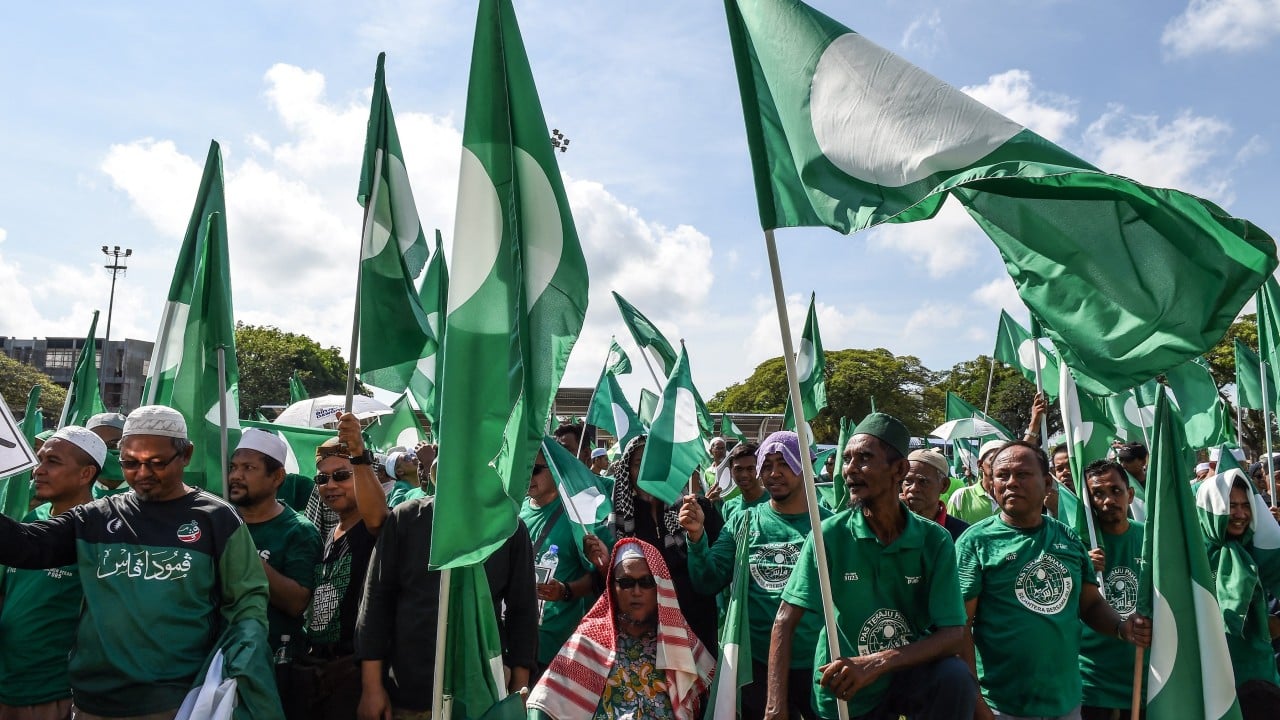
The dust hasn't even settled from the absolute bloodbath in Johor, and Malaysia’s political machine is already spinning a new narrative. If you look at the raw numbers from the July 11 Johor state election, the Islamist party PAS and its partners in Perikatan Nasional (PN) look completely finished. They won exactly zero seats.
But don't let the Johor wipeout fool you.
PAS isn't retreat-planning. Instead, party president Abdul Hadi Awang is already trying to dictate terms for the upcoming Negeri Sembilan state election on August 1. PAS is publicly offering a deal to Barisan Nasional (BN)—specifically its backbone, UMNO—suggesting they work together to protect "Malay-Muslim political leadership".
Can PAS actually deliver the votes in Negeri Sembilan to make this partnership work, or is this a calculated trap designed to tear Prime Minister Anwar Ibrahim's federal coalition apart from the inside?
The answer lies in understanding that the Johor defeat wasn't a failure of PAS's machinery. It was a deliberate, tactical retreat.
The Johor Mirage: Why the Opposition Wipeout is Deceptive
To understand what PAS is trying to pull in Negeri Sembilan, you have to look closely at how they behaved in Johor. Yes, Perikatan Nasional was wiped out, losing all 33 seats they contested. Yes, PAS has no representation in the Johor state assembly for the first time in over two decades.
On paper, it looks like a disaster. In reality, PAS played a very different game.
Halfway through the campaign, as their alliance with Bersatu fractured, PAS leadership made a startling pivot. Deputy President Tuan Ibrahim Tuan Man openly urged PAS supporters to vote for BN in seats where PN wasn’t contesting. Shortly after, Hadi Awang issued a blanket statement telling his base that under no circumstances should they vote for Anwar’s Pakatan Harapan (PH).
Essentially, PAS redirected its highly disciplined voter base to support BN candidates simply to ensure PH got crushed.
It worked. BN cruised to a supermajority of 48 seats, while PH’s primary Chinese-majority ally, the Democratic Action Party (DAP), was absolutely decimated in its traditional strongholds like Jementah, Tangkak, and Johor Jaya.
Now, PAS is turning up in Negeri Sembilan holding the receipt for those Johor votes. They want their reward.
The Negeri Sembilan Math: Can PAS Actually Deliver?
Negeri Sembilan is a very different beast than Johor. The state assembly has 36 seats. Before the dissolution, the power balance was tight:
- Pakatan Harapan: 17 seats
- Barisan Nasional: 14 seats
- Perikatan Nasional: 5 seats (3 held by PAS, 2 by Bersatu)
Hadi Awang’s proposed "peace treaty" is simple: UMNO/BN defends the 14 seats it currently holds, while PAS defends the three seats it won previously. On paper, it sounds like an easy way to prevent Malay votes from splitting.
But can PAS actually deliver those votes on August 1?
They probably can. Unlike Bersatu, which relies on protest votes and shifting political winds, PAS has a deeply entrenched, ideologically loyal machinery. In Negeri Sembilan's semi-rural and rural Malay heartland seats, that machinery is highly effective at mobilising voters.
When PAS tells its supporters to turn up, they turn up. In a tight race where a few hundred votes can flip a seat, having the disciplined PAS base on your side is incredibly valuable.
The catch is that PAS never offers its machinery for free.
Why UMNO is Hesitant to Take the Bait
UMNO President Ahmad Zahid Hamidi has already reacted to Hadi's proposal with extreme caution, warning observers not to read too much into PAS’s public overtures. He knows exactly what is at stake.
Accepting a formal or informal pact with PAS in Negeri Sembilan is a massive gamble for several reasons.
1. It Alienates the Non-Malay Vote
UMNO survived the Johor elections partly because moderate and non-Malay voters, terrified of a conservative Islamist wave, threw their support behind BN candidates. If UMNO is seen getting into bed with PAS in Negeri Sembilan, those moderate voters will immediately flee back to PH, or simply stay home.
2. It Trashes the Federal Coalition
The federal "unity government" under Anwar Ibrahim is built on a fragile power-sharing model. If UMNO partners with PAS in Negeri Sembilan, they are actively campaigning against their federal partners in PH. We are already seeing the federal alliance unravel in states like Melaka over the controversial lawmaker bill. A backroom deal with PAS in Negeri Sembilan would be the final nail in the coffin for federal stability.
3. PAS Wants to Swallow UMNO's Base
Historically, whenever UMNO partners with PAS (such as during the short-lived Muafakat Nasional pact), PAS ends up cannibalising UMNO’s grassroots. PAS positions itself as the "purer" Islamic defender, slowly chipping away at UMNO’s legitimacy until UMNO is relegated to a junior partner.
"Formal cooperation carries significant risks for UMNO," warns Asrul Hadi from The Asia Group. While it reduces vote-splitting in the short term, it hands PAS the keys to UMNO’s house.
The Broader Fallout: Anwar's Fraying Unity Government
This entire Negeri Sembilan drama is happening against a backdrop of severe instability for Prime Minister Anwar Ibrahim. The Johor results proved that the "Madani" brand is struggling to retain moderate and progressive voters who are tired of slow reforms and constant compromises on racial and religious issues.
Even Anwar's allies are starting to panic:
- DAP is Soul-Searching: After losing key seats in Johor, the party is openly questioning its role in the government pact.
- The Bersama Factor: Rafizi Ramli's breakaway party, Bersama, got absolutely humiliated in Johor, with all 15 of its candidates losing their deposits. While they are sitting out the Negeri Sembilan poll, the division they caused shows how fractured the reformist camp has become.
- The "Tok Mat" Variable: Foreign Minister Mohamad Hasan (Tok Mat) is defending his Rantau state seat in Negeri Sembilan. As a former Negeri Sembilan Menteri Besar and a massive political heavy-weight, his performance will be a direct indicator of whether local UMNO leadership still has pull without relying on PAS.
What to Watch on August 1
As the August 1 polling day approaches, don't look at the overall seat tally as a simple win/loss column. To see if PAS's strategy is working, keep your eyes on these specific indicators:
- Malay Turnout in Rural Seats: If turnout is high in Malay-majority areas but BN's vote share drops, it means PAS successfully kept its voters from backing UMNO.
- The Margin in Rantau: Tok Mat's seat will show whether UMNO can still command a dominant Malay majority on its own merit, without needing an Islamist crutch.
- Cross-Coalition Campaigning: Watch if UMNO and PH candidates actually share stages in Negeri Sembilan, or if they run entirely separate campaigns. If they don't campaign together, the federal coalition is effectively dead in all but name.
PAS didn't lose in Johor; they simply cleared the board so they could play a much bigger game in Negeri Sembilan. Whether UMNO falls for the trap remains to be seen.