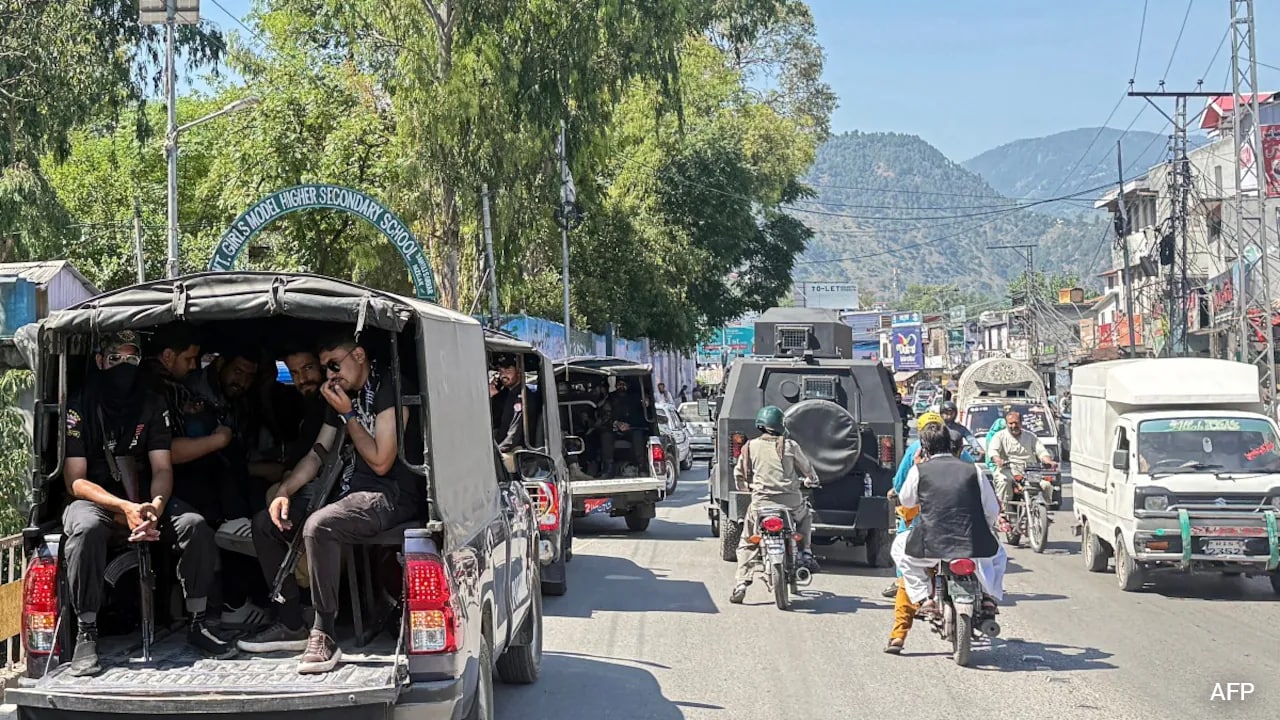
The ground is shifting under Islamabad foot, and the old playbook isn't working anymore. For decades, the Pakistani establishment relied on a simple diversion strategy. Whenever domestic chaos peaked, they dialed up the rhetoric on Kashmir to unite the public against a common external enemy. But today, that strategy has imploded. The crisis isn't something Pakistan can export to India to distract its people. Instead, the crisis has taken root inside Pakistan-occupied Kashmir (PoK), and the flames are threatening to consume Islamabad itself.
When you look at the recent explosive protests across PoK, it's clear this isn't the usual political theater. We're seeing mass food blockades, soaring inflation, and a complete breakdown of basic governance. It has gotten so severe that local protest leaders, operating under banners like the Jammu Kashmir Joint Awami Action Committee (JAAC), are openly issuing ultimatums to the Pakistani state. Some have even appealed directly to New Delhi for humanitarian assistance and called for the opening of the Line of Control (LoC).
This represents an unprecedented geopolitical role reversal. Islamabad used to paint itself as the savior of Kashmiris. Now, the people under its own administrative control are begging India to step in and save them from Pakistani state repression.
The Economic Collapse Rawalpindi Cannot Hide
Let's look at what's actually driving this anger. It isn't just abstract political ideology. It's empty stomachs.
Pakistan's economy is running on fumes, surviving on back-to-back IMF bailouts and emergency loans. When a state faces that level of fiscal ruin, peripheral regions are always the first to be squeezed. The Pakistani government slashed crucial subsidies on wheat and electricity for PoK, triggering massive public outrage.
- Wheat Shortages: Mass food blockades and supply chain disruptions left local markets bare.
- The Energy Paradox: PoK produces a massive chunk of Pakistan's hydroelectric power through mega-projects like the Mangla Dam. Yet, the locals face brutal electricity outages and inflated bills while the power gets funneled straight to Punjab and Sindh.
This classic exploitative relationship has pushed locals to the brink. They see themselves treated as a colony rather than an equal province. The local administration responded with a heavy hand, executing mass arrests of political workers and activists. But trying to beat a population into submission when they can't afford bread rarely ends well for the oppressor.
The Failed Strategy of Exporting Chaos
Historically, the Pakistani deep state—specifically the ISI and Rawalpindi military headquarters—would counter internal dissent by engineering a major security crisis across the Line of Control. The goal was always to force India into a reactive military posture, flash the nuclear card to international observers, and demand global intervention.
We saw a dangerous manifestation of this cycle in April and May 2025, when the Pahalgam attacks sparked violent military exchanges and airspace closures that temporarily disrupted regional trade. India retaliated swiftly by striking terrorist infrastructure and cutting off trade, signaling that the cost of cross-border asymmetric warfare would be devastating for Pakistan.
But executing that old playbook in 2026 is a massive miscalculation. India's internal security matrix in Jammu and Kashmir has fundamentally transformed since the abrogation of Article 370. The local intelligence network is tighter, infiltration routes are heavily secured, and New Delhi's tolerance for cross-border terrorism is zero.
When Rawalpindi tries to export terror to shift focus away from its internal failures, it finds that the external market is closed. India isn't taking the bait. Instead of getting bogged down in endless bilateral bickering, New Delhi is utilizing global forums like the United Nations Human Rights Council (UNHRC) to flip the script. Indian diplomats are systematically exposing the structural human rights abuses and economic neglect within PoK, ensuring the international community watches Islamabad's internal unraveling in real-time.
Why the International Community Is No Longer Buying It
For years, Islamabad successfully weaponized a victimhood narrative on the global stage. It portrayed itself as a cash-strapped nation fighting frontline terror while advocating for Kashmiri self-determination. That narrative is completely dead.
The world is exhausted by Pakistan's perpetual instability. Western capitals are far more concerned with global supply chain security, maritime security, and containing larger geopolitical conflicts than listening to familiar talking points from a state that cannot even secure its own economy. When Pakistan threatens to rip up bilateral pacts like the Indus Waters Treaty or the Simla Agreement, it doesn't scare New Delhi anymore. It just signals to global investors that Pakistan is an unpredictable, high-risk environment.
Furthermore, the domestic situation in major Pakistani cities has deteriorated to a point where the military's grip on power looks increasingly fragile. From high-profile corruption scandals to rampant lawlessness and a surging domestic TTP insurgency along the western border, the state is fighting survival battles on too many fronts. They simply lack the economic capital or the institutional bandwidth to sustain a prolonged, high-intensity covert war against an economically surging India.
What Happens Next
The Pakistani establishment needs to realize that the threat to its stability isn't coming from New Delhi. It's coming from its own governance failures.
To prevent a total systemic collapse in the region, several immediate shifts must occur:
- Restore Economic Subsidies: Islamabad must immediately halt the economic choking of PoK and restore basic wheat and electricity subsidies before the civil unrest turns into a full-scale armed rebellion against the state.
- De-escalate Cross-Border Rhetoric: The military leadership must abandon the illusion that a fresh security crisis with India will magically resolve their domestic legitimacy crisis.
- Address Local Autonomy: The central government needs to grant genuine administrative and financial power to regional bodies instead of treating peripheral territories as resource extraction zones.
If Rawalpindi continues to ignore the desperate cries for basic rights within its borders while trying to manufacture external conflicts, it won't be exporting a crisis to India. It will simply be accelerating its own breakdown.