The era of open academic collaboration is dead. If you work in a university lab, run a research department, or rely on federal grants, the ground just shifted permanently under your feet.
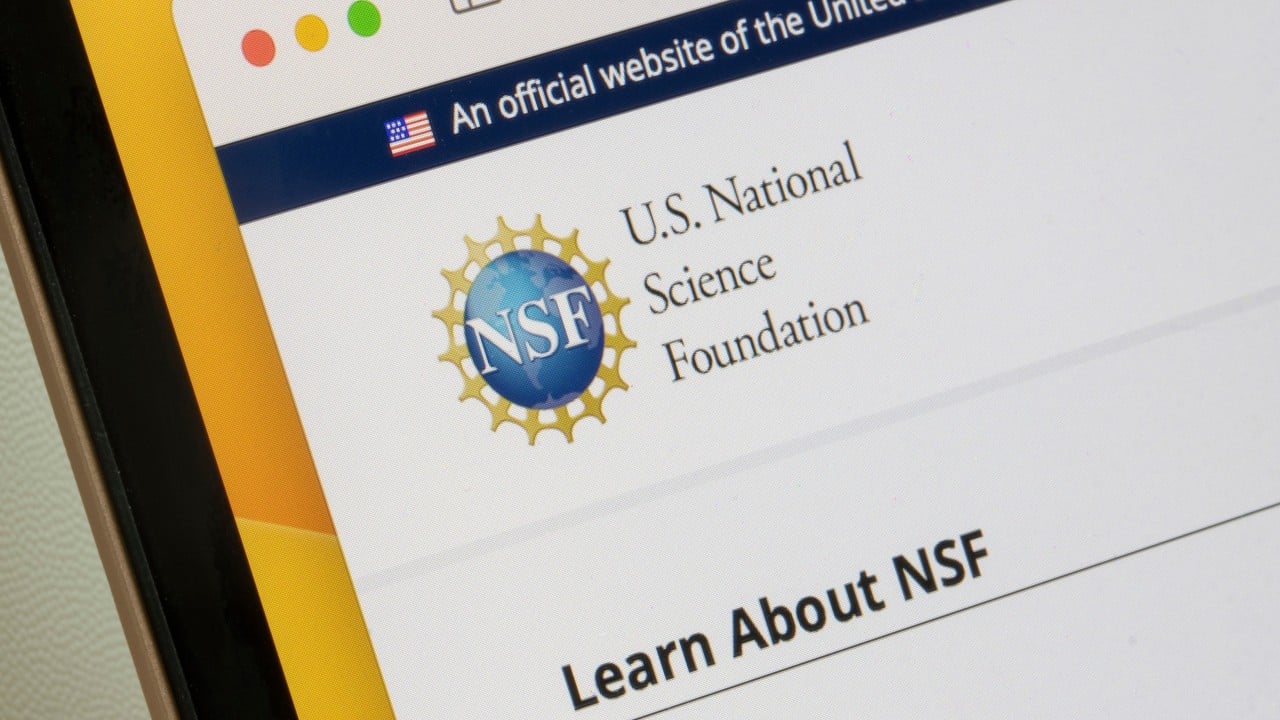
The U.S. National Science Foundation (NSF) just dropped a massive policy shift that drops all attempts to mitigate risks and replaces them with an absolute wall. Starting in the 2027 fiscal year, the NSF will completely ban any funded projects from collaborating with entities on Washington’s restricted party lists.
Let's not dance around what this actually means. While the restricted lists include various global bad actors, the target here is overwhelmingly China. The policy explicitly blacklists institutions tied to the Commerce Department’s Entity List, the Pentagon’s 1260H list of Chinese military companies, and the Treasury’s military-industrial complex roster.
This isn't a minor administrative update. It's a complete decoupling of basic scientific research disguised as paperwork.
The Death of Risk Mitigation
For years, federal science agencies tried to walk a fine line. They knew international cooperation drove breakthroughs, but they worried about intellectual property theft. The old play was risk mitigation: keep the collaborations but add disclosures, firewalls, and audits.
The NSF just admitted that strategy failed.
Under the new directive, there's no middle ground. If a Chinese university or research institute lands on a U.S. watchlist, American scientists cannot touch them. The ban covers direct research, joint papers, and even casual advisory roles. Senior personnel on NSF grants can't hold appointments at these institutions, nor can they accept a single dime of funding from them.
This policy mimics the hardline restrictions traditionally used by defense agencies. It treats fundamental, unclassified civilian science—think clean energy tech, basic material science, and mathematics—with the same paranoia as stealth fighter schematics.
Universities Become Compliance Cops
If you think the government is going to police this, you don't know how federal grants work. The NSF is offloading the entire surveillance burden onto the universities themselves.
Before a single dollar is spent, Authorized Organizational Representatives at American universities must formally certify that no restricted entities are involved. If a rogue co-author from a blacklisted Beijing lab slips onto a paper three years into a grant, the American university faces the wrath of federal auditors. We've already seen the NSF suspend awards and bar professors globally over compliance failures during investigations.
This creates an environment of absolute fear. University compliance offices don't care about scientific breakthroughs; they care about keeping their federal funding. The natural response will be extreme risk aversion. Rather than vetting whether a specific Chinese scholar is actually tied to a military project, university lawyers will simply say, "No collaborations with China, period."
We are already seeing this chilling effect across other agencies. The National Institutes of Health (NIH) has been flagging research progress reports simply because a co-author is located outside the U.S. NASA has been enforcing similar hard lines under the Wolf Amendment. The NSF is just the latest domino to fall, but because it funds roughly 25% of all federally supported basic research at U.S. colleges, its impact will be seismic.
The Real Cost to American Science
Washington politicians love to frame these bans as protecting American brilliance. But that assumes science is a one-way street where the U.S. creates knowledge and the rest of the world steals it.
That hasn't been true for a decade.
China leads the world in total scientific publication output and highly cited papers in fields like advanced materials, chemistry, and clean energy. Roughly 23% of all scientific papers globally involve international co-authors. By cutting off American labs from the top minds in China, we aren't just locking them out of our data—we are locking ourselves out of theirs.
A University of Pennsylvania study recently confirmed that rising geopolitical tensions are making ethnically Chinese scientists in the U.S. less productive. Many are simply packing up and returning to Asia or moving to Europe, where the research climate is less hostile. We are actively draining our own talent pool.
Your Immediate Compliance Playbook
If you manage federal research funds or lead a lab, waiting until 2027 to adapt is a terrible idea. You need to audit your network right now.
- Map your co-authors: Review every ongoing and planned project. Check the current institutional affiliations of every single collaborator against the Commerce Entity List and the Pentagon’s 1260H list.
- Establish a strict disclosure protocol: Force your senior lab personnel to declare any foreign fellowships, summer teaching gigs, or advisory roles immediately. A hidden stipend from a flagged institution will torpedo your entire lab’s funding.
- Separate funding streams: If your institution insists on maintaining global partnerships, ensure those projects are entirely siloed from any NSF or federal grant dollars. No shared personnel, no shared lab equipment bought with federal money, and absolutely no shared data pipelines.
The political trajectory is obvious. Congress is constantly pushing for even broader bans on Chinese scientific collaboration. The open, globalized research ecosystem of the 1990s and 2000s is gone, and it's not coming back. You either adapt your research workflows to this fractured reality today, or you watch your grant funding vanish tomorrow.