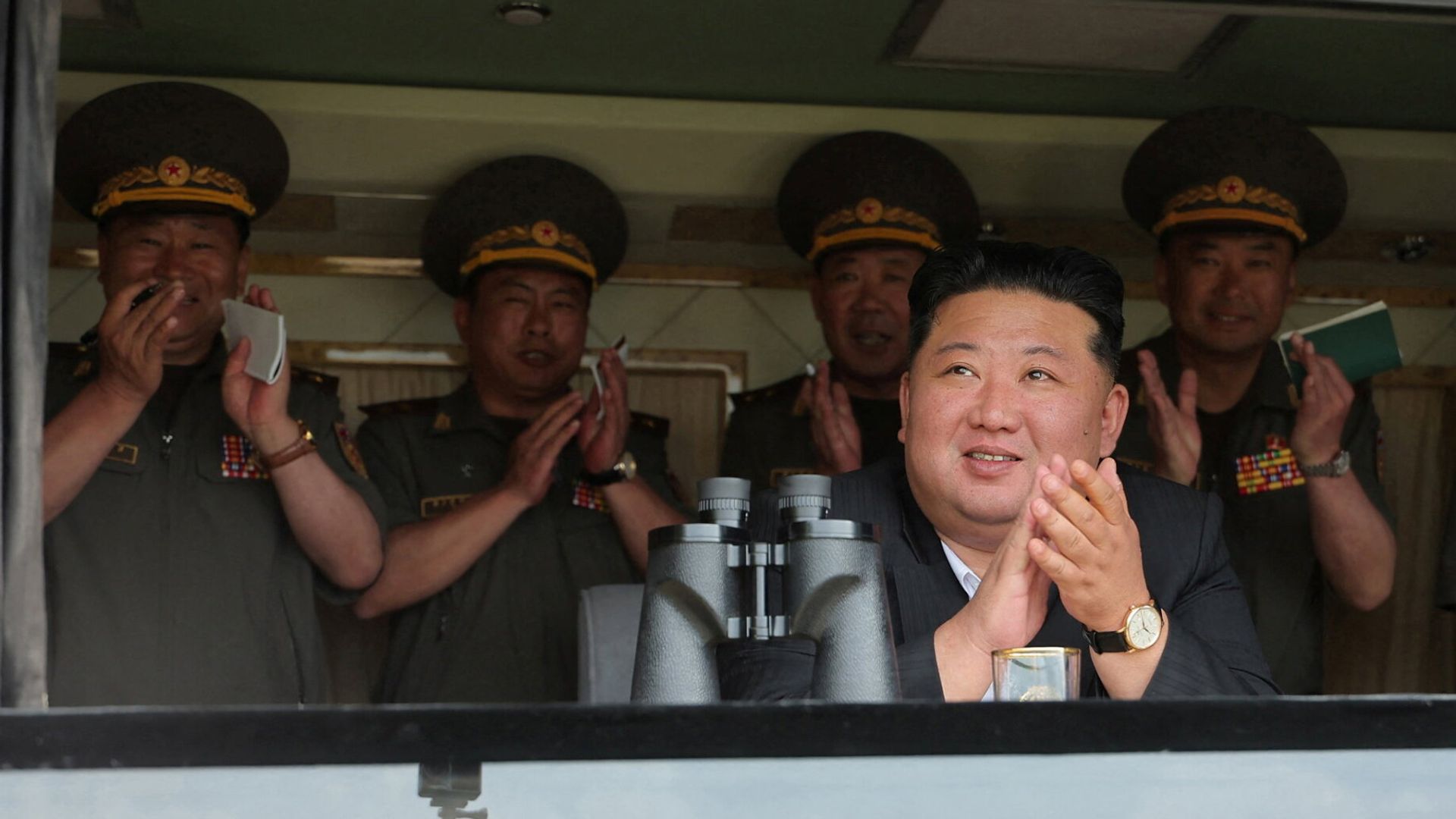
Tensions on the Korean Peninsula have spiked once again. North Korea fired a ballistic missile toward the sea off its east coast, lining up right ahead of major joint military drills between Seoul and Washington. Pyongyang accompanied this show of force with a chilling declaration: the regime must hold the military power to launch retaliatory strikes that make an enemy's survival and recovery completely impossible.
If you are wondering why this specific phrasing matters, you aren't alone. Let's break down what's actually happening behind the headlines, why the timing is far from random, and how regional security is shifting in real time.
The Trigger Behind the Timing
Pyongyang didn't choose this week by accident. The missile launch out of the Wonsan area—flying roughly 700 kilometers—came just days before the scheduled kickoff of the Ulchi Freedom Shield exercises. These joint military drills between South Korea and the United States are designed to counter escalating nuclear threats.
North Korea views these exercises as an invasion rehearsal. Every time Seoul and Washington gear up for large-scale maneuvers, Pyongyang responds with weapons testing. This latest launch marks the 11th suspected ballistic missile test by the North this year.
Hong Min, a senior researcher at the Korea Institute for National Unification in Seoul, notes that while these tests follow an active internal weapons development schedule, the exact calendar dates are chosen for maximum political impact. The message is loud and clear. North Korea refuses to be intimidated by allied defense posture.
Making Enemy Survival Impossible
The most alarming part of the recent cycle isn't just the hardware flying through the air. It's the rhetoric coming out of state media.
A North Korean Foreign Ministry official responsible for South Korean affairs issued a sharp warning targeting Seoul's plans to develop nuclear-powered submarines. Pyongyang labeled these defense initiatives a serious security challenge that destabilizes the region.
To counter what it perceives as aggressive encirclement, North Korea insists it must maintain an overwhelming deterrent. The official statement argued that the state requires strike capabilities potent enough to render any adversary's survival and recovery impossible.
This language signals a permanent hardening of Pyongyang's doctrine. Kim Jong Un's government isn't just looking to match regional capabilities. They want absolute insurance that retaliation would completely erase an opponent's capacity to bounce back.
How Seoul and Tokyo Are Responding
South Korea and Japan are not sitting quietly. Officials in both capitals condemned the launch instantly.
South Korea's Office of National Security rushed an emergency meeting together to review the security situation. Seoul's military maintains that it is tracking indicators closely alongside the United States, ready to respond with overwhelming force if pushed.
Meanwhile, Japanese Defence Minister Shinjo Koizumi lodged a formal diplomatic protest through Beijing, calling the frequent launches a direct violation of UN Security Council resolutions.
The US Indo-Pacific Command echoed these sentiments, confirming that while the missile didn't pose an immediate threat to American territory or personnel, the alliance remains vigilant.
What Happens Next
The immediate future looks tense. With the Ulchi Freedom Shield drills running through the end of August, don't expect Pyongyang to quiet down. Analysts anticipate potential follow-up tests, possibly involving hypersonic designs or submarine-launched systems, as North Korea pushes forward with its military modernization timeline.
If you're tracking regional stability, keep an eye on how Washington and Seoul adjust their deterrence strategies. The cycle of drills and counter-launches shows no sign of slowing down.