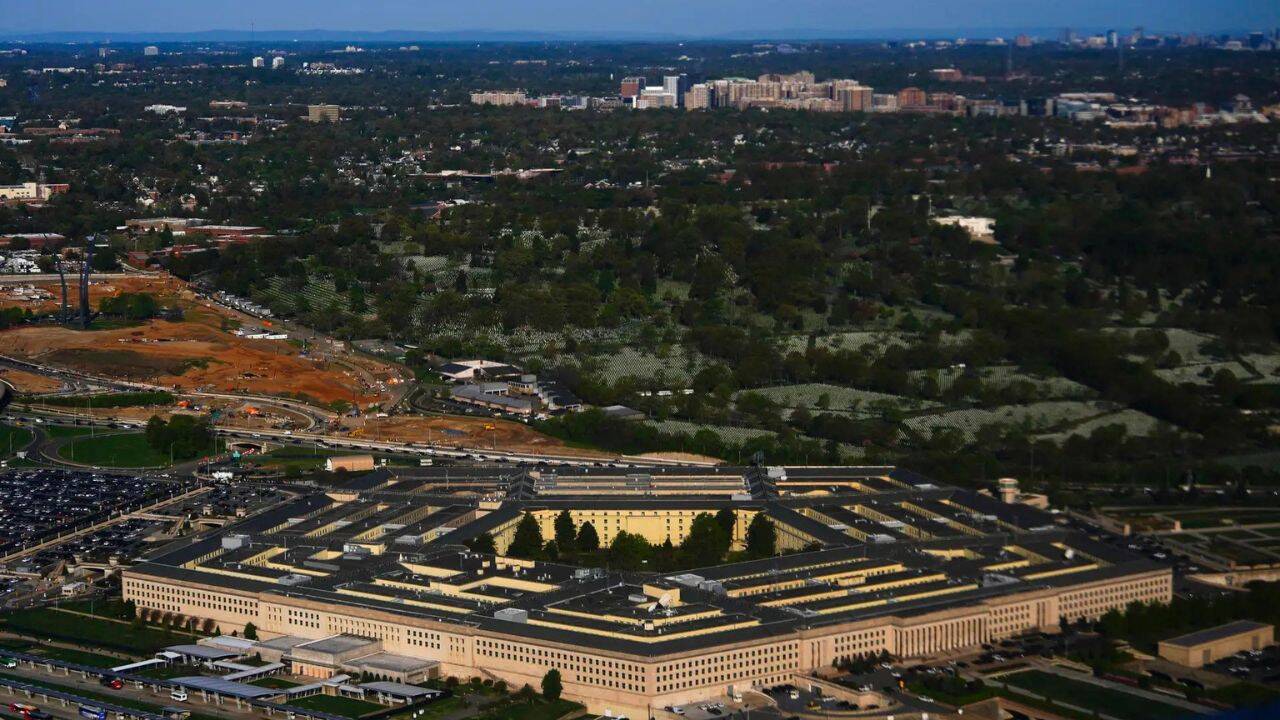
A federal judge just handed the Pentagon a major defeat. U.S. District Judge Paul L. Friedman issued a preliminary ruling blocking a Defense Department policy that forced New York Times journalists to be accompanied by official escorts while working inside the building. This is a massive victory for press freedom. It hits back hard against an ongoing, aggressive effort to control what the public knows about military operations.
The government claimed this was about national security. The court saw it differently. Judge Friedman ruled that the mandatory escort requirement directly violates the First Amendment. It marks the latest flashpoint in a bitter, months-long legal battle between independent media and Defense Secretary Pete Hegseth. Read more on a related subject: this related article.
If you think this is just a bureaucratic spat over press credentials, you are missing the bigger picture. This case exposes a calculated attempt to reshape how information flows from the highest levels of the American military. It matters to anyone who believes the government should be accountable to the people.
The Backstory of the Pentagon Press Walkout
To understand how we reached this point, we have to look back at the radical policy shifts that began in late 2025. In October of that year, the Defense Department quietly rolled out a brand-new press credentialing framework known as the Pentagon Facility Alternate Credential policy. More reporting by USA Today highlights similar perspectives on this issue.
The rules were unprecedented. They forced reporters to sign formal agreements pledging not to solicit or publish information that the Pentagon had not explicitly approved for public release. Even worse, the policy gave defense officials standardless discretion to strip journalists of their credentials if they were deemed a safety or security risk. Under these terms, doing basic investigative journalism became an expellable offense.
Major news outlets refused to comply. Rather than submit to a regime that criminalized routine newsgathering, reporters from The New York Times and dozens of other organizations walked out of the building. They surrendered their press passes.
The immediate result was an information vacuum. With veteran national security correspondents locked out, the Pentagon press corps was rapidly transformed. The administration began granting access almost exclusively to ideological allies and political activists who promised favorable coverage. The defense establishment had successfully insulated itself from critical scrutiny, creating a compliant echo chamber where tough questions were replaced by partisan cheerleading.
The Legal Counteroffensive and the Escort Pivot
The New York Times did not just walk away. They sued. In December 2025, the paper and its veteran reporter Julian E. Barnes filed a federal lawsuit challenging the constitutionality of the credentialing policy. They argued that the rules amounted to unlawful viewpoint discrimination and a flagrant violation of the Fifth Amendment due to their vague, arbitrary nature.
On March 20, 2026, Judge Friedman delivered his first major ruling in the case. He sided squarely with the newspaper, issuing a permanent injunction that vacated the challenged restrictions. His opinion was a ringing endorsement of press independence, explicitly stating that the nation’s security is preserved by political speech, not by its suppression. He noted that the Pentagon's policy was clearly designed to weed out disfavored journalists who produced unflattering coverage.
The Pentagon's response was swift and defiant. Exactly one business day after the court order, defense officials rolled out an interim policy. They claimed they were complying with the judge, but they threw up a brand-new barrier. They decreed that credentialed journalists could no longer move freely through the building. Instead, reporters were required to have an official government escort at all times.
This escort rule effectively shut down independent reporting. If a journalist wanted to grab coffee with a source, walk down a hallway to check an office door, or observe daily activity patterns, they needed a government minder watching their every move. It was a transparent attempt to bypass the court's decision. The Times went back to the legal battlefield, filing a second lawsuit in May to target the escort rule directly.
National Security Illusion vs Viewpoint Discrimination
The Defense Department has consistently defended its actions by waving the flag of operational security. Pentagon chief spokesman Sean Parnell publicly blasted the legal challenges, claiming that the New York Times simply wanted to roam the halls freely to get their hands on classified information. He argued that unescorted access allowed reporters to uncover operational plans, creating a risky environment during a time of active military tensions.
The court did not buy the national security excuse. Judge Friedman recognized that while protecting troops and genuine war plans is vital, the undisputed evidence showed a different motive. The administration’s public statements had repeatedly referred to legacy news organizations as fake news and scum. The sudden implementation of the escort rule was not a carefully tailored security measure. It was a retaliatory tactic meant to punish independent journalists and force self-censorship.
The government argued there is no constitutional right to the most convenient form of access. That is technically true, but the government cannot manipulate access rules to favor friendly coverage and penalize critical reporting. When a policy gives officials unchecked power to control a reporter’s physical movements based on whether the department likes their reporting, it crosses the line into egregious viewpoint discrimination.
Why Free Movement in the Pentagon Actually Matters
Many people wonder why reporters need to wander around the Pentagon unescorted in the first place. Why can't they just sit in the press briefing room and wait for official statements?
The answer lies in how real investigative journalism works. Relying solely on official press releases means printing managed public relations pieces. Independent reporting relies on building trust, noticing unusual activity, and having off-the-record conversations away from the watchful eyes of government handlers.
- Unescorted access allows reporters to spot which officials are meeting with whom.
- It enables spontaneous discussions that break through polished talking points.
- It protects sources who might be terrified to be seen walking into a formal meeting with a journalist.
When the military restricts movement, it effectively controls the narrative. If every interaction requires a press officer to be present, whistleblowers will stay silent. Waste, fraud, and strategic blunders will remain hidden. At a time when the U.S. military is heavily engaged in volatile regions across the globe, public accountability is not a luxury. It is a fundamental necessity.
What Happens Next for Press Freedom
Judge Friedman’s latest ruling is a critical victory, but the war is far from over. This preliminary injunction temporarily blocks the escort rule specifically for New York Times journalists while the broader lawsuit winds its way through the system.
The Pentagon has already pledged an immediate appeal. They will likely lean on a previous, friendly ruling from a D.C. Circuit appellate panel, which had briefly stayed an earlier lower-court order on procedural grounds. The legal battle will intensify as both sides dig in for a protracted fight over the boundaries of executive power and the First Amendment.
For now, the ruling sets a powerful precedent. It sends a clear signal to federal agencies that they cannot use bad-faith administrative rules to freeze out investigative journalists. It forces the Pentagon to open its doors to independent oversight, even if defense leadership despises the resulting coverage.
Your Next Steps to Track This Issue
The fight over government transparency affects everyone. If you want to keep tabs on how this legal battle unfolds and ensure your news sources remain unmanaged, here are the concrete steps you can take today.
Follow the case docket directly. Monitor the legal filings for The New York Times Company v. Department of Defense in the U.S. District Court for the District of Columbia. Watching the actual motions reveals the raw arguments the government uses to justify secrecy.
Support diverse, independent national security reporting. Read coverage from multiple outlets, including the Pentagon Press Association and specialized defense publications like the Washington Examiner, to see if their reporters are successfully regaining unescorted access.
Demand transparency from your elected officials. Write to your representatives on the House or Senate Armed Services Committees. Ask them to demand clear, objective press credentialing standards from the Department of Defense that protect both operational security and the public’s right to know.