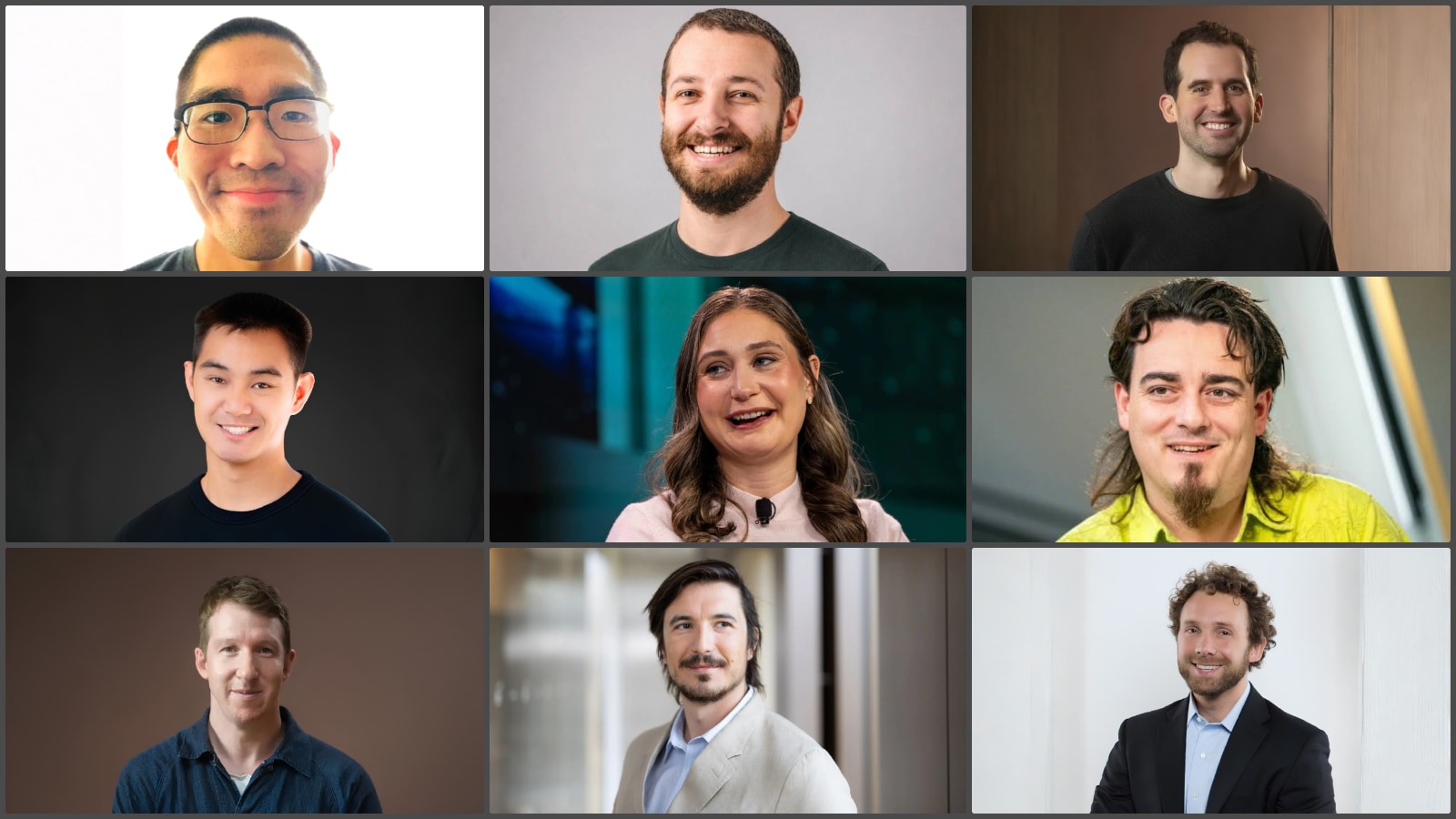
For decades, the billionaire club was an exclusive retirement home. You had to grind for forty years, build a sprawling industrial conglomerate or master Wall Street, and turn gray before your net worth hit ten figures. Not anymore. The latest Forbes rankings show a massive shift. The newest members aren't aging oil barons or retail giants. They're software engineers, algorithm designers, and machine learning researchers who haven't even hit their forties.
If you look closely at how fortunes are built today, the rulebook has completely burned down. Let's break down who these young billionaires actually are, where their money came from, and why this generation's rise is entirely different from anything we've seen before.
The Artificial Intelligence Gold Rush is Minting Fortunes Overnight
You cannot talk about young wealth without looking at the raw fuel behind it: artificial intelligence. The tech boom of the late 90s produced dot-com millionaires who mostly crashed when reality hit. This current wave is different because the underlying companies are pulling in billions in actual revenue and reshaping global infrastructure before they even reach their fifth birthday.
Consider Steven Hao, who snagged a top spot on the Forbes lists. At just 30 years old, he leads Cognition, an AI lab known for creating developer agents like Devin. Hao and his co-founders didn't inherit a dime. They built software that writes code, raised capital at jaw-dropping private valuations, and vaulted straight into the billionaire tier.
Then you have companies like Anthropic, which practically turned its founding team into a collective of billionaires almost overnight. Researchers and executives like Tom Brown, Daniela Amodei, Jack Clark, and Sam McCandlish found themselves sitting on massive valuations because they cracked scaling laws and safety architectures for language models.
The Shift From Old Money to Code
It is easy to look at names like Lukas Walton of the Walmart dynasty—who still sits comfortably among the youngest billionaires thanks to his family lineage—and assume old money still rules the entire game. But the ratio is cracking. While inherited wealth still dominates the broader under-30 lists globally, the American ultra-wealth tier under 40 has been completely flooded by self-made tech founders.
Look at Edwin Chen, founder of Surge AI. Growing up with immigrant parents running a restaurant, Chen took a math and linguistics background from MIT and channeled it into data labeling and fine-tuning infrastructure for machine learning models. Today, his company clears massive annual revenue because every major tech giant relies on his human-in-the-loop data systems to keep their models from hallucinating. He didn't wait for an inheritance. He built the plumbing for the modern intelligence economy.
What Separation of Age and Experience Means for Founders
If you are trying to launch a business today, the old advice of "spend twenty years climbing the corporate ladder" is toxic. The young founders dominating these lists skipped the ladder entirely. They dropped out of elite universities, joined competitive programming circles like the International Olympiad in Informatics, or started coding solutions while still in their early twenties.
Take Greg Brockman at OpenAI. Leaving his studies behind early, he became a chief technology officer at Stripe in his mid-twenties before co-founding OpenAI. His multi-billion-dollar stake proves that execution speed matters infinitely more than industry tenure. When a technological shift happens this fast, traditional experience can actually become a liability because older executives are often tethered to how things used to work.
The Real Cost of Hyper-Fast Wealth
Nobody talks enough about the sheer pressure cooker these young founders live in. Accumulating a net worth upwards of fifteen or twenty billion dollars before your fortieth birthday means you are managing geopolitical tech competition, intense regulatory scrutiny, and massive compute costs before you have even figured out how to manage a large corporate organization.
Many of these founders are grappling publicly with their own impact. Anthropic's team, for instance, has famously structured massive equity pledges toward philanthropic goals, trying to reconcile the weird reality of holding astronomical wealth derived from technology that might radically transform human labor.
Where Wealth Goes From Here
The era of waiting until retirement to build an empire is dead. Software scales infinitely, and when a small team of ten engineers can build a product utilized by hundreds of millions of people globally, financial rewards concentrate at speeds that defy historical precedent.
If you want to understand where the economy is heading, stop watching traditional retail or real estate markets. Pay attention to the twenty-somethings writing code in cramped apartments and college dorms today. They are writing the financial rules for tomorrow. Pick a problem, master the core technology, and move fast.