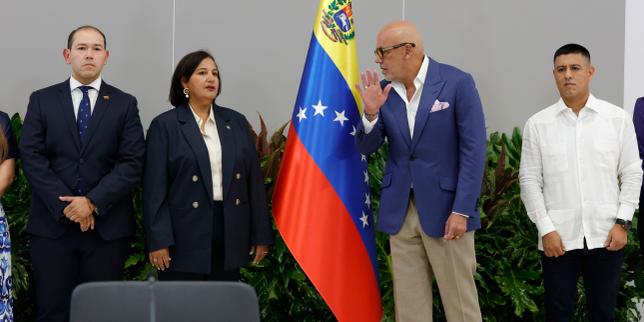
You can throw away twenty-five years of anti-imperialist rhetoric because everything in Caracas has changed overnight. Seven months after the dramatic military capture of Nicolás Maduro by American forces, the political architecture of Venezuela looks completely unrecognizable. The government and the fractured opposition just sat down at the La Carlota military base in Caracas for direct negotiations.
Who is pulling the strings? Washington.
If you want to understand why these talks are happening now, you have to look past the official press releases about national reconciliation. This dialogue is operating under tight American supervision, and it raises massive questions about sovereignty, oil, and the future of Latin America. Let us break down what is actually happening behind closed doors.
The Washington Mandate in Caracas
President Donald Trump didn't hide his administration's fingerprints on this process. Ever since former vice-president Delcy Rodríguez stepped into the interim presidency following Maduro’s removal, the dynamic shifted. Rodríguez spent years railing against American sanctions and economic sabotage. Today, her administration works hand-in-hand with the White House, opening up vital energy and mining sectors to private American interests.
This sudden pivot caught local political players off guard. The current dialogue kicked off with delegations agreeing on basic frameworks for a peaceful democratic transition. Yet, the underlying pressure is unmistakable. The State Department oversees the agenda, prioritizing economic stabilization and political re-engineering under a strict American blueprint.
Who Is At The Table (And Who Is Missing)
The negotiating teams reveal a strange political reality. On the government side, Jorge Rodríguez—the head of the National Assembly and brother to the interim president—leads the charge. Facing them across the table is Dinorah Figuera, an exiled former deputy heading the opposition delegation.
Notice anyone missing? María Corina Machado, the prominent opposition leader, is completely absent from the process. Despite her massive electoral backing and recent international recognition, she chose to stay away from a table she views as heavily compromised by foreign choreography. Her absence creates a massive credibility gap. Can you have a legitimate democratic transition when the most popular opposition figure refuses to participate? Many citizens and analysts remain deeply skeptical.
The Splitting of the Left
The most fascinating fallout of this American-backed dialogue is happening inside the chavismo movement itself. For a quarter-century, the political identity of the ruling party relied entirely on defiance against the United States.
Now, hardline grassroots militants are staring at a leadership that collaborates directly with Washington. Slogans chanting against foreign tutelage echo through the streets of Caracas as traditional leftists feel betrayed by the administration's sudden pragmatism. Even the deposed Maduro, currently awaiting trial in a Brooklyn prison, chimed in from New York to endorse the dialogue, urging peace from his cell. That endorsement alone tells you how much control the current leadership has lost over its own ideological narrative.
What Happens Next
The talks at La Carlota are scheduled to run through the week, focusing on electoral roadmaps and human rights protections. But real power doesn't reside solely in the conference room. It rests in Washington's willingness to keep lifting sanctions and the ability of interim leaders to keep a fractured population from boiling over. Keep your eyes on the upcoming months. The true test of this tutored dialogue will arrive the moment voters actually step into a ballot box.