You've probably heard the dramatic headlines claiming Washington just took over Greenland. Let's clear the air immediately. The upcoming security agreement between the United States, Denmark, and Greenland is not an outright territorial conquest, no matter how President Donald Trump frames it on social media.
Instead, it's a high-stakes diplomatic compromise designed to save face for all parties while cementing American military dominance in the high north.
If you look past the political posturing, the core of the deal is about locking down the Arctic against rivals like Russia and China. But what does this agreement actually change on the ground? And why are Danish and Greenlandic leaders pushing a completely different narrative than Washington? Let's break down what's really happening.
The Two Very Different Stories Being Told
Right now, you're getting two entirely different versions of this agreement depending on who you listen to.
President Trump announced that the United States secured "permanent control over security, and all other needs" in Greenland. In his telling, Washington now holds the keys to the kingdom, with absolute authority to defend the island and shut out foreign adversaries from establishing bases or making sensitive investments.
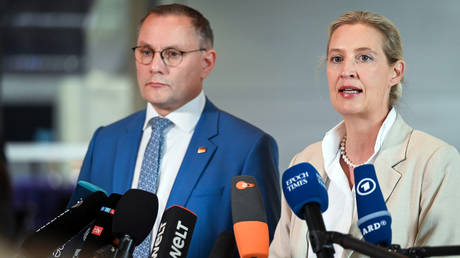
Meanwhile, Copenhagen and Nuuk are telling a much more traditional diplomatic story. Danish Prime Minister Mette Frederiksen and Greenlandic Prime Minister Jens-Frederik Nielsen insist that the pact strengthens regional defense while explicitly preserving the territorial integrity of the Kingdom of Denmark and respecting Greenland's right to self-determination.
Who is telling the truth? Both are, sort of.
The deal is a masterclass in creative diplomatic phrasing. It lets Washington claim permanent strategic control while ensuring that local sovereignty remains legally untouched. You're basically watching leaders write a document that allows everyone to declare victory back home.
What the Agreement Actually Does for Arctic Security
To understand why this deal matters, you have to look at a map. Greenland sits right between North America and the Arctic, making it an irreplaceable vantage point for tracking foreign military movements. With both Russia and China scaling up their capabilities in the Arctic, Washington's focus on the island isn't new.
In fact, the US military has operated in Greenland since World War II under a 1951 defense agreement and its 2004 amendment, which established the Pituffik Space Base.
So what's new here? Reports indicate the upcoming agreement allows the US to expand its military footprint beyond Pituffik, potentially reviving former Cold War sites like Narsarsuaq. Furthermore, it bars non-NATO countries from setting up military installations or making sensitive investments in mining and minerals on the island without approval.
It basically codifies a NATO-centric shield over the North Atlantic. Foreign Minister Lars Løkke Rasmussen pointed out that Arctic security under this framework leans heavily on the broader Western alliance rather than bilateral arm-wrestling alone.
The Sovereignty Paradox and Local Concerns
Greenland isn't just an empty slab of ice. It's home to roughly 57,000 people who care deeply about their independence. For years, threats of economic or political pressure from Washington left local leaders on edge.
That's why the inclusion of self-determination language in the official Danish statement is non-negotiable. If you're wondering whether Greenland is losing its autonomy, the answer is no. The legal status of the island hasn't changed. Denmark still holds sovereignty, and Greenland's path toward potential future independence remains open.
Yet, locking in permanent security provisions creates a fascinating paradox. How do you grant a foreign superpower permanent military rights without eroding local sovereignty? You do it by tying the agreement directly into NATO's collective framework. By framing the expansion as a joint defense necessity, local leaders can justify the presence of US troops to a skeptical public.
What Happens Next
The ink isn't dry yet. The formal signing is scheduled for Tuesday at United Nations headquarters in New York on the sidelines of the General Assembly.
Once signed, the agreement doesn't magically take effect overnight. It still has to pass through the necessary parliamentary procedures in Denmark and Greenland. That means local lawmakers will scrutinize every single clause to ensure no hidden surprises undermine their authority.
Don't expect this agreement to erase all friction between Washington and Copenhagen. Years of pressure and public threats have left a mark on transatlantic ties. A piece of paper can fix strategic alignment, but it takes a lot longer to repair bruised diplomatic trust. Watch the parliamentary debates closely over the coming months. That's where the real battle over Greenland's future will be fought.