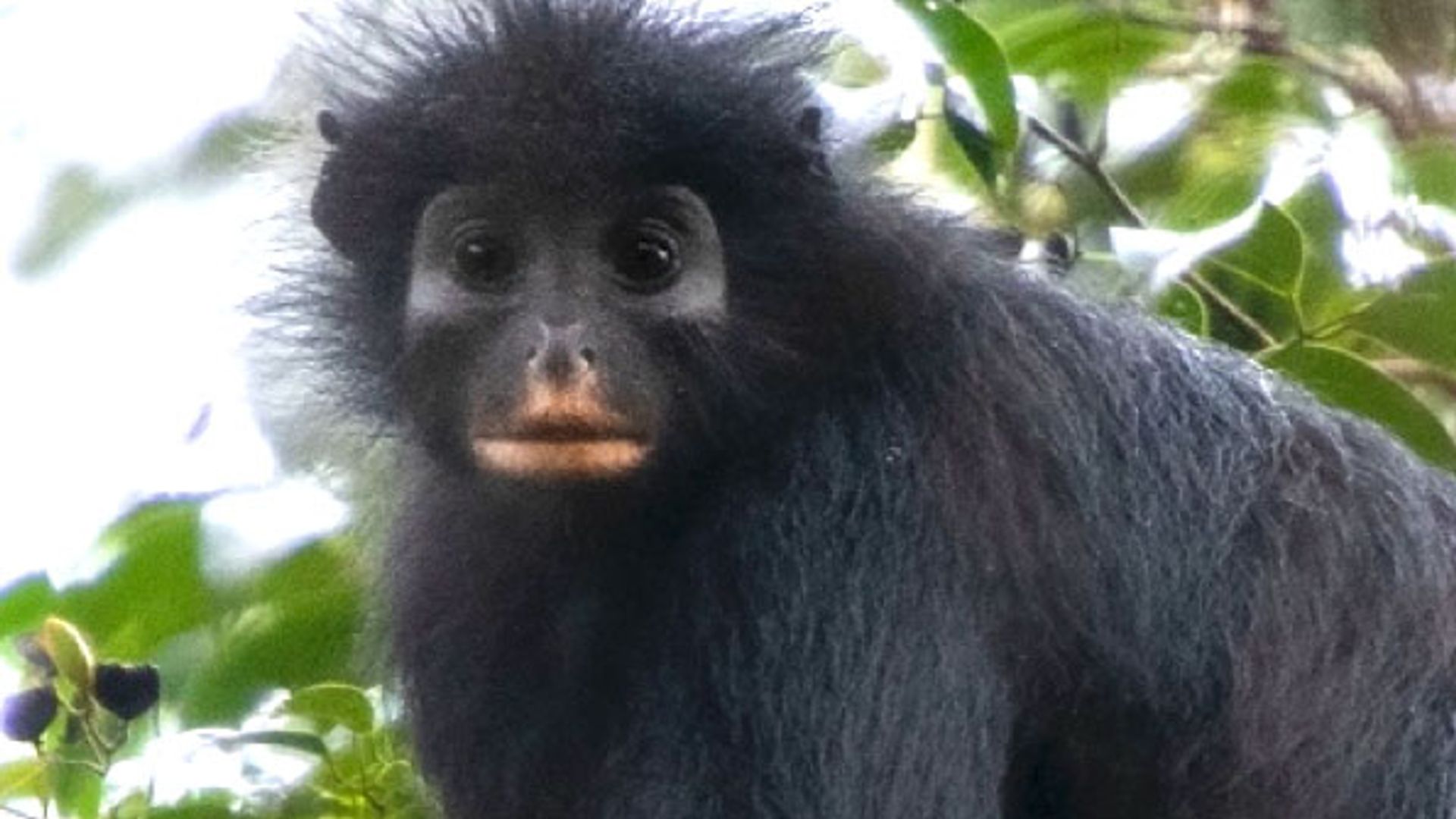
In 2008, a team of researchers working deep in the Democratic Republic of Congo snapped a blurry, frustrating picture. It was just a glimpse of a monkey sitting in the forest canopy. But something about it was off. The black fur was too glossy, the size was wrong, and there was a strange, bright flash of color around its mouth.
For ten years, that single photo sat in files, a puzzling mystery that nobody could solve. Many figured it was just an odd individual or a trick of the light. Then, in 2018, researchers got lucky again. This time, they got a crystal-clear shot.
They were looking at a completely new species of monkey.
Fast forward to July 2026. After years of careful genetic testing, physical mapping, and acoustic analysis, scientists have officially described Colobus congoensis in the journal PLOS One. Locally, it's called the "Likweli" or "kasaba nkoni". This isn't just another biology footnote. Finding a new medium-to-large mammal today is incredibly rare. In fact, this is only the fifth new monkey species identified in Africa over the last 75 years.
But don't assume this is just a happy story about nature's secrets. The reality of finding a new primate in 2026 is complicated, messy, and urgent.
The Blurry Frame That Started a Two Decade Hunt
Most people think new species are discovered when a scientist walks into a forest, points a camera, and instantly names a new animal. That is a myth.
The discovery of the Likweli was a slow, grueling process of patience and local collaboration. It took nearly two decades to move from that initial blurry image in 2008 to official scientific recognition.
The breakthrough came when Junior Amboko, a field conservationist from the DRC and a PhD student at Florida Atlantic University, took over the investigation in 2020. Amboko was overseeing field teams in Lomami National Park, a remote reserve in the east-central region of the DRC. When his team analyzed the 2018 photographs, they noticed something crucial. The monkey did not have thumbs.
That thumb-less hand instantly placed the animal in the genus Colobus. But everything else about it looked totally different from the other colobus monkeys in the area. Amboko knew they were on the trail of something historic.
Between 2018 and 2022, research teams braved the dense, roadless terrain of the Lomami Basin. They weren't just looking for another photo. They needed biological samples, recordings of the monkey's unique calls, and physical measurements to prove to the global scientific community that this was indeed a distinct branch on the evolutionary tree.
Meet the Orange Lipped Likweli Monkey
If you saw a Likweli monkey, the first thing you'd notice is the face. It looks almost like it's wearing dramatic stage makeup.
While most of its body is covered in a deep, glossy black coat, its face is a striking mask of contrasting colors. It has bare grey skin stretching across its cheekbones, which frames pitch-black skin around its eyes. But the absolute standout feature is the patch of bright, pinkish-orange skin right around its lips and nose.
Anatomical Clues from the Forest Canopy
Scientists didn't just rely on the orange lips to declare this a new species. They ran full genetic analyses on tissue samples. The results were staggering. The genetic data showed that Colobus congoensis split from its closest known evolutionary relative roughly four to five million years ago. For context, that means this monkey was already a distinct lineage long before the first human ancestors walked the earth.
Physically, the Likweli also sports a prominent patch of bright white fur right around its rear. This creates a sharp, visual contrast against its dark body, which likely helps group members keep track of one another as they leap through the thick canopy.
A Voice That Shakes the Forest
You usually hear the Likweli long before you see it.
Like other colobus monkeys, the Likweli is famous for its "roars". These are deep, resonant vocalizations that male monkeys use to define their territory and keep in touch with their social group. However, acoustic analysis of these calls revealed a highly specific structure unique to the Likweli.
Their roars are punctuated by sharp, distinctive snorts. When they make these calls, their bright orange lips puff out, creating a visual signal that matches the acoustic boom echoing through the trees.
Why Finding a New Monkey is an Absolute Miracle
We live in an age of satellite mapping, thermal imaging, and constant surveillance. It feels like every square inch of the planet has been scanned, logged, and uploaded. How did a medium-sized mammal manage to hide right under our noses for so long?
The answer lies in the geography of the Democratic Republic of Congo.
The Congo Basin is the second-largest tropical rainforest on Earth. It is a massive, incredibly dense jungle. Vast stretches of this forest remain almost entirely inaccessible by vehicle. The area where the Likweli lives—between the Lomami and Lilo rivers—is a maze of closed-canopy forest. It's a place where you have to travel by foot or canoe, hacking your way through undergrowth in high humidity.
Furthermore, the local communities who live on the edges of these forests have actually known about the "Likweli" for generations. But because science is often disconnected from local knowledge, it took years for academic researchers to listen, document, and verify what the locals already knew. This highlights a massive blind spot in modern biology. We don't need to "discover" things so much as we need to collaborate with the people who already live alongside them.
The Harsh Reality Facing the Likweli
This isn't just a feel-good science story. The moment the Likweli was officially named, it also joined the list of the world's most vulnerable primates.
The research team, led by John Hart of the Lukuru Wildlife Research Foundation and scientists from Florida Atlantic University, has already recommended that the species be listed as Endangered.
The data paints a worrying picture. The Likweli's entire known range is incredibly small. They are confined to an area of about 1,700 square kilometers. Compared to other colobus species, which often range across thousands of miles of the African continent, the Likweli is packed into a tiny geographical box.
This tiny range makes them highly vulnerable to three specific threats:
- Habitat Sensitivity: The Likweli only thrives in high-quality, closed-canopy forest. They don't do well in disturbed or fragmented forests. Any logging or road building in their small territory could wipe out entire populations.
- Hunting Pressure: Like many primates in the Congo Basin, the Likweli faces threats from the bushmeat trade. Because they are relatively small and travel in tight social groups, they are easy targets for hunters.
- A Slow Reproductive Cycle: Large primates don't reproduce quickly. If a population takes a hit from hunting or disease, it can take decades for those numbers to recover.
The Only Way to Actually Save This Monkey
Discovering a species is easy compared to the work of keeping it alive. If we want the Likweli to survive the next century, we have to change how we approach conservation in the DRC.
First, we must stop treating local communities as threats and start treating them as primary partners. The Lukuru Wildlife Research Foundation has shown that local trackers and field assistants are the backbone of successful conservation. Funding needs to go directly toward training and employing people living on the borders of Lomami National Park. If protecting the forest provides stable, high-quality jobs for local families, the incentive to hunt or clear land disappears.
Second, we need strict, zero-tolerance protection of the closed-canopy corridors between the Lomami and Lilo rivers. This area must be kept free of industrial logging, mining, and road development.
The discovery of Colobus congoensis is a stark reminder that we don't know nearly as much about our planet as we think we do. But it's also a ticking clock. Now that we know the Likweli is there, the pressure is on to ensure we don't let it slip away.