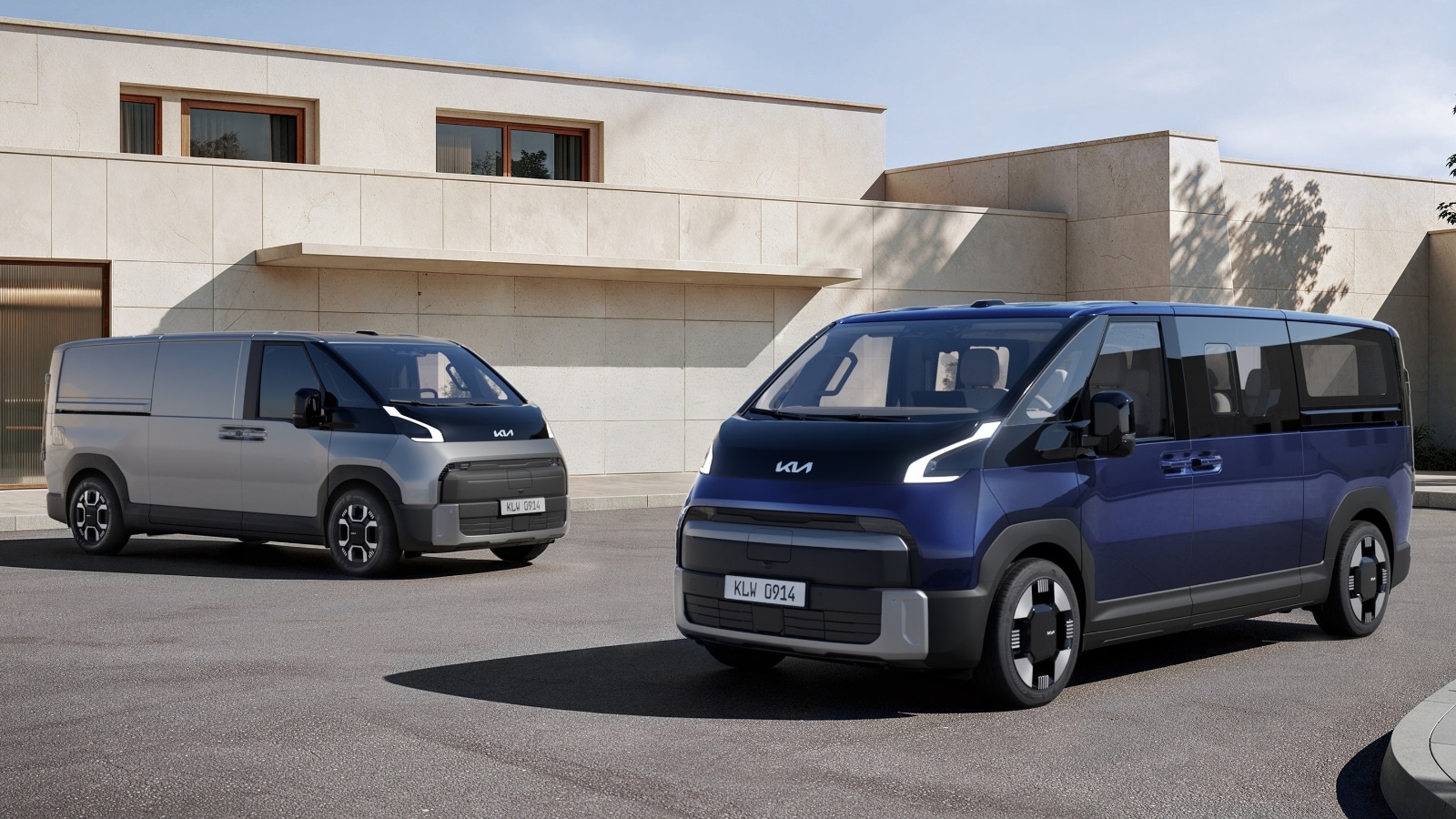
Electric vans have long suffered from a dirty little secret. They look great in corporate sustainability reports, but drivers hate charging them during a busy shift. Most commercial electric vehicles take forty-five minutes or longer to replenish a drained battery. When you run a delivery or shuttle fleet, losing an hour of uptime is simply lost money. Kia just solved that problem.
The Korean manufacturer revealed its new PV7 van at the IAA Transportation show in Hannover, Germany, marking the second major entry into its dedicated Platform Beyond Vehicle lineup. This is not another converted passenger car chassis with a box glued to the back. It is purpose-built from the rubber up on a modular EV architecture designed specifically to move cargo and people without excuses. Learn more on a connected issue: this related article.
Charging Speeds That Actually Work in the Real World
The headline feature everyone is talking about is the 800-volt electrical architecture. While most competitors stick to a 400-volt system, Kia borrowed the high-voltage setup from its EV6 and EV9 passenger cars.
Plug the PV7 into a 350-kilowatt DC fast charger, and the battery goes from ten to eighty percent in roughly twenty-five minutes. That is the exact length of a driver's mandatory lunch break. You pull up, grab a sandwich, and come back to a nearly full battery. It bridges the gap between petrol convenience and electric efficiency. Further reporting by Engadget explores related views on the subject.
Furthermore, Kia added dual charging ports. You get a front-facing AC/DC port along with an optional rear-side AC port. If you have ever tried to squeeze an oversized van into a cramped depot charger setup, you know why having choices where you plug in matters.
Range and Battery Options Built for Long Shifts
Range anxiety kills commercial adoption faster than high sticker prices. The PV7 offers two distinct nickel-cobalt-manganese battery packs: a 71.5-kilowatt-hour base unit and a larger 96.2-kilowatt-hour pack.
If you spec the Long Range Cargo variant with the bigger battery, it clears over 460 kilometers (about 285 miles) on a single charge under WLTP testing. Real-world highway driving under load will eat into that number, but it still provides enough breathing room to complete multi-stop urban routes without a mid-day top-up.
Power comes from a front-mounted electric motor putting out 268 horsepower and 420 Newton-meters of torque. An all-wheel-drive dual-motor setup is slated to arrive later, but the front-wheel-drive layout handles standard commercial duties just fine.
Space for People or Freight
Flexibility defines the PV7. Kia splits the lineup into two distinct styles: Cargo and Passenger.
The Cargo variant caters directly to logistics firms and delivery services. It comes in Compact, Long, and High Roof configurations. The High Roof model gives you up to eight cubic meters of storage capacity, easily swallowing three standard Euro pallets. Max payload stretches up to 1,200 kilograms depending on the spec. There is even a dedicated heavy-load driving mode that automatically adjusts vehicle performance when the cabin or cargo bay is weighed down to its limit.
Flip over to the Passenger model, and you are looking at up to nine seats globally, or eleven seats if you are buying in Korea. Shuttle operators and rental fleets will appreciate the seven-seat layout featuring long-rail removable seats. You can slide or pull them out when you need to haul luggage instead of bodies.
Inside the Mobile Workspace
Commercial cabins usually feel like punishment cells moulded from hard grey plastic. Kia took a different approach. The dashboard houses a massive 14.6-inch central touchscreen paired with a 12.9-inch digital instrument cluster.
The system runs on Android Automotive OS through Kia's Pleos Connect framework. It handles real-time navigation, over-the-air updates, and app downloads. There is also an integrated AI assistant called Gleo AI that lets drivers control climate, messaging, and navigation using natural voice commands so they don't have to take their eyes off the road.
Practical touches are everywhere. The center seatback on three-seat versions folds down into an instant desktop tray. USB-C ports push one hundred watts of power to keep laptops and scanners running.
Vehicle-to-Load technology lets you run heavy-duty power tools or external equipment directly from the van's battery pack. You basically get a massive rolling generator on job sites.
The Bottom Line for Fleet Operators
The commercial van sector has been slow to electrify because operators are notoriously practical. They do not care about green marketing if the vehicle drops their profit margins.
By combining an 800-volt architecture, 460-kilometer range variants, and a modular layout that scales from delivery box to eleven-seat shuttle, Kia built a commercial EV that respects the bottom line. Pricing remains the final hurdle when sales start in Europe and Korea, but the engineering foundation is solid. Stop looking at electric vans as compliance compromises. The PV7 proves they can work harder than diesel ever did.
The New 2027 KIA PV7 Cargo - World Premiere and First Look
This video provides a first look at the new Kia PV7 Cargo electric van, showcasing its exterior design, cargo space, and layout features.