The world just witnessed a major shift in how oil moves across the globe, and it didn't happen on the high seas. It happened at a conference table in Washington. U.S. companies just inked roughly $60 billion in massive agreements and partnerships with the Iraqi government. The crown jewel of these deals is a massive plan to build alternative shipping routes that bypass the chaotic waters of the Persian Gulf entirely.
If you've been watching energy markets lately, you know things are messy. The ongoing conflict between the U.S. and Iran has turned the Strait of Hormuz into a geopolitical chokepoint that threatens global supply every single day. This new initiative aims to change the math completely.
Let's look at the actual realities of this deal, why it's happening right now, and what it means for global energy security.
The Massive Deal to Bypass the World's Most Dangerous Chokepoint
For decades, the Strait of Hormuz has held a figurative chokehold on global energy. Roughly a fifth of the world's petroleum supply squeezes through this narrow channel daily. When Iran repeatedly attempted to shut down the strait following the outbreak of hostilities earlier this year, oil markets went on a wild rollercoaster ride. Prices spiked past $110 a barrel in April before settling back down closer to $88 after brief truces.
The uncertainty is exhausting for global economies. That's why the $60 billion package signed at the U.S. Chamber of Commerce is a big deal. It isn't just about extracting more crude. It's about building a massive land-based alternative to ocean shipping.
The primary focus is a major infrastructure project to rehabilitate and expand a direct overland pipeline network. The plan connects the oil-rich hub of Basra in southern Iraq to Haditha in the west. From there, the network splits, sending crude directly to the Ceyhan port in Turkey and the port of Baniyas on the Syrian coast.
The U.S. State Department explicitly backed this international consortium. Once fully operational, this network is projected to move about 2 million barrels of oil per day. That's an enormous volume of energy pulled right out of Iran's line of sight.
Chevron and the New Realities of Iraqi Investment
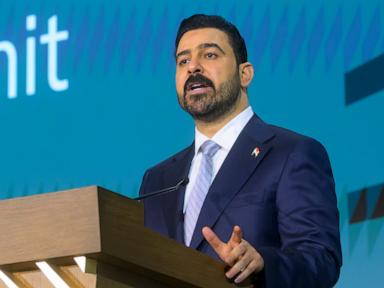
Iraqi Prime Minister Ali Falah al-Zaidi didn't just show up in Washington to sign papers. He spent time in Houston pitching American energy executives directly. His message was loud and clear. Iraq doesn't want short-term contractors anymore. They want long-term corporate partners who will sink capital into permanent infrastructure.
Chevron stepped up in a massive way. The company signed three separate agreements with Baghdad. Two of those initiatives will focus heavily on boosting output in existing fields. The third is the big one, focusing on direct capital investment for the export pipeline bypass.
Jake Spiering, Chevron's head of corporate business development, noted that creating another export route out of Iraq to world markets is fundamental to energy security. He's right. Relying on a single body of water controlled by a hostile neighbor is a terrible strategy.
The Realistic Timeline for Bypassing Hormuz
Don't expect oil to stop flowing through the strait tomorrow. Infrastructure takes time.
Goldman Sachs analysts put out a sobering reality check alongside these announcements. Building a complex pipeline through just a single country takes an average of two and a half years. The projects envisioned here cross multiple borders and require navigating complex local politics.
However, the medium-term outlook is fascinating. Goldman Sachs estimates that seven different regional pipeline projects currently under development could collectively carry 60% of the oil that usually relies on the Strait of Hormuz by the end of 2028. That equals roughly 14 million barrels per day redirected through safer overland paths.
Why Syria is Emerging as an Unexpected Winner
One of the strangest twists in this entire saga is the role of Syria. After surviving a brutal 14-year civil war, Damascus is suddenly presenting itself as a neutral, stable transit zone for regional energy. Because the war in the Persian Gulf has strangled shipping through the strait, energy companies have resorted to desperate measures.
Right now, crews are literally trucking crude oil overland from Iraq into Syria. From there, it gets loaded onto ships at Syria's Baniyas port and sent to European markets.
It's an inefficient process. Trucking oil is expensive and slow. But it proved that the overland route works as a proof of concept. Upgrading this makeshift trucking route into a permanent 2-million-barrel-per-day pipeline changes everything. It gives Iraq a direct line to the Mediterranean, cutting out the Persian Gulf entirely.
The Geopolitical Chessboard Behind the Infrastructure
Iraq finds itself in an incredibly awkward position. The nation houses critical U.S. military bases, yet it's also home to powerful Iran-backed political factions and militias. When the U.S. and Israel engaged in active conflict with Iran earlier this year, Iraq was caught directly in the crosshairs.
By anchoring its energy sector to U.S. corporate giants like Chevron, the Iraqi government is making a deliberate strategic choice. Prime Minister al-Zaidi's administration is actively trying to insulate its economic survival from Tehran's regional maneuvers.
The U.S. is also using these energy partnerships to enforce broader regional goals. The investment boom coincides with strict deadlines for the disarmament of domestic militias and the planned transition of remaining U.S. forces. It's a classic carrot-and-stick strategy. Washington is offering massive economic integration and energy independence, but only if Iraq cleans up its internal security environment.
What This Means for Global Energy Prices
If you're an investor or just someone worried about inflation, this deal provides a glimpse into the future of energy pricing.
- Reduced volatility: Once these lines open, Iranian threats to close the strait lose their teeth. Markets won't panic-buy oil because a single shipping lane is blocked.
- Higher initial costs: Building these lines requires billions up front. The overland transit fees paid to Turkey and Syria will make this oil slightly more expensive to move than ocean tankers initially.
- Diversified supply lines to Europe: European nations get a direct pipeline supply to Mediterranean ports, bypassing traditional maritime risks entirely.
This isn't just about corporate profits. It's a structural rewiring of how energy moves across the globe.
Your Next Steps to Prep for This Energy Shift
If you manage logistics, trade commodities, or invest in global markets, you need to adapt to this shifting reality today.
First, keep a close eye on regional construction milestones over the next 18 months. Track the progress of the Basra-to-Haditha pipeline rehabilitation specifically. Any delays there will immediately impact mid-term energy futures.
Second, re-evaluate your portfolio's exposure to maritime shipping risks. As land-based pipelines scale up toward that 2028 target, the strategic value of traditional tankers operating in the Persian Gulf will shift dramatically.
Diversify your energy investments away from entities solely reliant on the Strait of Hormuz chokepoint. The transition is officially underway.
Vertex News coverage of the U.S.-Iraq energy deals provides an inside look at the political agreements and statements from officials surrounding these major corporate partnerships.
/singapore-travel-584f789f5f9b58a8cdf97dda.jpg)


