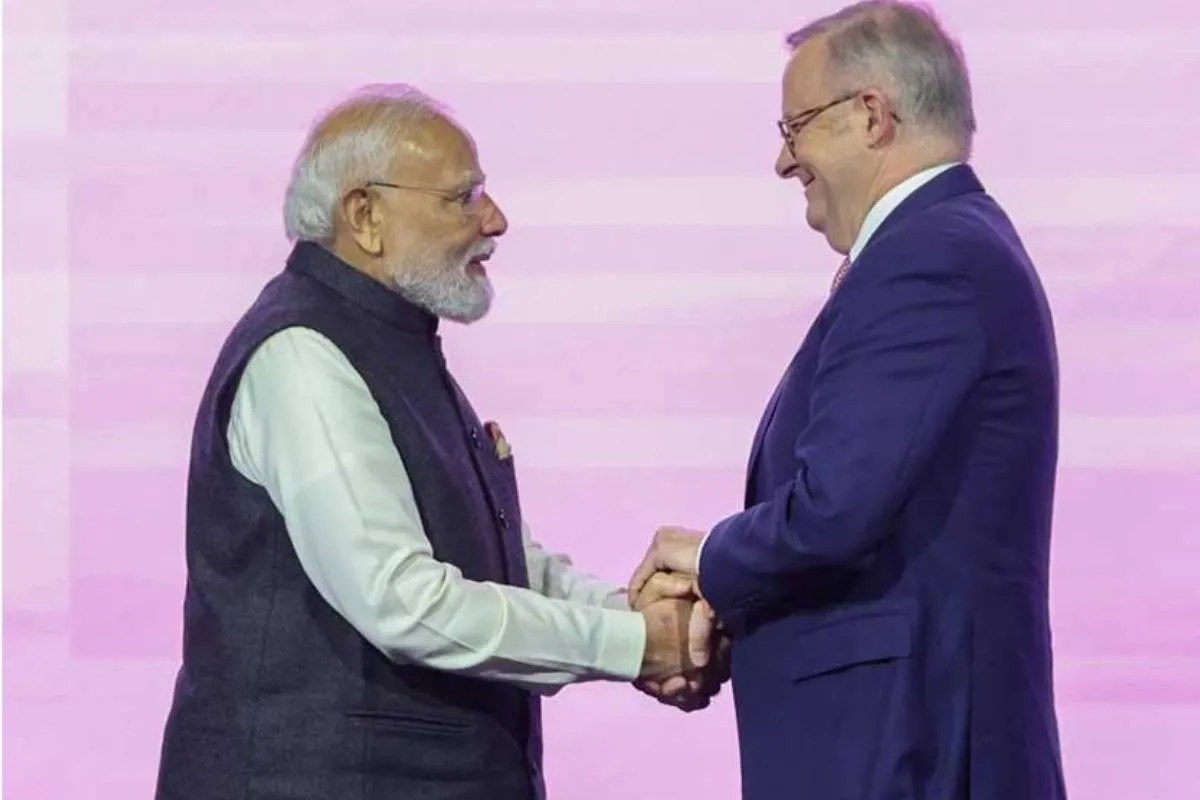
Don't let the corporate press releases fool you. The massive diplomatic dance that just went down between Indian Prime Minister Narendra Modi and Australian Prime Minister Anthony Albanese in Melbourne isn't just a standard bureaucratic handshake. It's a fundamental recalibration of power in the Indo-Pacific region.
Mainstream news outlets are hyper-focusing on the headline-grabbing nuclear aspect—the fact that Australia will finally start shipping uranium to India. Yes, it's a massive story. But if you look closer at the newly minted Joint Declaration on Defence and Security Cooperation, you'll see a much larger blueprint. It’s an aggressive, dual-pronged strategy aimed directly at combating cross-border terrorism and keeping a heavy check on regional maritime aggression.
The Uranium Standoff is Finally Over
Let's look at what actually changed. Australia sits on nearly a third of the world's known uranium deposits. India needs a mountain of energy to fuel its tech-driven economy and massive data centers. Yet, for more than a decade, the two nations were stuck in a diplomatic traffic jam.
Bilateral Paradox:
[Australia: Largest global uranium reserves] ---> [11-Year Safeguard Stalemate] ---> [India: Powering a massive tech boom]
Even though a civil nuclear framework was agreed upon way back in 2014, Canberra's incredibly strict environmental and non-proliferation safeguards kept the taps shut. Australia wanted ironclad guarantees that its nuclear material wouldn't find its way into India's military weapons program.
The stalemate broke in Melbourne. Both leaders finalized the administrative arrangements to clear the commercial shipping lines under strict International Atomic Energy Agency (IAEA) watchful eyes. It’s a massive win for India's clean energy ambitions, which aim to scale up its nuclear capacity from a modest 8 gigawatts to an ambitious 100 gigawatts by 2047. It also lets New Delhi aggressively cut down its long-standing dependency on Russian fuel.
A Direct Stance Against Terrorism
The second major pillar of this summit was an uncompromising position on global and regional terror networks. India and Australia issued a blunt, unequivocal condemnation of terrorism, demanding that all nations eliminate safe havens and halt cross-border attacks without displaying double standards.
This wasn't vague diplomatic jargon. The two nations are embedding counter-terrorism strategies straight into their daily intelligence networks via the Quad framework. They’re actively tracking terror financing channels, checking radicalization trends across cyber networks, and securing vulnerable sea lines across the Indian Ocean. It’s a unified front designed to protect trade assets while isolating actors who use non-state proxies to destabilize South Asia.
The Silent Threat Forcing Their Hand
While neither leader explicitly shouted China's name during the press briefings, you don't need a degree in geopolitics to see who the target is. The elephant in the room was impossible to ignore. Just days before Modi landed, Beijing raised alarms by test-firing an unannounced submarine-launched, long-range ballistic missile straight into the South Pacific.
Australia didn't take kindly to that display of force in its backyard. India, dealing with persistent maritime incursions in the Indian Ocean, shares that exact anxiety.
The response? The new Maritime Security Collaboration Roadmap. This isn't just about joint naval exercises or superficial photo opportunities. The plan expands real-time military intelligence sharing, coordinates joint patrols, and synchronizes anti-submarine warfare drills. They're fundamentally locking arms to ensure the Indo-Pacific remains open and free from single-party coercion.
Moving Past Raw Materials
The relationship is moving quickly past basic resource extraction. Australia wants to diversify its trade away from its overwhelming commercial reliance on China. India wants to secure the high-tech supply chains of tomorrow.
- Critical Minerals: The summit secured dedicated investment pipelines for lithium and cobalt. India needs these minerals to scale its domestic electric vehicle production, and Australia has them in abundance.
- Big Pension Funds: AustralianSuper, the nation's largest pension fund, put its money where its mouth is, committing an additional A$500 million directly into India's National Investment and Infrastructure Fund.
- Trade Aggression: Both teams fast-tracked negotiations for the comprehensive Comprehensive Economic Cooperation Agreement (CECA) to build on top of a massive 86% trade surge since 2022.
What Happens Next
The agreements are signed, the cameras are off, and Modi has moved on to the final legs of his regional tour in New Zealand. Now comes the hard part: executing the plan. Watch these three indicators over the next twelve months to see if this deal actually lives up to the hype:
- Track the first physical uranium shipment container. Look for the first commercial vessel leaving Western Australian ports bound for Indian civilian nuclear reactors to ensure bureaucratic delays haven't crept back in.
- Monitor the frequency of unannounced maritime drills. Watch how quickly the Indian Navy and the Royal Australian Navy launch real-time anti-submarine tracking operations in the eastern Indian Ocean corridors.
- Check the status of the CECA trade pact. See if trade negotiators can finalize the free trade expansion by the end of the fiscal year without getting bogged down in domestic agricultural tariff disputes.