Brussels and Hong Kong are quietly rebuilding their financial bridge. While global headlines fixate on trade wars, tariffs, and geopolitical decoupling, something far more pragmatic is happening on the ground. The European Union and Hong Kong are in talks on a new financial services dialogue to revive regular, high-level institutional communication.
This isn't just another layer of bureaucracy. It's a calculated move driven by survival, capital demands, and the urgent push for multi-billion dollar green infrastructure projects. If you look past the standard political statements, the timing and focus of these talks reveal a massive shift in how international finance operates in a fragmented world.
The Reality Behind the Renewed Communication
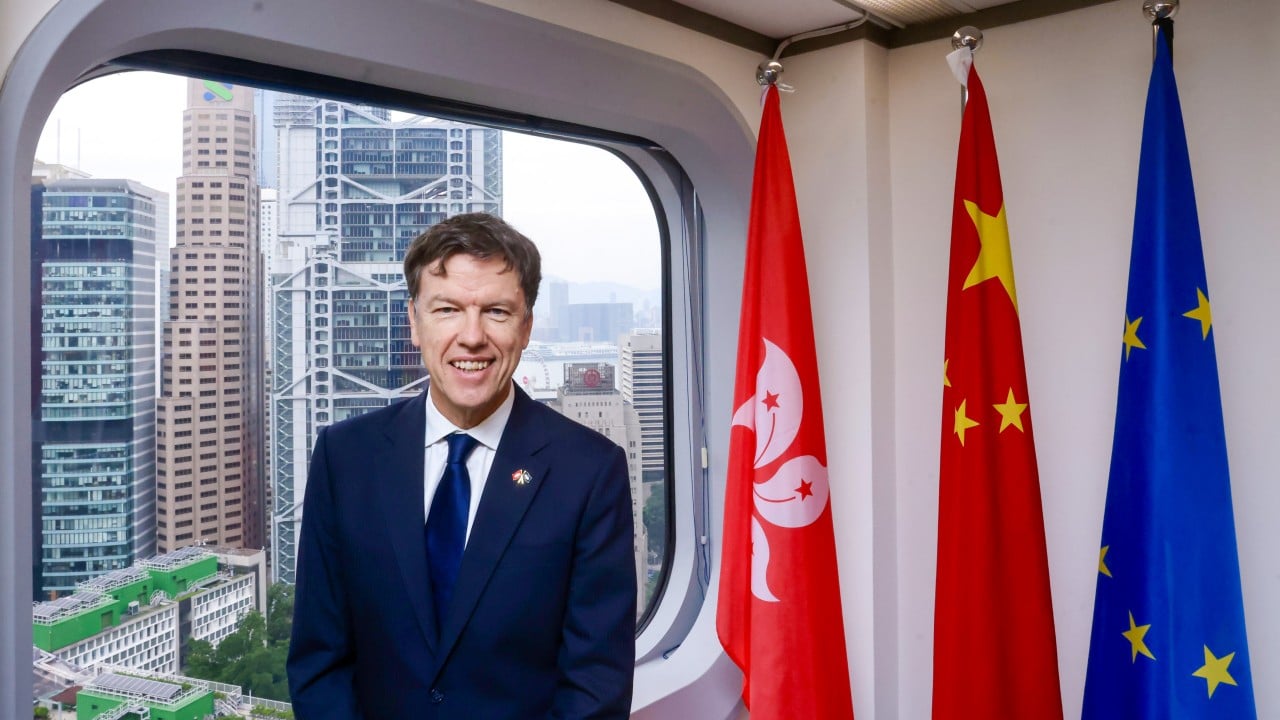
The announcement came straight from Ambassador Harvey Rouse, the head of the European Union Office to Hong Kong and Macao. Speaking at the Greenway 2026 sustainability forum, Rouse made it clear that both sides want to get back to the table. They are looking to launch this structured financial services dialogue to iron out cooperation, primarily targeting the massive green finance sector.
For years, institutional dialogues between the West and Hong Kong sat in the freezer. Political tensions and shifting legal environments made formal engagement awkward. But capital has a funny way of forcing people to talk. European asset managers are hunting for yield and structured green assets, while Hong Kong needs massive inflows of foreign capital to build its ambitious domestic projects.
Acting Chief Executive Paul Lam laid out the stakes clearly during the same event. He noted that the city has led Asia in arranging international green and sustainable bond issuances for eight consecutive years, capturing roughly 40% of the regional total. But maintaining that crown requires deep pools of international liquidity. That means keeping European banks and funds heavily invested in local paper.
Where the Money is Actually Going
Forget abstract commitments to save the planet. This dialogue is about real concrete deals, major infrastructure, and industrial contracts. European companies aren't just sitting in office towers in Central. They are bidding on massive physical projects across the territory.
Look at what's happening right now in the city. European firms are already embedded in the local economy, running complex operations in water desalination, high-tech waste management, and even advanced aircraft recycling. But the real golden goose is the Northern Metropolis project.
This massive border-zone development is intended to be the city's new engine for technological and economic growth. The government released its first five-year plan public consultation document recently, placing new energy, smart infrastructure, and green technology right at the center of the strategy.
Ambassador Rouse pointed out that European companies are eyeing this development with intense interest. They want to sell their expertise in sustainable urban planning, high-efficiency grid systems, smart mobility, and digital tech. The upcoming financial services dialogue will serve as the legal and regulatory framework to ensure that European capital can flow into these projects without hitting compliance walls back in Brussels.
Navigating the Regulatory Minefield
The dialogue will have to tackle serious structural friction. It's not a secret that doing business between the EU and China has become incredibly complicated. Brussels is tightening its rules on supply chain tracking, carbon tracking tariffs, and ESG disclosure requirements.
Hong Kong is trying to position itself as the ultimate intermediary. Local authorities want to act as a translation layer. They are working to align local financial reporting with the International Sustainability Standards Board rules. By doing this, they hope to make it simple for mainland Chinese companies to use Hong Kong to issue debt that meets strict European regulatory standards.
It is a tricky balancing act. If Hong Kong aligns too closely with Western regulatory mandates, it risks friction with mainland systems. If it drifts too far away, European capital will simply flee to Singapore or London. The new financial dialogue is basically an emergency valve to make sure both sides stay aligned enough to keep the money moving.
Aviation and Shipping Take Center Stage
Another critical area that this financial dialogue will address is transport decarbonization. Both the EU and Hong Kong are major global logistics hubs, and both face massive pressure to clean up their acts.
The aviation sector is under the gun. Sustainable aviation fuel can slash life-cycle emissions by more than 80% compared to standard jet fuel. Europe has ramped up its production of sustainable aviation fuel to around 1.4 million tons, and its companies want to export this technology and establish fueling networks in Asia.
Hong Kong wants to become the regional leader in low-carbon logistics, which means expanding green fuel bunkering services for both ships and planes. This requires hundreds of millions of dollars in capital investments to upgrade port facilities and airport storage infrastructure. The financial services dialogue will focus heavily on how to structure the loans, green bonds, and private equity deals required to fund these capital-intensive transitions.
What This Means for Global Investors
If you're managing money or running a business in the region, you can't afford to ignore this development. The fact that the EU and Hong Kong are actively working on a structured financial services dialogue means that the talk of total economic decoupling is overblown. Pragmatism is winning out over political rhetoric.
Don't expect overnight miracles. These talks will be slow, technical, and full of diplomatic caution. But the direction of travel is unmistakable. The city is clawing back its status as a critical international financial node by turning itself into the green finance capital of Asia, and Europe wants a piece of the action.
Keep a close eye on the regulatory announcements coming out of the Hong Kong Monetary Authority and the European Commission over the coming months. The specific rules they hammer out regarding green taxonomies and cross-border investment compliance will dictate where the next big wave of infrastructure capital lands.