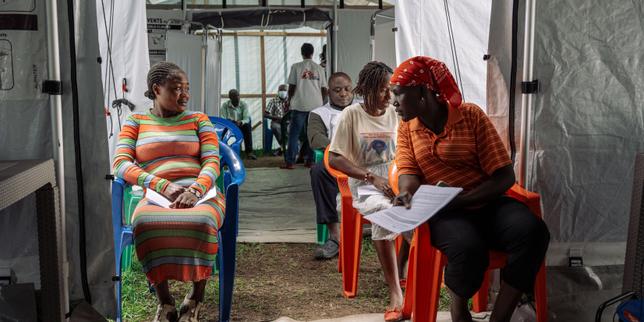
When a health crisis hits the eastern provinces of the Democratic Republic of Congo, the world usually watches from afar with a familiar sense of dread. This time, things feel different on the ground. The ongoing epidemic fueled by the rare Bundibugyo strain has pushed local healthcare infrastructure to its absolute limits, yet a wave of cautious optimism is quietly sweeping through the epicentre in Bunia. Clinical trials for experimental treatments and vaccines are finally underway, offering a stark contrast to past outbreaks where medical workers could only offer supportive care and watch helplessly.
You need to understand why this specific outbreak caught public health experts off guard. Unlike the more common Zaire strain that scientists spent decades studying and building countermeasures against, the Bundibugyo species demands a completely different playbook. Standard treatments developed for previous outbreaks don't automatically work here. When the virus started spreading rapidly across the region earlier this year, crossing borders and climbing past ten thousand suspected cases, the lack of targeted medical countermeasures left communities vulnerable.
That vulnerability shifted the moment researchers launched the PARTNERS clinical study. Coordinated by the Institut national de recherche biomédicale alongside international partners like the World Health Organization, this trial evaluates the monoclonal antibody MBP134 and the antiviral remdesivir, administered either separately or in combination. Patients entering specialized treatment units aren't just getting basic rehydration anymore. They are gaining access to targeted therapeutics designed to neutralize the specific mechanisms of the Bundibugyo strain.
Clinical research in an active conflict zone brings enormous logistical nightmares. Healthcare teams face constant security threats, broken supply chains, and deep-seated community mistrust born from decades of institutional neglect. Just months ago, an attack on a treatment center in Ituri forced workers to suspend operations and highlighted how fragile these medical interventions truly are. Protecting doctors, nurses, and patients remains just as important as discovering effective molecules. Without local community buy-in and stringent security measures, even the most advanced pharmaceutical breakthrough will fail to stop the transmission chains.
Parallel to therapeutic trials, preventative strategies have gained serious momentum. The rollout of the TUMAINI phase 2/3 vaccine trial utilizes a ring vaccination approach, immunizing contacts and high-risk individuals surrounding confirmed cases. Instead of waiting for people to fall sick and flooding overwhelmed treatment wards, public health strategists are trying to build an invisible firewall around the virus. Mobile laboratories deployed directly to rural communities have slashed turnaround times for diagnostic confirmation from days to mere hours, allowing contact tracers to isolate positive cases much faster than before.
Skeptics often point out that clinical trials take time to yield definitive data, and they are right. You cannot rush science simply because an epidemic demands immediate answers. However, having active trials running directly inside the epicentre means patients receive cutting-edge care immediately rather than waiting years for regulatory approval in distant capitals. The high occupancy rates across treatment beds show that affected populations are increasingly willing to seek formal medical help when they see tangible improvements in survival outcomes.
Stopping this epidemic requires more than just high-tech drugs or foreign aid donations. It demands long-term investment in local medical capacity, transparent communication that respects community fears, and relentless persistence from local health workers who carry the heaviest burden day in and day out. The current trials represent a monumental turning point, but translating scientific hope into permanent eradication will take disciplined, boots-on-the-ground execution until the last transmission chain breaks.
This video provides an overview of the initial clinical trials launched in the Democratic Republic of Congo to evaluate treatments against the Bundibugyo Ebola strain.