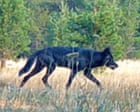
A lone gray wolf just showed up in the Mendocino National Forest, and wildlife biologists are paying close attention. This marks the first verified presence of the species west of the Sacramento Valley since their modern return to the state fifteen years ago. For a long time, California's wolf population stayed safely tucked away in the remote northeastern corner. Not anymore.
When state wildlife officials confirmed the reports from late August, they weren't just checking off another animal on a checklist. They were looking at clear proof of geographic expansion. The California Department of Fish and Wildlife sent biologists on the ground to inspect tracks and verify photos taken where Mendocino, Glenn, and Lake counties meet. The verdict was unanimous. Gray wolves are moving westward, testing new territory, and defying old distribution maps.
The Long Road Back to California
Let's look at the timeline. Hunters and settlers wiped out every single gray wolf in California nearly a century ago. The state was completely empty of apex predators for generations. Then, in 2011, a lone wolf known as OR-7 crossed the Oregon border, proving that natural recolonization was possible.
Since that historic crossing, the population has grown slowly. State records show at least 50 documented wolves living across California now. They formed packs, settled into remote mountain ranges, and started raising pups. But almost all of that activity stayed east of the Interstate 5 corridor. Crossing the Sacramento Valley barrier into the rugged terrain of the Mendocino National Forest represents a major milestone. It proves the animals can navigate human-dominated infrastructure and find wild, unbroken habitat on the other side.
Why This Geography Matters
If you look at a map of California, the Central Valley acts as a massive wall of agriculture, highways, and cities. Wildlife movement from the Sierra Nevada or the Cascades to the Coast Ranges is rare and difficult.
The Mendocino National Forest sits about two hours north of San Francisco, spanning rugged mountains and deep canyons. It offers dense cover, plenty of deer, and very few humans in its deepest sections. Finding a wolf here means the species is actively searching for new home ranges instead of just overcrowding old ones. State wolf coordinators note that this single sighting is the westernmost confirmation in over a century. It shifts the entire conversation about where wolves can survive in modern California.
The Friction Between Conservation and Ranching
Not everyone is popping champagne over the news. Livestock producers across rural California are watching these developments with deep anxiety. Wolves eat meat, and calves are easy targets when herds graze on public or private timberlands.
Ranchers face tight restrictions because gray wolves remain strictly protected under both California's state endangered species act and federal laws. When a wolf kills livestock, producers have very few legal options for defense. That regulatory reality has fueled intense political pushback.
Federal battles reflect this tension. Recent executive actions from the White House have pushed the interior department to look at stripping federal protections from gray wolves entirely, opening up pathways for legal lethal removal when conflicts arise. Environmental groups are already fighting those rollbacks in court, arguing that weakening protections cuts short a fragile recovery.
What Happens Next
The wolf in Mendocino might keep moving, or it might decide to stay and set up shop. Wildlife agencies plan to monitor the area closely using remote cameras and scat collection for DNA analysis.
If you live, hike, or farm in the region, expect to see more signs warning about wolf presence and guidelines on how to secure livestock. Coexistence requires active management, sturdy fencing, and electric deterrents, not just crossed fingers. The wolves are back, and they are writing a new chapter in California's ecological history whether we are ready or not.