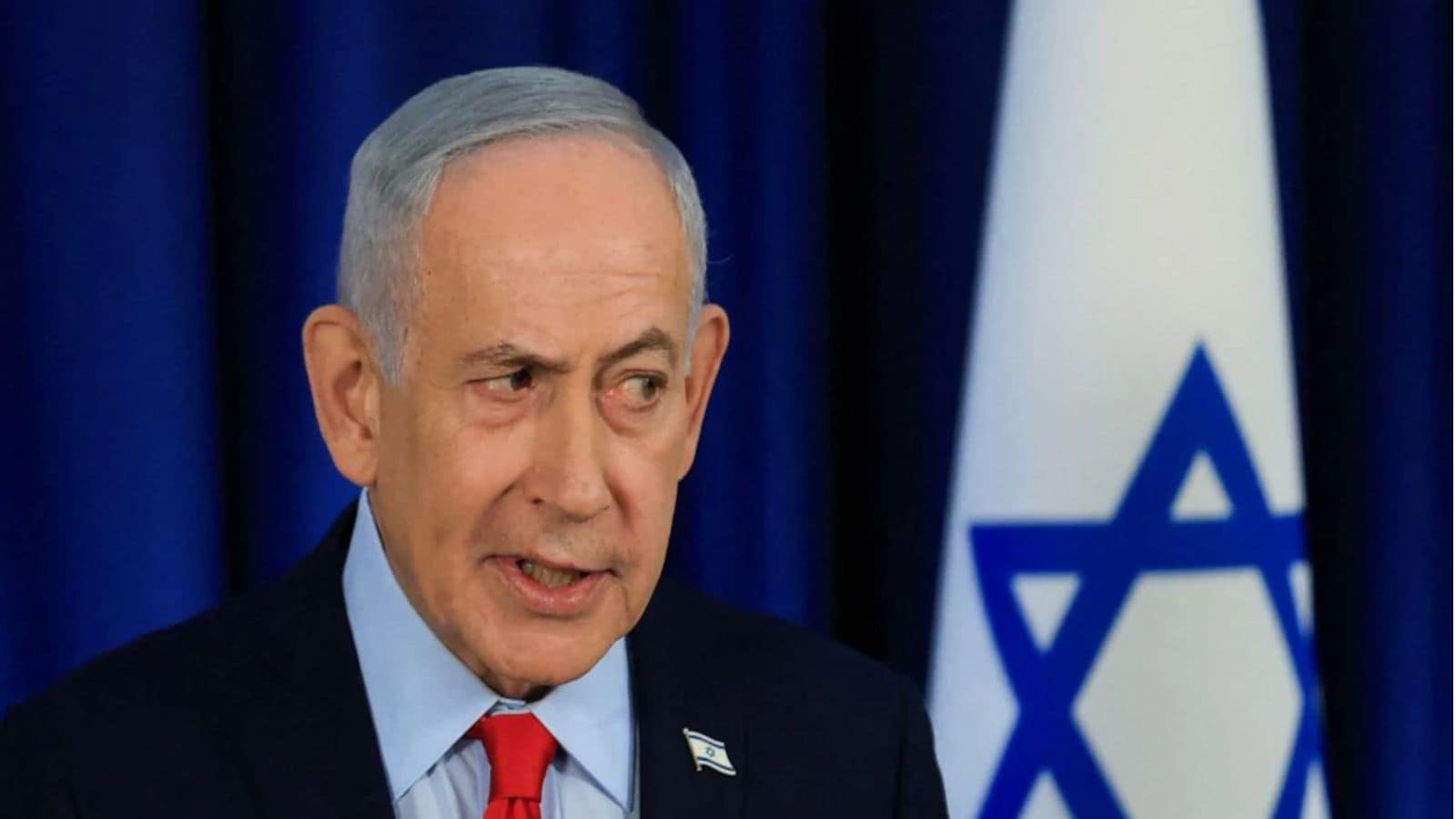
A peace agreement signed on paper rarely matches the reality on the ground. Just days after Israel and Lebanon signed a major U.S.-backed framework agreement to end hostilities, Israeli Prime Minister Benjamin Netanyahu stood directly on occupied Lebanese soil to deliver a blunt message. Israel isn't leaving anytime soon.
On Tuesday, Netanyahu visited troops stationed inside the 10-kilometer self-declared security zone in southern Lebanon. Flanked by Defense Minister Israel Katz and top military officials, his presence sent a clear message to Washington, Beirut, and Tehran. The diplomatic timeline means very little compared to the military realities on the border.
The Friction Between Diplomacy and Military Reality
Last week's framework agreement, brokered under heavy U.S. sponsorship, seemed like a massive breakthrough. It laid down a 14-point plan for permanent peace, including a mechanism to disarm Hezbollah and hand over specific "pilot zones" to the Lebanese Armed Forces. For the first time since 1983, Beirut officially recognized Israeli sovereignty.
But Netanyahu's latest statements completely upend the assumption of a quick Israeli withdrawal.
"Our position is clear: we will not leave southern Lebanon until the threat has disappeared," Netanyahu told soldiers. "And as long as Hezbollah, armed, is here and threatening us, we will stay here."
This creates an immediate paradox. The U.S.-backed deal makes an Israeli withdrawal conditional on the Lebanese military disarming Hezbollah. Yet, Netanyahu is making it clear that troops won't move an inch until that disarmament is already a proven fact. For anyone tracking the region, the idea of the weak Lebanese national army successfully forcing Hezbollah to disarm is a massive gamble, if not a total impossibility.
What is Happening Inside the Security Zone
The current conflict erupted on March 2, after a series of military escalations involving the U.S., Israel, and Iran. Since then, the Israeli military carved out a deep buffer zone running roughly 6 miles into Lebanese territory.
Life inside this strip of land has been completely upended. The Israeli military forced out local Lebanese populations, conducting targeted raids and destroying village infrastructure, including a vast network of underground Hezbollah tunnels. The human cost is staggering. Lebanese authorities report that more than 4,200 people have been killed since March. On the Israeli side, the military has reported the deaths of 38 soldiers and one civilian contractor.
Netanyahu used his visit to speak directly to Israel's regional adversaries, telling Iran and Hezbollah that they no longer belong in the area. He framed the situation as a matter of two sovereign states that simply want to live in peace, provided the militant threat is entirely removed from the equation.
The Strategy Behind Netanyahu's Stance
Why take such a hardline stance right after signing a peace framework? It comes down to domestic political survival and deep-seated security distrust.
Netanyahu faces intense pressure from hardline factions within his own government. Right-wing ministers strongly oppose giving up territory captured in Lebanon, Syria, or Gaza. By physically visiting the occupied zone and promising a long-term presence, Netanyahu is reassuring his base that he won't let international pressure compromise what they see as vital security buffers.
There's also a clear lack of faith in international or regional forces to keep the peace. Israel has spent decades watching UN resolutions fail to keep Hezbollah away from its northern border. From the Israeli perspective, relying on the Lebanese army to clear out remaining militants is a risk they can't afford.
Next Steps for Following the Conflict
The situation is moving fast, and the gap between diplomatic agreements and military action is widening. To understand where this conflict goes next, keep an eye on these specific indicators:
- Watch the Pilot Zones: Look for whether Israel actually hands over the first two designated pilot areas to the Lebanese Armed Forces, as detailed in the framework agreement. Any delay here means the deal is stalling.
- Monitor Local Displacement: Pay attention to whether civilian populations are allowed back into the 10-kilometer buffer zone. If Israel keeps the area cleared, the occupation is turning permanent.
- Track U.S. Diplomatic Reactions: Watch how Washington responds to Netanyahu's explicit refusal to set a withdrawal timeline. Friction between U.S. mediators and the Israeli cabinet will tell you how fragile the peace deal really is.