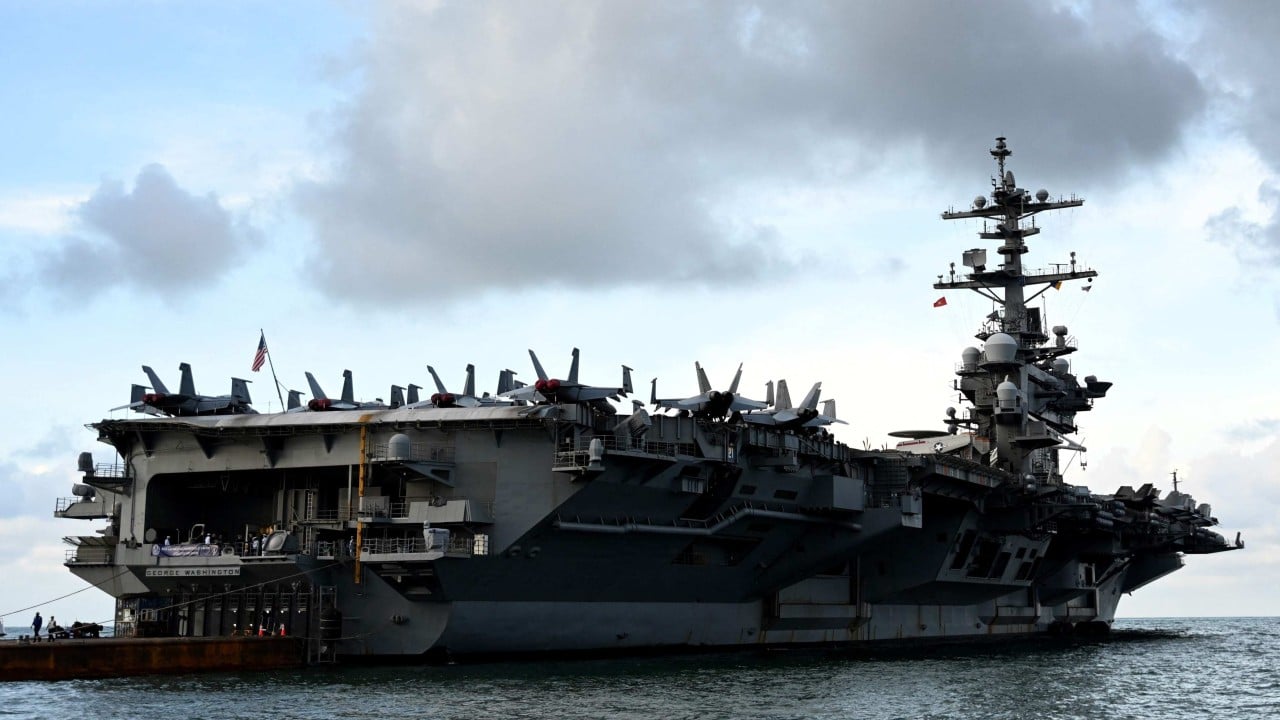
The United States Navy is swapping out its heavy hardware in the Middle East. The aircraft carrier USS George Washington is steaming toward the region to replace the USS Abraham Lincoln.
On paper, the Pentagon calls it a routine rotation. On the water, it is an urgent relief mission for an exhausted crew. Meanwhile, you can read related events here: What The Luigi Mangione Plea Deal Means For The Unitedhealthcare Case.
The Lincoln has spent more than 250 days away from home base. More than 200 of those days happened back-to-back at sea without a single port call. That is a brutal stretch that breaks machines and bends human minds.
The Reality Behind the Rotation
When a warship stays deployed for over eight months supporting operations against Iran, the toll goes far beyond burnt-out jet fuel pumps. Sailors live on top of each other under constant combat readiness. To explore the complete picture, we recommend the excellent article by Al Jazeera.
Recent reports from lawmakers and family networks paint a grim picture of life on the Lincoln. We are talking about severe supply pinches, plumbing failures, and mounting mental health strains. Some families have raised alarms over sailors sliding into profound psychological distress under the relentless pressure.
Defense Secretary Pete Hegseth pushed back hard against these descriptions, claiming public reports of conditions on board were completely misrepresented. Yet the carrier swap happening right now tells its own story. When a multi-billion-dollar nuclear carrier has to be relieved because the crew is running on fumes, standard talking points stop working.
What the Iran Conflict Cost the Fleet
The operational tempo in the Arabian Sea hasn't slowed down since the conflict kicked off. The Lincoln and its strike group were pulled into active combat during Operation Epic Fury, driving a persistent naval blockade around Iranian ports.
Enforcing a blockade in a volatile choke point isn't a weekend exercise. It is a 24-hour grind of flight decks launching F/A-18s, air defense radars humming nonstop, and maintenance crews working triple shifts in stifling heat.
The machinery takes a beating. The flight deck plates wear down. Most importantly, the sailors holding the wrenches and flying the jets hit a wall.
Congressional Pressure Forces Transparency
Lawmakers from both sides of the aisle started asking uncomfortable questions. Democratic Senator Richard Blumenthal of Connecticut fired off letters to military leadership pointing out that the Lincoln smashed records for consecutive days at sea without relief.
When reports leaked about shortages of basic hygiene items, poor water quality, and broken waste systems, Congress demanded immediate answers from the Pentagon.
The military insists this carrier swap was already inked on the calendar before Capitol Hill started knocking. Maybe it was. But the timing highlights a chronic problem in modern American foreign policy. The U.S. military expects a shrinking number of hulls to cover an expanding list of global flashpoints.
What Happens Next in the Arabian Sea
The USS George Washington is stepping into a messy theater. The White House and the Pentagon have signaled that the naval blockade near the Strait of Hormuz will remain active indefinitely.
That means the George Washington won't get a quiet welcome. The crew will inherit the exact same high-threat environment, the same punishing operational tempo, and the same pressure to keep regional adversaries in check.
Military planners need to rethink how long they can stretch a carrier strike group before the human cost outweighs the strategic gain. Ships can be repaired in dry docks overnight. Sailors need more than a quick PR defense when they reach their breaking point.