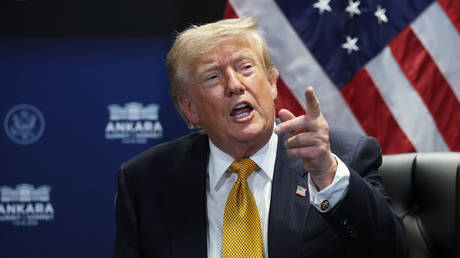
National survey averages published in July 2026 indicate that public support for President Donald Trump has fallen to a fresh low for his second administration. A nationwide survey released by YouGov found that 36 percent of American adult citizens approve of the president's performance, while 60 percent express disapproval. This stark margin reflects a broader trend seen across major political tracking indexes, where a Trump Approval Net Negative Poll outcome has become a persistent fixture of his second term in office.
According to data compiled by Ipsos, public concern over persistent living costs and foreign relations has continuously strained the administration's political standing. The latest findings show that disapproval of the president's economic stewardship has expanded, with nearly two-thirds of respondents expressing dissatisfaction with price levels and interest rates. The figures highlight an accelerating shift in public mood compared to the early months of the term.
White House officials have disputed the significance of the figures, arguing that traditional polling methods often underestimate populist support. Speaking at a press briefing in Washington, administration representatives pointed to ongoing trade negotiations and industrial policy gains as evidence of long-term progress. However, independent analysts emphasize that widespread dissatisfaction among key voter cohorts poses growing challenges for the administration's broader policy agenda.
Trump Approval Net Negative Poll Data Highlights Public Dissatisfaction
The aggregated national polling averages maintained by major research organizations demonstrate a sustained downward trajectory in public sentiment. Data compiled by RealClearPolling shows an average approval rating of 41.1 percent alongside an average disapproval rating of 55.6 percent. Similarly, tracking models from the Silver Bulletin reflect a similar distribution, placing overall approval at 39.6 percent and disapproval at 57.2 percent.
The broader statistical breakdown shows that the gap between approval and disapproval has widened significantly since the beginning of the year. During the opening months of his second term, the president maintained approval numbers near 47 percent, according to historical benchmarks from Gallup. The subsequent slide represents one of the sharpest presidential approval contractions recorded over a six-month period in recent history.
Survey methodologists note that the breadth of public dissatisfaction extends across multiple major policy domains. The Washington Post and Ipsos survey conducted in mid-July showed that 65 percent of respondents disapproved of the administration's economic management. That same survey revealed that 69 percent of adults disapproved of recent foreign policy actions in the Middle East.
Political scientists emphasize that sustained negative margins carry structural weight for any sitting administration. When net approval ratings fall below negative 15 points, presidents typically face increased difficulty in unifying Congressional caucuses around legislative priorities. The ongoing polling trend suggests that the administration faces a increasingly hesitant legislative environment on Capitol Hill.
Key Drivers Behind the Disapproval Trend
Economic anxiety remains the dominant driver behind the shifting public perception. The Reuters and Ipsos Core Political survey conducted in May 2026 revealed that 74 percent of Americans believe their individual cost of living is on the wrong track. Additionally, 73 percent of respondents in that same poll registered direct disapproval of the administration's specific efforts to curtail inflation.
Consumer anxiety has been compounded by rising interest rates and shifting international trade conditions. Data from the Bureau of Labor Statistics indicates that price pressures in essential consumer categories like housing and groceries have remained elevated throughout the current quarter. Voters cited these persistent daily costs as their primary concern when evaluating the administration's performance.
Foreign policy developments have also contributed directly to the widening gap in public approval. Survey results from ABC News and Washington Post polling showed deep public hesitation regarding recent military deployments and international military operations. A majority of respondents expressed skepticism regarding the long-term effectiveness of unilateral actions overseas without explicit international coalition support.
Independent voters, who proved decisive during the previous electoral cycle, have registered a sharp turn in their evaluations. Polling figures from Yale Youth Poll indicate that disapproval among voters under 30 years old has reached 72 percent. Among non-party-affiliated voters overall, disapproval ratings now stand above 60 percent in multiple national surveys.
Household Budget Strain and Trade Friction
Household financial sentiment has deteriorated in tandem with broader economic indicators. Research from the University of Michigan Consumer Sentiment Index demonstrated a notable decline in consumer confidence during the second quarter. Families across middle-income brackets reported reduced purchasing power despite wage growth in specific technical sectors.
Trade policy and newly implemented import tariffs have drawn mixed reactions from agricultural and manufacturing regions. While the administration maintains that protective tariffs safeguard domestic manufacturing jobs, consumer advocacy groups argue that the costs are passed directly to domestic buyers. Agricultural exporters in the Midwest have raised formal concerns regarding retaliatory measures enacted by foreign trading partners.
Foreign Military Policy Concerns
Public reaction to national security initiatives shows similar fragmentation. Polling conducted by the Pew Research Center indicates that less than one-third of citizens believe recent defense maneuvers will yield long-term regional stability. A clear majority of surveyed citizens expressed a preference for diplomatic negotiations over military escalations.
These security concerns have resonated strongly among military families and veteran organizations. Several non-partisan advocacy groups have issued public calls for clearer strategic objectives from defense officials. The resulting public debate has created additional political headwind for administration spokespeople seeking to defend current military posture.
Bipartisan Pushback and Congressional Dynamics
The persistent negative polling numbers have altered the strategic calculations of lawmakers in Washington. Members of the House of Representatives facing competitive reelection contests have increasingly distanced their campaign rhetoric from executive branch policies. Congressional leadership has faced mounting pressure from moderate caucus members to assert greater oversight over regulatory and spending directives.
Democratic lawmakers have pointed to the national survey figures as validation of their critique of executive governance. Opposition leaders in the Senate issued formal statements asserting that public dissatisfaction stems directly from unilateral executive actions and tariff implementation. House committee chairs have scheduled oversight hearings to examine administrative expenditures and policy implementations.
Meanwhile, conservative allies of the administration maintain that public opinion polls fail to capture long-term economic gains. Republican lawmakers representing industrial districts contend that tariff protections will eventually produce robust manufacturing employment across key industrial corridors. They emphasize that short-term economic adjustments are necessary components of long-term structural realignments.
Despite these defense efforts, legislative momentum for key White House initiatives has slowed noticeably on Capitol Hill. Centrist lawmakers from both parties have signaled hesitation to approve contested judicial nominees or advance sweeping budget packages without substantial modifications. The shifting legislative environment underscores the practical impact of sustained negative public opinion on executive authority.
Electoral Calculations for Vulnerable Lawmakers
Congressional candidates in swing districts are adjusting their campaign messaging ahead of the upcoming electoral cycle. Internal party polling indicates that associating closely with unpopular executive policies carries measurable risk in suburban suburban battlegrounds. As a result, several vulnerable incumbents have begun emphasizing independent voting records and local community projects.
Political strategists from both major parties monitor national approval averages as leading indicators for legislative majority control. Historical voting data suggests that a president with net negative ratings typically oversees legislative seat losses for the president's party during midterm elections. This historical pattern has amplified strategic anxieties among campaign staff nationwide.
Senate Oversight and Committee Actions
Senate committees have signaled plans to increase oversight activity regarding federal spending and regulatory actions. Key panel leaders have requested detailed testimony from cabinet officials regarding foreign trade negotiations and domestic budget allocations. The planned hearings reflect a growing institutional intent to exercise Congressional checks on executive power.
Constitutional scholars note that legislative oversight naturally expands when executive approval ratings decline. When a president maintains high public support, Congressional allies typically grant broader deferential leeway to administrative agencies. Conversely, prolonged polling declines encourage lawmakers to reassert legislative prerogatives and budgetary authority.
Comparative Historical Context and Demographics
When evaluated against historical precedents, the current national standing reflects broader structural shifts in modern political realignment. Presidential approval ratings across recent decades have shown increasing volatility and faster contractions following inauguration. Comparative historical figures from the Roper Center for Public Opinion Research show that modern chief executives encounter broader baseline partisan polarization than those in prior eras.
A detailed examination of demographic breakdowns reveals significant divergence across age, gender, and geographic lines. The latest YouGov dataset shows that female voters disapprove of the administration's performance by a margin of 28 percentage points. Conversely, support remains relatively strong among rural male demographics, where approval figures continue to hover near 50 percent.
Age-based polling trends demonstrate a pronounced generational divide across all geographic regions. Voters aged 18 to 29 express the highest levels of dissatisfaction, with disapproval topping 68 percent in the Yale Youth survey. Older demographics, particularly citizens aged 65 and above, display a more balanced distribution, though net sentiment remains slightly negative.
Geographic variations further highlight the localized nature of current public opinion dynamics. While suburban counties surrounding major metropolitan areas show substantial declines in presidential approval, rural communities continue to demonstrate steady support. This geographical polarization mirrors the broader national alignment observed during recent national elections.
Gender and Age Disparities
The gender gap in presidential job approval has reached historically wide proportions in recent tracking surveys. Female voters across suburban districts express heightened concern over healthcare access, educational funding, and domestic economic stability. Polling analysts attribute this demographic divergence to differing priorities regarding social spending and consumer prices.
Younger demographics display high engagement on issues related to climate policy, living expenses, and government transparency. Survey respondents in the 18 to 34 age bracket overwhelmingly report that national economic conditions are failing to support entry-level home ownership and wage growth. These findings highlight significant long-term demographic challenges for party strategists.
Regional Polling Variations
Regional polling models highlight distinct regional divisions across the country. Sunbelt states that experienced rapid population growth show highly volatile approval figures, fluctuating alongside local economic metrics. Meanwhile, traditional Rust Belt industrial regions exhibit deep divisions between union manufacturing workers and agricultural producers.
State-level polling averages in critical battleground areas closely parallel national trends. Independent voters in states like Pennsylvania, Michigan, and Wisconsin mirror the national swing toward net negative evaluations. Local economic conditions in these states remain central to how residents evaluate executive leadership.
Economic Projections and Political Implications Ahead
Economic forecasters caution that public sentiment will remain tightly linked to upcoming inflation and employment reports. Federal Reserve officials have indicated that monetary policy decisions will remain strictly data-dependent as they monitor wage growth and inflation metrics. Any unexpected rise in unemployment or living costs could further depress public approval metrics in subsequent quarters.
Political strategists are closely watching how the administration responds to these persistent polling challenges over the coming months. White House communications teams have announced plans for a series of regional policy addresses focused on infrastructure investments and domestic energy production. These public appearances are intended to reshape public perception around core economic initiatives before the midterms.
The ultimate political impact of a sustained Trump Approval Net Negative Poll baseline will depend heavily on legislative outcomes and economic performance leading into the next election cycle. With key economic indicators showing mixed signals, the administration faces the dual challenge of addressing public anxiety while maintaining legislative discipline among Congressional allies.
As Congress prepares for its upcoming legislative session, both major political parties are recalibrating their strategic roadmaps based on these public sentiment metrics. Observers will monitor upcoming state-level primary elections and legislative debates to determine whether public approval trends continue their current trajectory or begin to stabilize.