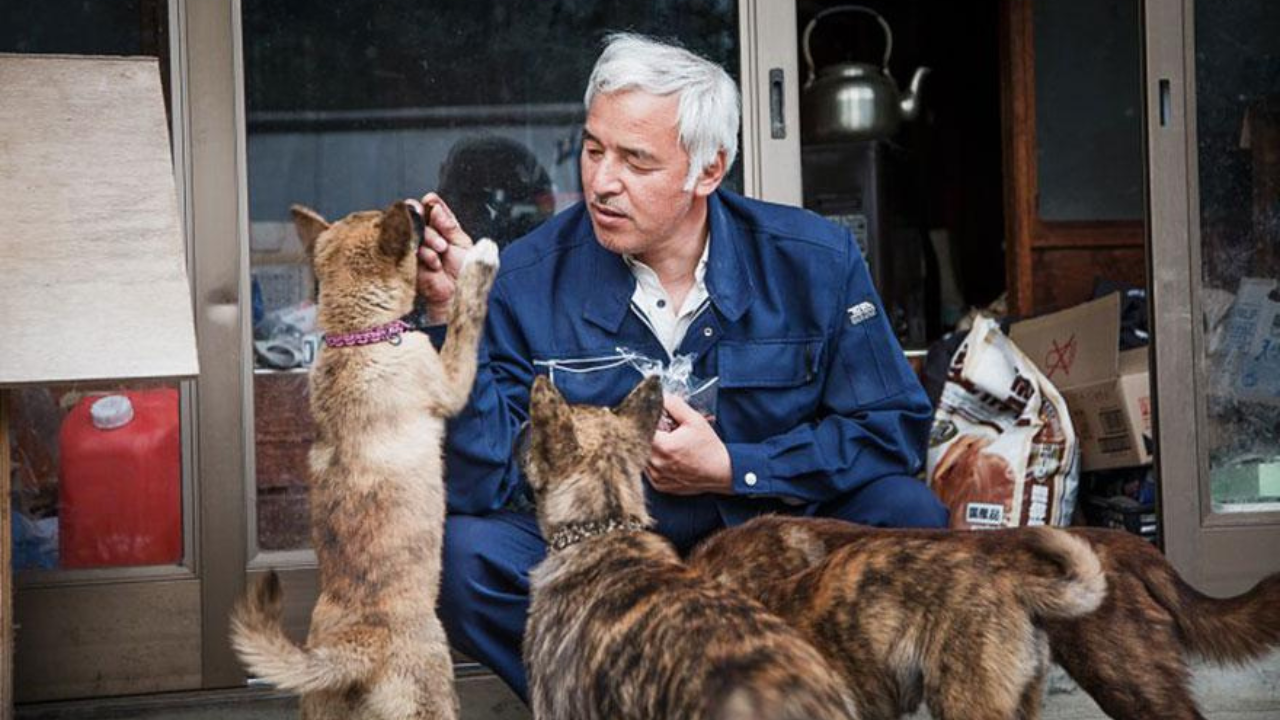
March 11, 2011, changed everything on the northeastern coast of Japan. A massive 9.0 magnitude earthquake struck. Minutes later, a 14-meter tsunami slammed into the Fukushima Daiichi Nuclear Power Plant. Meltdowns hit three reactors. The government panicked. Officials ordered an immediate evacuation of everyone within a 20-kilometer radius. Over 150,000 citizens fled their homes in a frantic rush, leaving behind their belongings, their communities, and their animals.
Most people thought they would return in a few days. They didn't. The area became an official exclusion zone overnight. Families were barred from returning, leaving thousands of domestic pets and farm animals locked in houses, chained to posts, or trapped in barns with zero access to food and water.
While the world watched the unfolding disaster from a safe distance, a 54-year-old former construction worker named Naoto Matsumura did something unthinkable. He packed his bags and walked right back into the highly radioactive ghost town of Tomioka. He didn't do it for fame or political protest. He did it because he couldn't stomach the thought of innocent creatures starving to death in the dark.
The Grim Reality Inside the Abandoned Zone
When Matsumura first returned to his hometown of Tomioka, just 12 kilometers from the crippled nuclear plant, the silence was deafening. The vibrant town of over 20,000 people was completely empty of human life. The only sound cutting through the quiet was the frantic barking of chained dogs and the low, desperate moaning of cattle trapped inside unventilated barns.
His initial goal was simple. He wanted to rescue his own family pets. But as he walked through the abandoned neighborhoods, he realized the scale of the horror. Neighbors had left their dogs tied up to porches, assuming they would be back within forty-eight hours. Those dogs were weak, dehydrated, and crying out for help. When Matsumura fed his own animals, the neighborhood dogs started going completely wild. He couldn't just walk away.
The scenes inside the local commercial farms were even worse. Thousands of cows, pigs, and chickens were locked in tight pens. Without anyone to feed them or open the gates, many had already succumbed to starvation by the time he arrived. He described the smell of decay hanging over the town, accompanied by millions of buzzing flies. The animals that survived were emaciated, eating whatever debris they could chew through.
Matsumura took a pair of wire cutters and began snapping chains. He opened barn doors, letting hundreds of cattle and pigs roam free through the empty streets so they could graze on the overgrown weeds. He became a solo rescue operation in a town that the rest of civilization had written off.
Confronting the Government and the Cattle Cull
Matsumura's mission put him in direct conflict with Japanese authorities. A few months after the disaster, the government realized that hundreds of abandoned livestock were roaming the exclusion zone. Instead of launching a rescue or relocation plan, officials issued a mass euthanasia order for all cattle within the restricted area. They viewed these animals as radioactive waste with zero commercial value.
This order infuriated Matsumura. He refused to comply. He actively hid herds of cattle from government workers, building makeshift fences and using abandoned farmland to keep them safe. To him, the government had already abandoned the people of Fukushima, and now they were slaughtering the animals to cover up the mess.
He didn't just save farm animals. His rescue list grew to include stray cats, dogs, honeybee hives, and even an ostrich that had escaped from a nearby ostrich farm. He gave them freedom if they wanted it, and shelter if they stayed close. Two kittens dumped near an evacuation shelter, named Shiro and Sabi, eventually became his permanent roommates, keeping him company in a house with no running water and no reliable electricity.
Living with Extreme Radiation
Everyone wanted to know how he survived the invisible poison in the air. The Japanese Aerospace Exploration Agency (JAXA) conducted medical tests on Matsumura to measure his internal radiation levels. The results were staggering. Scientists informed him that he had the highest level of radiation exposure of any individual tested in the country.
He was breathing radioactive dust, eating food that had been exposed to fallout, and drinking water from local springs before he could secure clean supplies.
Yet, Matsumura remained completely unfazed. Doctors told him that the radiation might take three or four decades to cause serious illness or shorten his lifespan. Given his age when he returned, he figured he would likely die of old age before the radiation caught up with him. He famously told interviewers that he simply didn't care about the personal health risks. The immediate, agonizing death of the animals mattered more to him than a theoretical sickness decades down the road.
He relied entirely on solar panels for minimal electricity to run a computer. He used his platform to blog about the reality of the exclusion zone, exposing what he viewed as the negligence of the Tokyo Electric Power Company (TEPCO) and the national government.
How the World Responded to the Guardian of Fukushima
For the first few years, Matsumura was completely isolated, spending thousands of dollars of his own savings to buy commercial pet food and livestock feed from towns outside the zone. He had to drive out of the restricted area, load up his truck with bags of feed, and smuggle them back into Tomioka.
Eventually, international journalists and documentary filmmakers found him. As his story spread across the globe, donations started pouring in. Animal welfare organizations, independent donors, and volunteers began shipping supplies to the edge of the zone. This outside financial help kept his operation alive. People recognized that while the official policy was to let the zone rot, one man was maintaining a fragile ecosystem of survival.
His work shed light on a massive flaw in global disaster management: the complete omission of animal welfare in emergency evacuation protocols.
Critical Preparedness Steps for Pet Owners
The tragedy in Fukushima offers hard lessons for pet owners and farmers worldwide. Disasters hit without warning, and relying on the idea that you will return home in a few days is a dangerous gamble. Here is what you need to do to ensure your animals don't suffer a similar fate during an emergency.
Build an Animal Emergency Grab Bag
Never leave your house during an evacuation without a dedicated kit for your pets. It needs to be stored right next to your human emergency supplies.
- Pack at least a seven-day supply of dry food and bottled water.
- Include physical copies of vaccination records and medical history in a waterproof bag.
- Keep extra collars, leashes, and a secure crate or carrier ready to go.
Never Tie Down or Cage Animals if You Evacuate
If emergency personnel force you to leave your animals behind, do not leave them restrained.
- Never leave a dog chained to a post or locked in a crate inside a house.
- Do not leave livestock locked inside a barn without an exit route.
- Give them a fighting chance by opening interior doors and gates so they can look for water and escape rising dangers or fires.
Set Up Microchips and Visible ID Tags
During a chaotic evacuation, pets get separated easily. Modern scanners work internationally, making microchipping the single most effective way to get reunited. Ensure the registry profile has your current phone number and an out-of-area emergency contact who won't be affected by the same local disaster.
The government has slowly opened parts of Tomioka for rebuilding over the years, but very few original residents have chosen to move back. The town remains a shadow of its former self. Matsumura still spends his days checking on the local fauna, driving through the quiet streets, and ensuring the remaining animals are fed. He proved that humanity isn't defined by the orders you follow, but by the lives you choose to protect when everyone else walks away.
To support grassroots disaster relief or learn more about localized animal rescue efforts during environmental crises, connect with your local humane society or international disaster response networks to volunteer for animal transport teams.
Fukushima disaster 10 years on: On a mission to feed abandoned animals
This video provides an authentic, on-the-ground look at Naoto Matsumura's daily routine and the environments he navigates inside the exclusion zone.