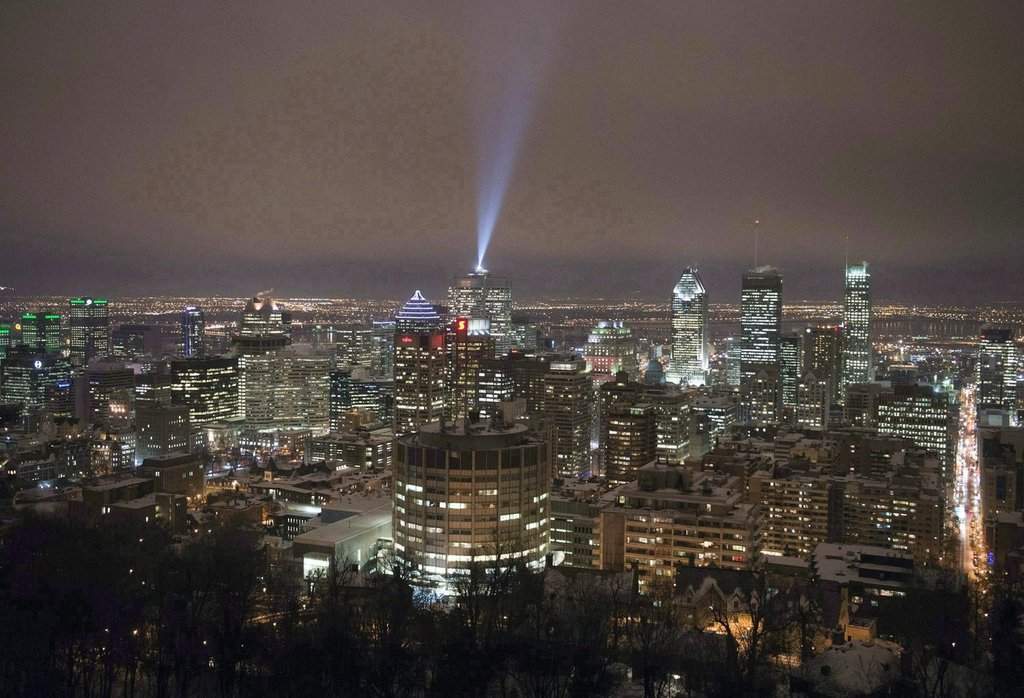
Local politics rarely grab global headlines. Monday night at Montreal City Hall completely broke that rule.
The municipal council voted 54 to 6 to pass a motion expressing solidarity with the Palestinian people. Sounds straightforward on paper. Reality inside the chamber was messy, tense, and deeply polarized. Projet Montréal, the official opposition party, wanted much more than a soft statement. They pushed for Montreal to officially recognize genocide, declare an apartheid regime, and sever all institutional ties with the Israeli government.
Those heavy provisions didn't survive the night. Minutes before the final vote, Mayor Soraya Martinez Ferrada’s ruling party, Ensemble Montréal, forced through sweeping amendments along party lines. They stripped out the calls to cut ties. They scrubbed allegations of genocide. What remained was a heavily modified text emphasizing broader inclusion, human rights, and general solidarity with civilian victims.
Activists outside weren't happy. Council members inside were openly frustrated. This vote exposed the limits of municipal power when local councils try to tackle foreign policy.
The Clash Over Municipal Scope
Why are city councils debating international wars anyway? That core question fueled hours of sharp debate on Monday.
Mayor Martinez Ferrada argued that foreign affairs belong strictly in Ottawa, not at a municipal council meeting focused on snow removal, housing, and local services. Her administration maintained that stepping into global geopolitics only deepens fractures within Montreal's diverse neighborhoods. Groups like the Centre for Israel and Jewish Affairs (CIJA) echoed this stance, arguing that importing overseas conflicts directly worsens local antisemitism and community hostility.
Projet Montréal councillors saw it differently. Interim leader Ericka Alneus and councillor Alex Norris argued that global suffering ripples directly into local communities. Thousands of Montrealers have family caught in the crossfire. Norris framed the debate as a moral test, pointing out that municipal leaders routinely take stances on other international crises.
Protesters chanting outside made sure nobody inside could ignore them. Palestinian flags filled the freezing or humid night air depending on the season, while activist groups like Montreal Anti-Apartheid pressed for concrete economic divestment, not just words.
What the Amended Motion Actually Says
Stripping the controversial clauses changed the character of the document entirely.
Instead of an aggressive rebuke targeting a specific foreign government's diplomatic status, the final text offers a generalized expression of support for Palestinian civilians and anyone caught in the middle of Middle East hostilities. It leans heavily on upholding international law. It urges federal and provincial leaders to show stronger leadership in resolving the crisis.
Projet Montréal politicians accepted the defeat on their original wording, though they made no secret of their disappointment. Nathalie Goulet, the councillor who introduced the original text, told reporters that leaving any mark at all mattered, even if the final policy was watered down. Conversely, critics from various community organizations argued that even discussing the truncated motion brought unnecessary toxicity into city governance.
Where Montreal Goes From Here
Passage of this motion closes a chaotic chapter, but it opens deeper questions about civic cohesion.
Municipalities across North America are increasingly targeted by grassroots campaigns demanding geopolitical stances. Montreal avoided becoming the largest North American city to sever ties with Israel, stepping back from the path taken by some European municipalities. Yet, the deep wounds among residents remain wide open.
Expect further friction at upcoming agglomeration council meetings where separate motions addressing local antisemitism and synagogue arson attacks are up for debate. Local leaders face an uphill battle trying to mend trust across neighborhoods while global tensions continue to dictate local emotional weather.
Focus on local community building and municipal service delivery remains the official stance of the mayoral administration. Activist groups promise they will keep pushing city halls nationwide for heavier diplomatic accountability.