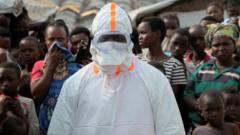
Whenever a UK humanitarian worker returns from an outbreak zone and enters a London hospital for Ebola monitoring, headline writers rush to sound the alarm. It’s easy to see why. "Ebola" and "London hospital" in the same sentence instantly triggers anxiety about a potential domestic outbreak.
When a healthcare volunteer who served on the frontlines of a viral outbreak is admitted to a specialist isolation unit like the Royal Free Hospital, it isn't a sign of systemic failure. It's proof that public health protocol is working exactly as designed.
Understanding how medical observation works, what triggers an isolation admission, and why the general public remains safe during these scares cuts through the noise.
How Ebola Screening and Patient Transfer Actually Work
When healthcare volunteers return to the UK from regions experiencing active viral outbreaks, they don't simply walk through airport security and head home. Public health agencies operate structured monitoring schemes for high-risk individuals.
If a worker reports potential exposure—such as a needle-stick injury, a breach in personal protective equipment (PPE), or early symptoms like a fever or headache—precautionary isolation protocols engage immediately.
- Immediate Triage: The worker reports symptoms or exposure events through the designated returning worker hotline.
- Secure Transport: If deemed moderate or high risk, transport to a specialist infectious disease facility is arranged via military aircraft or specially equipped isolation ambulances.
- High-Level Isolation: The patient is placed in a specialized unit, such as the High-Level Isolation Unit (HLIU) at the Royal Free Hospital in London, featuring negative pressure ventilation and strict bio-containment.
- Diagnostic Testing: Blood samples are analyzed in high-security laboratories to confirm or rule out the presence of the virus.
Being monitored in an isolation ward does not mean a patient has tested positive. In fact, many individuals admitted for evaluation test negative and are discharged once the 21-day incubation window passes safely.
Why the Public Risk Remains Negligible
Ebola is terrifying, but its transmission dynamics make a widespread outbreak in a modern healthcare environment virtually impossible.
Unlike respiratory pathogens such as influenza or SARS-CoV-2, Ebola does not spread through the air over long distances. It requires direct contact with bodily fluids—blood, vomit, saliva, or sweat—from an individual who is already showing symptoms.
Key Fact: An individual infected with Ebola is not contagious during the incubation period before symptoms appear.
Because returning medical workers are trained to monitor their temperature twice daily and self-isolate at the very first sign of feeling unwell, the chance of transmitting the virus to members of the general public or fellow passengers on a flight is extremely low.
Transmission Route Comparison:
- Influenza / COVID-19: Airborne droplets -> High community transmission
- Ebola Virus Disease: Direct body fluid contact -> Contained within clinical settings
The Role of Specialist Facilities Like the Royal Free Hospital
The UK’s capability to handle dangerous pathogens relies on specialized NHS centers. The Royal Free Hospital in Hampstead, London, houses the UK's primary High-Level Isolation Unit.
The unit utilizes isolator tents surrounding the patient's bed, dedicated air scrubbing equipment, and strict waste disposal protocols. Staff entering the unit wear advanced powered air-purifying respirators (PAPRs) and protective suits.
Historically, this unit successfully treated high-profile cases, including British nurses William Pooley and Pauline Cafferkey, proving that even when active cases reach UK soil, containment remains absolute.
What Happens Next for Medical Deployments
The continuous monitoring of returning volunteers ensures that humanitarian aid can continue safely. Without aid workers stepping up on the ground in outbreak zones, global viral threats would grow unchecked.
If you're following news reports about healthcare workers under observation:
- Check official health advisories: Follow updates directly from the UK Health Security Agency (UKHSA) or the NHS rather than unsourced social media claims.
- Understand the terminology: "Under observation" or "being monitored" means precautionary testing; it is not a confirmed infection.
- Respect worker privacy: Aid workers undertake immense personal risk to contain threats abroad; public health protocols are built to protect them and the community without stigma.
Precautionary admissions aren't cause for panic. They are the visible proof of a containment system doing its job.