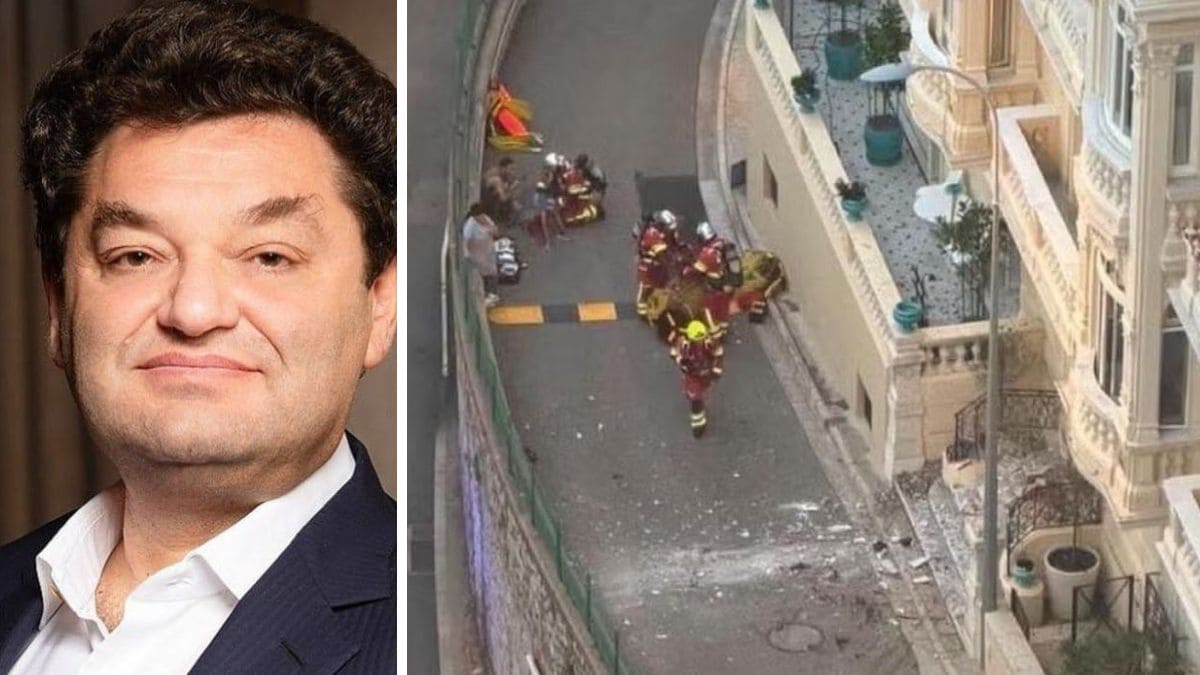
Monaco doesn't do bombs. The ultra-wealthy Mediterranean tax haven built its entire brand on absolute security, pristine streets, and a quiet understanding that your millions buy you total peace of mind. That illusion shattered just before 9:00 PM on Monday, June 29, 2026.
A makeshift shrapnel device, packed tight with bolts and hidden inside a backpack, exploded in the entrance hall of a residential building on Rue Révérend-Père-Louis-Frolla. The blast ripped through the quiet La Rousse-Saint Roman district, tearing off a woman's feet and leaving blood pooled on the manicured pavement.
The primary target wasn't Monaco. It was Vadim Ermolaev, one of Ukraine's richest real estate tycoons.
Ermolaev and his partner are fighting for their lives in a Nice hospital. Their 13-year-old son sustained less severe injuries. As French and Monegasque authorities shut down borders to hunt for a suspect caught on CCTV fleeing into France, the message reverberating through the diaspora is chilling. If you are a high-profile Ukrainian exile with complicated allegiances, your money can no longer buy you safety.
The Anatomy of the Attack on Rue Frolla
This wasn't a warning shot. Monaco's Minister of State, Christophe Mirmand, noted the device was clearly packed with anti-personnel debris designed to maximize human carnage. Security footage tracked a lone operative dumping the backpack at the building's entrance shortly before the detonation.
The blast wave shattered glass across the street, sending four bystanders into severe shock. For a principality that prides itself on being an impenetrable bubble, this marks what officials call the first-ever terrorist-style assassination attempt in modern Monegasque history. Prince Albert II cut short a trip to Germany, returning immediately to manage a joint manhunt with French authorities.
But to understand why someone went to this extreme, you have to look past the glitz of Monte Carlo and dive straight into the muddy waters of the Dnipro business elite.
Who is Vadim Ermolaev
Ermolaev didn't make his fortune quietly. Worth an estimated $800 million to nearly $1 billion depending on the year, he fundamentally reshaped the skyline of Dnipro, a major industrial and logistical hub in eastern Ukraine. Through his primary corporate umbrella, Alef, he controlled vast swaths of local agriculture, manufacturing, and commercial real estate. If you walked through the center of Dnipro, you were walking past his investments, including the massive Most-City shopping center and the luxury Cascade Plaza.
But the tycoons of eastern Ukraine have always played a dangerous, multi-sided game.
When Russia annexed Crimea in 2014, Ermolaev chose commercial survival over strict patriotism. He re-registered his businesses, particularly his lucrative alcohol and manufacturing interests, under Russian regulatory authorities to keep operating in the occupied territory. To Kyiv, this was a betrayal. To Ermolaev, it was just business.
That calculated gamble caught up with him in December 2023. The Ukrainian government slapped him with heavy economic sanctions, freezing assets and effectively turning him into a persona non grata back home.
The Myth of the Monaco Battalion
Ermolaev wasn't around to face those sanctions. He had already slipped out of Ukraine in the early days of the 2022 invasion, moving his immediate operations to a luxury existence on the French Riviera. He wasn't alone.
He became a focal point of a scathing investigation by Ukrainian media outlet Ukrainska Pravda titled "Battalion Monaco." The exposé shamed a group of ultra-wealthy Ukrainian politicians and oligarchs who chose the beaches of the Côte d'Azur over the defense of their homeland.
Ermolaev fought back hard against the narrative. He ran aggressive public relations campaigns pointing out that his private plane was destroyed by Russian shelling, his properties in occupied territories were looted, and that he had quietly donated millions to the Ukrainian war effort. He even renounced his Ukrainian citizenship to become a citizen of Cyprus in an attempt to distance himself from the chaos.
None of it cleansed the stain. To hardline Ukrainian nationalists, he was a corrupt draft-dodger who capitalized on blood money. To Russian intelligence, he was an eastern-born tycoon who refused to fully bend the knee after the full-scale war began.
A Growing List of Enemies
Who actually planted the backpack? The investigation is too fresh to assign definitive blame, but the reality is that Ermolaev had generated a massive, overlapping web of adversaries.
- Russian Saboteurs: The Kremlin has a well-documented track record of eliminating high-net-worth individuals from eastern Ukraine who refuse to cooperate with occupation forces or who redirect their wealth toward Western banks.
- Radical Nationalists: Hardline Ukrainian factions have grown increasingly furious with the "Monaco Battalion" living in absolute luxury while ordinary citizens die in trenches. The fact that Ermolaev’s son, Artur, was detained in Cyprus just months ago in December 2025 under an Interpol warrant hints at the tightening legal and extrajudicial net surrounding the family.
- Corporate Rivals: The corporate landscape in Ukraine has always been cutthroat. With Ermolaev sanctioned and vulnerable, a permanent removal opens up immense vacuums in the Dnipro real estate market.
The Security Illusion is Dead
For years, the exiled elites of Eastern Europe believed that crossing the EU border granted them a magic shield. They assumed western European police forces and strict surveillance states would isolate them from the raw violence of the geopolitical arena.
The Monaco bombing changes the math completely. It proves that the conflict is fluid, borderless, and deeply personal. A billionaire's security detail can stop a disorganized mugger, but it cannot stop a professional operative dropping a shrapnel-filled backpack in a residential lobby.
If you are a wealthy exile reading this from a villa in Cap d'Antibes or a penthouse in Monte Carlo, you need to understand that the old rules are gone.
Immediate Next Steps for High-Risk Assets
If you manage security, legal representation, or logistics for high-net-worth individuals tied to the region, the Rue Frolla blast requires immediate operational adjustments.
- Audit All Common-Area Access Points: Do not rely on building security. The Monaco attack succeeded because the device was left in a communal lobby entrance. Private verification of all delivery drop-offs and common vestibules is now mandatory.
- Re-evaluate Static Transit Routes: The suspect monitored Ermolaev’s routine. If your principal leaves or enters a building at predictable hours via the same doorway, you are inviting a static device attack.
- Enhance Counter-Surveillance: The operative was caught on CCTV fleeing, meaning they spent days scouting the location beforehand. Shift security focus outward to identify individuals filming or lingering near the property lines.
The Mediterranean is no longer a sanctuary. It is a front line.