National political coverage loves to focus on coastal elites and beltway drama. But if you want to know where the actual soul of the American left is being decided, you need to look at three states in the Upper Midwest. This August, voters in Michigan, Minnesota, and Wisconsin are heading to the polls for a series of high-stakes primary elections that will do more than just pick candidates. They will dictate exactly how the Democratic party communicates with working-class voters ahead of the 2028 presidential race.
The standard media narrative is simple. It frames these battles as a repetitive rerun of the establishment versus the insurgents. But that lazy analysis misses the entire point. The ideological struggle between moderate and progressive Democrats is playing out across a region with a deep, conflicted history of populism. The outcome of these races won't just choose the next crop of legislators. It will validate or destroy competing theories on how to win back the industrial heartland.
The Battlegrounds Splitting the Great Lakes Region
Three distinct races represent the core of this internal party dispute. Each offers a unique window into what voters are actually looking for when they step into the voting booth.
Minnesota and the Senate Seat Showdown
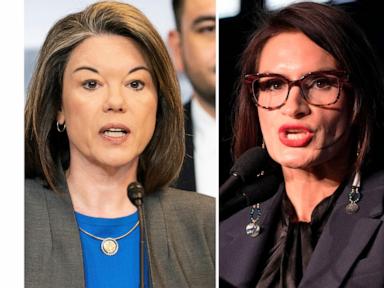
The retirement of Democratic Senator Tina Smith has opened up a vacuum in Minnesota. The resulting primary on August 11 has quickly devolved into a bitter proxy war. On one side stands Representative Angie Craig, a conventional moderate backed heavily by House Minority Leader Hakeem Jeffries and national party leadership. Craig is running on pragmatism and pure electability. She frames Minnesota as a razor-thin swing state where any shift toward the hard left could hand the seat directly to Donald Trump's Republican allies.
On the other side is Lieutenant Governor Peggy Flanagan. Backed by progressive heavyweights like Bernie Sanders and Elizabeth Warren, Flanagan is taking direct aim at corporate influence. She has held fiery press conferences calling out what she terms secretive dark money groups working behind the scenes to secure Craig's victory. Craig counters by pointing out that Flanagan herself raised money from major corporate entities while leading the Democratic Lieutenant Governors Association. It is a classic matchup that forces voters to choose between an institutional insider and an economic populist.
Michigan and the Open Senate Seat
Michigan votes even sooner, on August 4. Senator Gary Peters is retiring, leaving behind a highly competitive seat that Democrats absolutely must retain to keep any path to a Senate majority alive. Peters has thrown his weight behind Representative Haley Stevens, a moderate who aligns closely with traditional party structures.
Stevens faces an energetic challenge from progressive activist and physician Abdul El-Sayed. For progressives, El-Sayed represents the ultimate test case. National groups like the Progressive Change Campaign Committee view this specific primary as perhaps the most critical race in the country. They believe that if an unapologetic progressive can win a statewide race in a premier battleground like Michigan, it will permanently silence the argument that left-wing policies are a liability in general elections.
Wisconsin and the Race for the Governor Mansion
The drama extends to Wisconsin's August 11 gubernatorial primary. State Representative Francesca Hong, a democratic socialist from Madison, has seen a late surge in support. She is challenging established party figures, including former Lieutenant Governor Mandela Barnes and current Lieutenant Governor Sara Rodriguez. Hong is explicitly rejecting the cautious, incremental platform that Wisconsin Democrats have relied on for years. She wants massive structural reform, betting that raw enthusiasm can overcome the traditional institutional advantages her opponents hold.
Understanding the Roots of Midwestern Populism
To truly see why these primaries are so fiercely contested, you have to throw out the idea that the Midwest is a monolith of quiet moderation. The Upper Midwest has a long, chaotic history of radical politics stretching back over a century.
This is the region that birthed the Progressive Era reforms of the early twentieth century. It is the birthplace of the Wisconsin Progressive Party and Minnesota's unique Democratic-Farmer-Labor party alliance. But it is also a region that elected ultra-conservative figures like Senator Joseph McCarthy.
Political scientists often point out that the Great Lakes region thrives on intense competition between highly articulated left-wing populism and equally aggressive right-wing populism. Voters here are not necessarily looking for a safe middle ground. They are frequently drawn to leaders who promise to fight the system directly. The real disagreement between moderates and progressives is not about whether the system is broken. It is about who the enemy is and how to beat them.
The Secretive Money and Corporate Influence Argument
A central flashpoint in all three of these races is campaign finance. Progressives have weaponized the issue of outside spending to paint moderates as beholden to corporate interests. They argue that corporate political action committees pour millions into these primaries specifically to smother policies like single-payer healthcare, aggressive climate mandates, or strict labor regulations.
Moderates view this as a deeply unfair distraction. Candidates like Craig and Stevens argue that building a winning coalition requires accepting help from a broad range of allies. They believe that purity tests do nothing but dry up resources that will be desperately needed in November when facing a well-funded Republican apparatus. This dispute exposes a massive divide in how both factions view political power. Progressives think money corrupts the message. Moderates think a message without money cannot win an election.
The Electability Myth and the 2028 Horizon
Let's talk about electability because it is the word that gets thrown around the most while meaning the least. Moderates consistently warn that progressive candidates will alienate independent voters and suburban moderates. They point to recent high-profile losses in other states as proof that voters reject economic populism when it feels too disruptive. Craig explicitly called attention to recent progressive primary failures in places like Maine, warning that running an insurgent candidate in a true swing state is a recipe for disaster.
Progressives counter that the moderate strategy is a slow death march. They argue that playing defense and offering uninspiring, incremental policies fails to turn out the very voters Democrats need: young people, working-class communities, and voters of color. For progressives, these Midwestern races are the absolute last stand to shape the party's direction before the 2028 presidential primary cycle kicks off in earnest. They know that if they lose here, the national party will lock in a moderate platform for the foreseeable future.
What to Watch on Election Night
If you want to understand where the momentum is heading, ignore the overall vote totals early on and focus on specific geographic regions within these states on election night.
First, track the suburban rings around Detroit, Minneapolis, and Milwaukee. These areas have trended toward Democrats in recent cycles, driven largely by college-educated voters who tend to prefer moderate, institutional candidates. If progressives manage to cut into those moderate margins in places like Oakland County, Michigan, or Hennepin County, Minnesota, it means their economic message is breaking out of its usual activist bubble.
Second, look closely at turnout in rural, post-industrial counties. These are the places that swung heavily toward the right over the last decade. If a progressive candidate like El-Sayed or Flanagan shows a surprise spike in voter turnout in these areas, it validates the progressive theory that a populist economic message can re-engage working-class voters who feel abandoned by traditional establishment politics.
Finally, watch the margins in the major urban centers. Progressively aligned candidates must run up massive, overwhelming numbers in cities like Madison, Minneapolis, and Detroit to offset the moderate advantages in wealthier suburban districts. A lower-than-expected turnout in these urban cores will seal a victory for the moderate wing of the party.
Real Actionable Insights for Political Observers
Instead of just watching the horse race, use these specific indicators to evaluate how the political winds are shifting in real-time:
- Check the post-primary unity statements. Look at how quickly the losing faction endorses the winner. Deep fractures that persist into late August indicate a high risk of voter drop-off in the general election.
- Watch the independent expenditure reports filed with the Federal Election Commission in the week immediately following the primaries. See if national groups pull back or double down on their financial commitments based on who wins.
- Monitor the policy rhetoric of the winning candidates. If moderate winners start adopting progressive talking points on labor or corporate regulation, it shows the insurgent movement succeeded in moving the party's baseline, even if they lost the actual seat.
The Upper Midwest remains the ultimate proving ground for American politics. The choices made by primary voters in these states will ripple across the entire country, setting the tone for the next major realignment of the Democratic coalition.