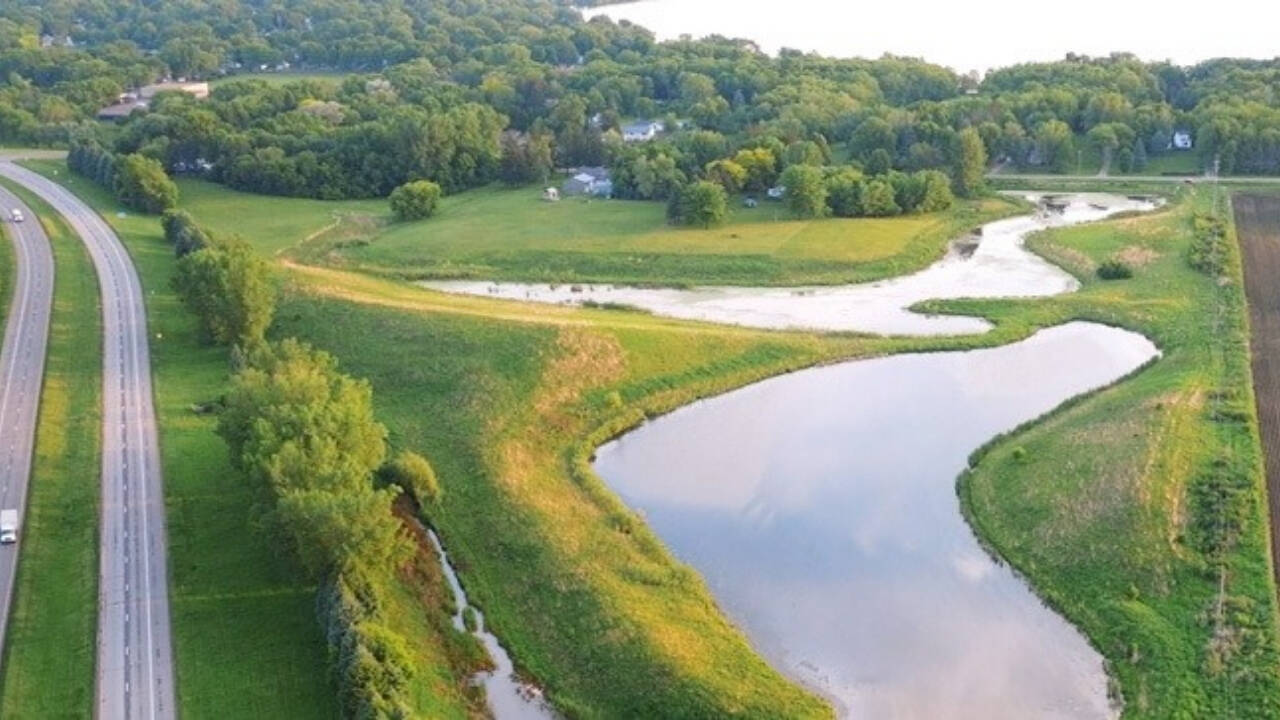
State-funded conservation grants often vanish into bureaucratic black holes, producing little more than glossy reports and empty promises. But look at what happened in southern Minnesota when lawmakers directed money toward a specific, troubled watershed.
Back in 2020, Minnesota approved $1.918 million for the Shell Rock River Watershed Habitat Restoration Program, known as Phase IX. By the time the final report landed from the Lessard-Sams Outdoor Heritage Council, the initiative hadn't just met its goals—it shattered them. Instead of the initial target of 483 acres, the project successfully protected, restored, or enhanced 588 acres of vital land and water.
If you want to understand how regional environmental management can actually deliver results without dragging on indefinitely, look closely at this project.
Where the Money Went
Real ecological recovery requires more than planting a few trees and walking away. The Shell Rock River Watershed District took the $1.918 million appropriation—channeled through the Minnesota Department of Natural Resources—and broke it down into concrete land acquisition and engineering projects.
The funding directly supported three major property transactions:
- The Glenville Property, closed in March 2021.
- The Bancroft Property, secured in September 2021.
- The Church Lake Property, where the deed was officially transferred to the Minnesota Department of Natural Resources in December 2024.
These land purchases accounted for 218 acres of permanent protection. But acquiring land is only half the battle. The remaining funds went straight into heavy-duty restoration work across 370 additional acres of wetlands and habitats.
Fixing Impaired Ecosystems
The Shell Rock River system faces constant pressure from agricultural runoff, phosphorus loading, and historical habitat degradation. Shallow-lake systems like these rely heavily on balanced vegetation and functional wetlands to filter out pollutants before they reach public water supplies or drift downstream into the Cedar and Mississippi rivers.
Phase IX tackled this head-on through targeted projects that shifted the landscape back toward its natural state. The Bancroft Wetland Restoration began moving dirt in June 2024, wrapping up construction by autumn before final seeding finished in the spring of 2025.
Simultaneously, the district launched the Panicum Prairie Enhancement Project. Contractors worked across 300 acres to establish native prairie vegetation, hitting substantial completion early in 2025.
Expanding the Scope Mid-Stream
A rare win in government spending happened when planners realized they had room to maneuver. When the district noticed slight cost savings and potential alignment with other initiatives, they expanded the scope of Phase IX to include the Fountain Lake In-Lake Habitat Project.
Workers dropped rock reefs and boulder clusters directly into the water to create structural fish habitat. By folding this extra work into the existing phase, the program pushed its final footprint up to 588 acres—over 100 acres more than what was originally promised on paper.
All original grant funds were fully expended, totaling precisely $1.918 million, with total project value reaching roughly $1.947 million once local factors and adjustments were calculated.
Maintaining Momentum After the Grant
One-off grants mean nothing if the local infrastructure lacks the capacity to maintain them. The Shell Rock River Watershed District avoids this trap by relying on a mix of funding mechanisms, including a citizen-driven local option sales tax and local levies, ensuring these restored acres aren't abandoned once state oversight ends.
When local agencies pair strict ecological targeting with diversified funding streams, conservation projects stop being financial drains and start functioning as permanent community assets.
Check your local watershed district's public reports to see how regional conservation funds are allocated in your backyard.