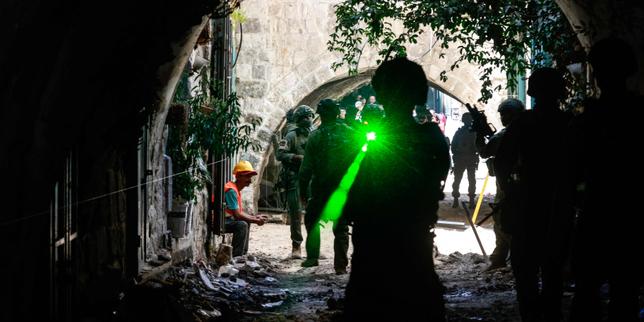
Another afternoon in the West Bank. Another surrounded house. Another family mourning a young man whose body they cannot even bury.
On Wednesday, June 24, 2026, an Israeli military operation in the small northern town of Al-Yamoun, just west of Jenin, ended exactly like dozens of others have this year. Mohammad Nazem Ezzat Zayed, a 29-year-old Palestinian, was shot and killed. The Israeli army quickly slapped the standard label on him, calling him a targeted terrorist during operational activity. Local witnesses and medical officials tell a much darker story of undercover operatives, heavy gunfire, and an intentional delay in medical care. Recently making news in related news: The Trump Curbs Israel Reality Nobody Talks About.
This isn't a rare incident anymore. It is the status quo. To understand what is happening in Palestine right now, you have to look past the brief headlines and examine how these raids actually function on the ground.
What Really Happened in Al Yamoun
The raid didn't start with a loud convoy of armored vehicles. That comes later. It began quietly on Wednesday afternoon when an undercover special forces unit infiltrated the town of Al-Yamoun. These units, often from the specialized Duvdevan division, slip into Palestinian communities using civilian vehicles, disguises, or local attire to catch their targets completely off guard. Additional details on this are covered by Reuters.
Their objective was a specific house where Zayed was located. Once the undercover operators surrounded the building, the quiet disappeared.
Witnesses stated that the soldiers opened fire directly on the house without warning. Zayed was hit multiple times by live ammunition. According to reports from the Palestinian health ministry and local Red Crescent workers, paramedics rushed to the scene immediately after hearing the gunshots. They didn't get far. Israeli soldiers blocked the ambulances, refusing to let medical crews reach the bleeding 29-year-old.
He was left on the floor inside the house. He bled to death before anyone could give him first aid.
To make matters worse for the family, the military didn't just leave after the killing. They took Zayed's body with them. Withholding the remains of Palestinians killed during operations is a frequent military tactic, leaving families in a state of suspended grief without the ability to hold a traditional funeral.
The Deadly Strategy of Undercover Units
Mainstream international reports usually describe these events with passive phrasing like "a Palestinian was killed during clashes." That language hides the actual mechanics of modern West Bank raids.
The use of units like Duvdevan has shifted the nature of these incursions. These aren't defensive actions. They are highly aggressive, proactive operations designed for urban warfare in tightly packed refugee camps and villages.
The protocol is remarkably consistent across different towns:
- Infiltration: Undercover operatives enter in commercial delivery trucks or ordinary cars to secure the perimeter before anyone realizes they are there.
- Overwhelming Firepower: The target area is hit with heavy fire, sometimes accompanied by shoulder-fired missiles or shoulder-launched rockets if the target refuses to come out.
- Medical Blocking: Soldiers seal off the perimeter. Ambulances are routinely turned away at gunpoint, a practice heavily documented by international groups like Defense for Children International and B'Tselem.
- Confiscation: The operation wraps up with the military pulling back, often carrying away detainees or the bodies of the dead.
When you look at this sequence, it becomes clear that survival rates for individuals inside these surrounded buildings are incredibly low. The denial of immediate medical care effectively turns a severe wound into a death sentence.
Looking at the Numbers in 2026
If you think the Al-Yamoun raid is an isolated event, the data proves otherwise. The escalation across the West Bank has reached staggering levels over the last few years.
Since the start of 2026 alone, Israeli forces have killed at least 71 Palestinians in the West Bank. If we expand the view to include the timeline since late 2023, the scale of destruction becomes even more apparent. Over 1,170 Palestinians have been killed by the army and armed settlers in these territories. More than 12,600 have been wounded, and close to 23,000 individuals have been swept up into the military detention system.
Entire neighborhoods are being fundamentally altered. Just a day before the raid on Zayed's location, military bulldozers tore up the main entrances to Al-Yamoun and nearby Silat al-Harithiya. The heavy blades destroyed asphalt, ripped up water pipelines, and shattered civilian infrastructure. This tactic serves a dual purpose. It clears potential roadside explosives for military vehicles, but it also inflicts heavy collective economic punishment on the local population.
The Psychological Toll of Withholding the Dead
It is hard to overstate the cruelty of body withholding. For a family, the loss of a son or brother is devastating enough. Denying them the right to a burial turns that grief into an open, agonizing wound.
Human rights organizations have repeatedly challenged this policy in courts, pointing out that it violates basic international humanitarian law and amounts to collective punishment. The Israeli defense establishment views these bodies as bargaining chips, holding them for future prisoner exchanges or using them as leverage against local factions.
For the people living in Jenin and Ramallah, this policy means that the violence doesn't end when the shooting stops. The trauma lingers for months, sometimes years, as families petition authorities just to receive a shroud.
The Fragmented Reality of the West Bank
International observers often wonder why the Palestinian Authority doesn't step in during these raids. The truth is simple. They can't, and honestly, they don't want to risk their own survival.
Under the decades-old security coordination agreements, the Palestinian Authority's security forces pull back into their barracks whenever the Israeli military signals an incoming raid. This leaves civilian populations entirely exposed. The vacuum of protection has naturally led to the rise of localized, independent armed groups in places like the Jenin camp, Nablus, and Tulkarm. These young fighters don't answer to the traditional political factions. They are a direct product of constant military pressure and a total lack of a future.
When a raid happens in a place like Al-Yamoun, it reinforces a bitter reality for the residents. They are entirely on their own.
What This Means for the Near Future
The killing of Mohammad Nazem Ezzat Zayed won't change the political landscape overnight, but it adds another layer of dry tinder to an already burning region. Every raid that ends with blocked paramedics and a confiscated body ensures that more young men will choose to pick up weapons tomorrow.
The strategy of crushing resistance through relentless urban incursions is failing to produce stability. Instead, it is institutionalizing a permanent state of low-level warfare across the entire West Bank.
If you want to track where this conflict is heading next, stop watching the empty political speeches in international halls. Watch the dirt roads of Al-Yamoun, the rubble left by the bulldozers, and the families who are forced to mourn without a body to bury. The real story is happening there, on the ground, every single day.


