{
  "component": "Bento",
  "props": {
    "use_case": "soccer-player",
    "cards": "lmss"
  },
  "children": [
    {
      "component": "BentoCard",
      "props": {
        "size": "l",
        "heading": "Mehdi Taremi",
        "subheading": "60 International Goals for Iran",
        "bgImageUrl": {
          "component": "Image",
          "props": {
            "src": "https://encrypted-tbn0.gstatic.com/licensed-image?q=tbn:ANd9GcTgbJbQ_xLeFV7iCy98cBLUraFWXkEvrA-jzmKSyESo6oRRyWRSeqxq8cArz5RHXWr4KKbOBZfh2LH7n_o"
          }
        },
        "ext": {}
      },
      "actions": {
        "open_url": "https://en.wikipedia.org/wiki/Mehdi_Taremi"
      }
    },
    {
      "component": "BentoCard",
      "props": {
        "size": "m",
        "heading": "91 Porto Goals",
        "subheading": "Four seasons dominating Portugal's top flight",
        "ext": {}
      },
      "actions": {
        "open_url": "https://en.wikipedia.org/wiki/Mehdi_Taremi"
      }
    },
    {
      "component": "BentoCard",
      "props": {
        "size": "s",
        "heading": "2 Years",
        "subheading": "Military service break at age 19",
        "ext": {}
      },
      "actions": {
        "open_url": "https://en.wikipedia.org/wiki/Mehdi_Taremi"
      }
    },
    {
      "component": "BentoCard",
      "props": {
        "size": "s",
        "heading": "27 Years Old",
        "subheading": "Late age when entering European football",
        "ext": {}
      },
      "actions": {
        "open_url": "https://en.wikipedia.org/wiki/Mehdi_Taremi"
      }
    }
  ]
}
Most modern football prodigies follow a strict, highly sanitized blueprint. They enter elite European academies at age eight, sign professional contracts by seventeen, and possess media-trained personalities by twenty.
Mehdi Taremi blew that blueprint to pieces.
Instead of training on pristine pitches in western Europe, Taremi spent his late teens completing mandatory military service in the Islamic Revolutionary Guard Corps Navy. He was stationed at a garrison in Bushehr, completely removed from professional football. By the time he finally made his debut in a major European league, he was 27. It's a trajectory that shouldn't work. In the hyper-competitive ecosystem of modern football, a two-year hiatus in your late teens is usually a career death sentence.
Yet, Taremi managed to conquer Portugal with Porto, earn a historic move to Inter Milan, and solidify himself as one of Asia's most lethal modern marksmen.
Understanding Taremi requires looking past standard scouting reports. His story isn't just about late-blooming talent; it's about a bizarre blend of geographical isolation, bureaucratic hurdles, and an unorthodox style of play that European defenders still struggle to read.
The Conscription Crisis That Almost Ended Everything
Football analysts love to throw around the phrase "late bloomer" when discussing players who break out after 23. But Taremi's delay wasn't down to a lack of ability. It was a matter of state law.
Born in the hot, humid port city of Bushehr, Taremi learned his trade under his father, Alishah, an amateur player in the local leagues. The raw talent was obvious early on. By 2010, he had cracked the senior squad at Shahin Bushehr. Then, the progress stopped dead.
In Iran, military service is mandatory for young men. While elite athletes often secure placements with military-affiliated sports clubs to keep playing, Taremi's paperwork stalled. He didn't get a sporting assignment. Instead, he spent 2011 to 2013 serving in a standard naval garrison.
Think about that. During the precise years when a modern forward refines his tactical awareness and explosive power, Taremi was performing military drills. He didn't play a single minute of professional football for two years.
When his service ended in 2013, he had to start completely over from the bottom. He signed with second-tier Iranjavan, scoring 12 goals in 22 games. That single season caught the eye of Ali Daei, the legendary Iranian striker then managing Persepolis. Daei saw something in the young forward that European scouts routinely miss: a terrifyingly unpredictable spatial intelligence born from street football rather than structured academy training.
The Tactical Chaos of a Late Arrival
When Taremi finally landed in Europe with Portuguese side Rio Ave in 2019, defenders had no idea what to do with him. He wasn't a traditional target man, nor was he a pure speed merchant. He was something far more frustrating to play against.
Academy-trained defenders are conditioned to read specific patterns. They know exactly how a striker will run based on the positioning of the midfielder's hips. Taremi doesn't move like that. His game is built on a chaotic, highly intuitive understanding of space.
- The Illusion of Sluggishness: Taremi often looks like he's coasting out of a play, only to snap into a dangerous position the millisecond a defender turns their head.
- Mastery of the Half-Space: He drops deeper than standard number nines, dragging central defenders into areas where they hate to mark.
- The Penalty Magnet: He possesses an elite, highly controversial ability to shield the ball inside the box, inviting reckless tackles. He doesn't dive; he simply positions his body so perfectly that a defender must either let him shoot or commit a foul.
His single season at Rio Ave yielded 18 league goals. Porto saw enough and bought him immediately. Over the next four years, he scored 91 goals for the Portuguese giants, won the league golden boot twice, and regularly dismantled elite defenses in the Champions League. His spectacular overhead kick against Chelsea in 2021 wasn't just a flash in the pan; it was the ultimate realization of a player who relies on pure, instinctive improvisation over rigid tactical programming.
The Pressure of Team Melli
Playing for the Iran national team—Team Melli—carries an emotional weight that few European players will ever comprehend. Football in Iran isn't just entertainment; it's a mirror for the country's complex geopolitical reality.
Every time Taremi steps onto the pitch at tournaments like the 2026 FIFA World Cup, he's navigating a minefield. Fans demand solidarity with domestic social movements. The state demands compliance. International media constantly pushes for political statements.
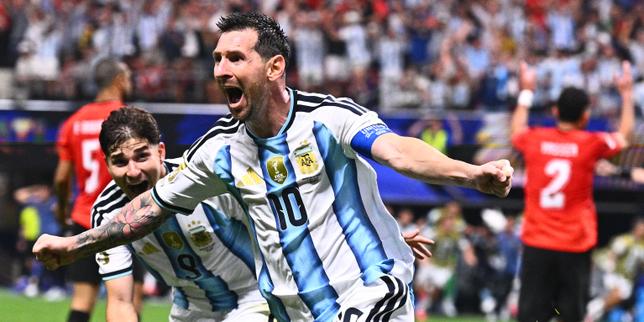
Taremi has openly argued that sport and politics shouldn't mix, but in reality, he's never allowed that luxury. During Iran's recent 1-1 group stage draw against Egypt, every movement, pass, and gesture from the veteran striker was analyzed through both a sporting and political lens. Carrying that type of psychological baggage while trying to break down a low-block defense requires a specific type of mental resilience—one likely forged during those long months in the Bushehr naval garrison.
Your Next Steps to Understand the Iranian Game
If you want to look deeper into how players like Taremi emerge from outside the traditional academy system, don't just watch mainstream European highlights.
- Watch Persian Gulf Pro League Highlights: Check out platforms broadcasting games from Persepolis or Esteghlal to see the physical, uncompromising style of football that shapes these players before they head west.
- Track Asian Football Confederation (AFC) Qualifiers: The road to the World Cup through Asia features some of the most tactically bizarre and hostile environments in global football. Seeing how Taremi handles away legs in harsh climates explains his resilience.
- Study League Trajectories: Pay attention to the Portuguese Primeira Liga and the Greek Super League (where Taremi spent time with Olympiacos). These leagues act as the primary launchpads for unorthodox talent overlooked by the English or Spanish scouting networks.