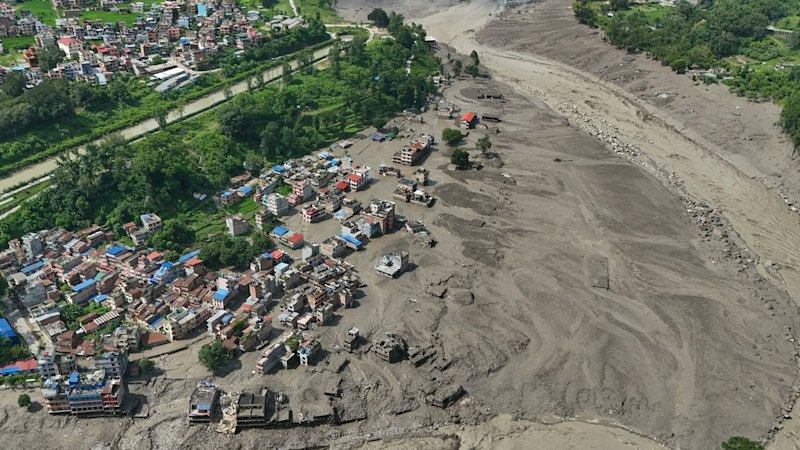
A massive wall of water tore down the Bhote Koshi and Trishuli river valleys with terrifying speed, leaving devastation in its wake. At least 160 people are confirmed dead, and hundreds of locals and foreign travelers remain unaccounted for after the disaster struck the Rasuwa and Nuwakot districts near the Tibet border.
Headlines have focused heavily on the raw numbers and the nationalities of missing tourists, including dozens of Australians, Americans, and Canadians. But focusing solely on the missing tourist lists misses the wider structural reality of how this disaster unfolded, why local warning systems failed, and what it means for the fragile Himalayan infrastructure.
The Anatomy of an Upstream Disaster
The catastrophe didn't start with heavy local rainfall in Nepal. In fact, weather conditions in Rasuwa were relatively dry when the surge hit. Instead, the flood originated upstream in Tibet, triggered by a combination of seismic activity and a sudden glacial lake outburst or rockslide that blocked the Lhende river before catastrophically failing.
When water breaks through an upstream blockage of that scale, geography acts as an amplifier. Narrow mountain gorges squeeze millions of cubic meters of water into a high-velocity battering ram. By the time the torrent crossed the border into settlements like Timure and Syabrubesi, it had enough force to erase concrete bridges, sweep away multi-story buildings, and dismantle entire market areas in minutes.
This highlights a glaring vulnerability in cross-border disaster management. Nepal bears the lethal and economic brunt of hydrological events originating in sovereign territory upstream, where real-time monitoring data is rarely shared instantaneously. When the river rises without warning from across the border, local SMS alert systems only give people seconds to run. Seconds aren't enough when an entire hillside is collapsing.
Beyond the Casualties: Infrastructure and Energy Shocks
While search and rescue teams use military and private helicopters to pluck survivors from isolated pockets like Dhunche and Mailung, the economic fallout is quietly compounding the crisis.
The disaster didn't just destroy homes; it struck at the heart of Nepal's energy grid. Major hydroelectric projects—including key facilities along the Trishuli and Chilime corridors—suffered severe damage, knocking out more than twelve percent of the country's total power generation capacity overnight. Substations were flooded, transmission lines snapped, and commercial banks along the riverbanks were washed away.
Rebuilding these projects will take months, if not years. More importantly, it exposes the hubris of building heavy infrastructure in narrow Himalayan river corridors without factoring in accelerating climate risks. Glacial retreat and seismic shifts are making these mountain watersheds increasingly volatile.
Why Cross-Border Early Warnings Are Broken
We talk a lot about climate resilience, but practical cross-border cooperation remains deeply flawed. Rivers don't care about geopolitical borders, yet hydrological data often stalls at customs checkpoints.
Establishing an automated, bilateral early-warning sensor network between Tibet and Nepal isn't optional anymore. It's an absolute necessity. If communities downstream are going to have a fighting chance against glacial lake outbursts, meteorological agencies need direct data feeds from the Tibetan plateau before a wall of water breaches a natural dam.
Practical Steps Forward for Regional Safety
If you're tracking this crisis or planning travel to the Himalayan region, you need to understand how local conditions have shifted.
- Avoid all riverside tracks, trekking routes near the Bhote Koshi and Trishuli basins, and damaged highway corridors until structural integrity is verified.
- Check official updates from the National Disaster Risk Reduction and Management Authority (NDRRMA) rather than relying on unverified social media panic.
- If you have family or friends registered with travel agencies in the Rasuwa or Nuwakot regions, utilize official embassy helplines and the Nepal Tourism Board verification channels instead of adding to congested local communication lines.
The water levels may eventually recede, but the structural risks across the northern border remain high. Ignoring the systemic flaws in how these mountain regions monitor shared river systems guarantees we will see this tragedy repeat itself.