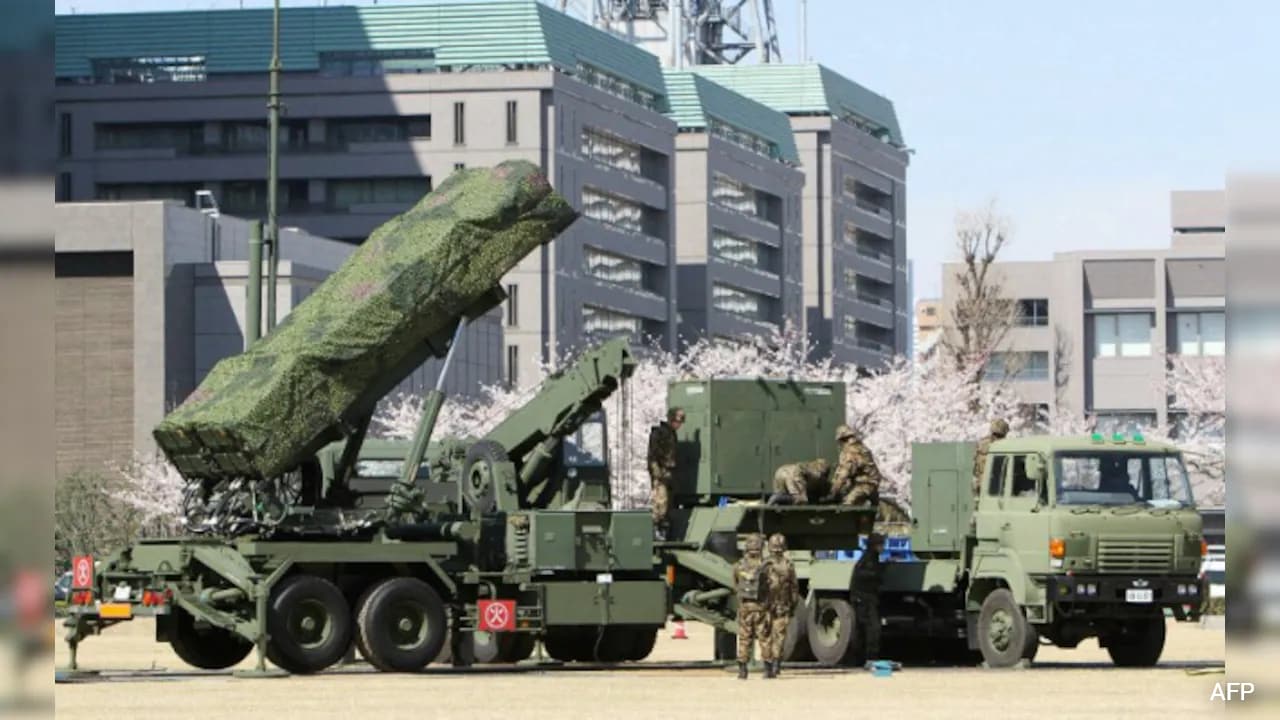
We are running out of the world’s most important missile defense interceptor, and nobody can fix it quickly.
Right now, a terrifying math problem is playing out across global conflict zones. In Ukraine, Russian forces are actively exploiting a severe shortage of Patriot air defense interceptors to hammer infrastructure. Meanwhile, the recent multi-theater conflict involving Iran has completely shattered old assumptions about how much ammunition a modern war consumes.
During the opening days of that Middle East conflict, coalition forces fired an estimated 225 Patriot missiles per day to swat down incoming threats. Now compare that to the production line. Lockheed Martin’s facility in Camden, Arkansas, produced about 620 interceptors in all of 2025. That breaks down to roughly 1.7 missiles per day.
You don't need a degree from the War College to see the issue. When consumption outpaces production by a ratio of 132:1, your strategy has an expiration date. Western militaries have spent decades building exquisite, highly accurate systems while completely ignoring the unsexy reality of industrial capacity. Now, the bill has come due.
The Iron Triangle of a Broken Defense Supply Chain
The Pentagon loves to throw money at problems, but you can't short-circuit physics or industrial logistics. In April 2026, Washington signed off on a massive $4.76 billion contract to fast-track production. Yet, the interceptors funded by that cash likely won't hit the field until mid-2028 at the earliest.
Why the lag? It's down to structural bottlenecks within the defense-industrial base. Every Patriot Advanced Capability-3 Missile Segment Enhancement (PAC-3 MSE) takes up to two years to build. If you need a new solid rocket motor, the lead time stretches to 30 months.
These delays aren't bureaucratic glitches. They are physical limitations. Solid rocket motors require extensive curing times. Beyond that, the sub-tier supply chain is highly fragile and relies on single points of failure.
Take the active radar seeker, the brain that guides the missile to its target. Every single seeker for the PAC-3 MSE is built at a single Boeing facility in Huntsville, Alabama. In 2025, that plant only managed to churn out between 650 and 700 units. Final assembly lines are completely useless if the sub-tier suppliers can't deliver the components. The exact same bottleneck chokes out production for the missile's rocket motors, managed by L3Harris’s Aerojet Rocketdyne.
The Mirage of Peak Production
The white flags aren't just flying in Washington. The panic has spread to America’s closest allies. Total contracted Patriot missiles sold to European buyers since 2022 sit at over 1,100 units. The global backlog across more than a dozen nations—including Poland, Germany, and Saudi Arabia—now exceeds 4,300 rounds.
That represents roughly seven years of global Patriot output at recent manufacturing speeds.
Western leaders point to a seven-year framework agreement aimed at ramping PAC-3 MSE production from 600 missiles annually to 2,000 by 2030. That sounds great on a press release, but it does absolutely nothing to help a commander facing a ballistic missile salvo tonight.
Militaries are realizing they fell into a dangerous peace-dividend trap after the Cold War. Air defense missiles are incredibly expensive, running between $3 million and $5 million per shot. During peacetime, bean-counters look at those figures and opt to keep stockpiles low. After all, if you don't use a missile within 20 years, you have to pay to safely decommission it. So, governments bought just enough for training and limited deployments, never anticipating a protracted, high-intensity drone and missile war.
Adversaries are Winning the Economic Attrition War
The crisis exposes a fundamental asymmetry in modern warfare. It costs Iran or Russia anywhere from $50,000 to $300,000 to manufacture a one-way attack drone or a tactical ballistic missile. The West is consistently forced to use a $4 million interceptor to down a threat that costs less than a used sedan.
This is unsustainable. Stockpiles have plummeted so low that US Patriot inventories previously fell to nearly a quarter of the Pentagon's minimum baseline requirements. The scramble for interceptors has turned into a zero-sum game, sparking intense friction among allies.
The US has had to delay scheduled deliveries to Switzerland and Poland to redirect interceptors to live combat zones. Ukraine's President Volodymyr Zelensky recently went so far as to suggest a missile-swap deal with Germany, begging Berlin for immediate stockpiles with a promise to replace them from future production lines years down the road. When you're trading IOUs for air defense, the system is fundamentally broken.
Practical Steps to Bridge the Interceptor Gap
Fixing this requires a hard pivot away from business-as-usual defense procurement. Since scaling factories takes years, defense planners must change how they deploy the weapons they currently hold.
- Implement Strict Defensive Attrition Doctrine: Commanders can no longer afford to fire multi-million-dollar Patriots at low-tier threats. Cheap drones and cruise missiles must be filtered out and handled by lower-tier systems like Germany's Iris-T, electronic warfare jamming, or kinetic anti-aircraft guns. The Patriot must be fiercely preserved for high-end ballistic and hypersonic threats.
- Establish Allied Interceptor-Sharing Frameworks: NATO and regional coalitions need to pool their existing inventories into a coordinated, floating reserve. Nations facing low immediate threats must hand over their current ready-to-fire stocks to front-line states in exchange for priority slots on the 2028-2030 factory output lines.
- Force Component Redundancy: The Pentagon must use its emergency powers to fund and qualify secondary manufacturing facilities for critical components like Boeing's Huntsville seeker line. Relying on a single factory for the entire Western alliance's premier air defense asset is a strategic failure.