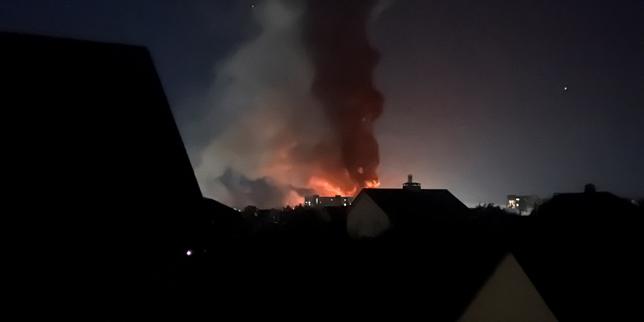
The war doesn't stay neatly confined to front lines anymore. When hundreds of drones fill the skies over Moscow and its surrounding region, the reality of the conflict hits home for millions of Russians who previously watched the fighting safely from television screens. Hundreds of aerial devices targeted the Russian capital region, leaving at least two people dead and shattering the illusion of local immunity as legislative elections wrapped up across the country.
If you thought drone warfare was limited to military outposts in the Donbas or frontline trenches in Ukraine, think again. The strategic calculus of modern aerial combat has shifted dramatically. Both sides now weaponize long-range technology to bring psychological and physical pressure straight to major population centers.
The Escalation Inside the Russian Capital Region
Let's look at the numbers. Regional authorities, including Moscow oblast governor Andrei Vorobiov, reported hundreds of aerial threats intercepted by air defense systems. We are talking about numbers pushing past two hundred neutralized drones in a single wave. Yet, getting intercepted doesn't mean zero impact. Falling debris, direct hits on civilian infrastructure, and secondary fires continue to exact a lethal human cost. At least two fatalities resulted from this massive aerial assault, proving that dense urban air defense can never guarantee absolute safety.
Why target Moscow directly? Strategic logic dictates that bringing the war to the adversary's political and financial heartland alters domestic political dynamics. For a long time, the Russian state media narrative insulated the capital from the grim realities of the invasion. Massive drone attacks pierce that bubble. When explosions echo over suburban rooftops and temporary airport closures disrupt daily commerce, citizens face uncomfortable questions about the trajectory of the conflict.
How Urban Air Defense Fails the Symmetrical Defense Test
Defending a sprawling metropolis against swarming, low-cost unmanned aerial vehicles is an absolute nightmare for military planners. Standard surface-to-air missile systems cost millions of dollars per interceptor. Meanwhile, the attacking drones cost a fraction of that amount. This economic imbalance drains stockpiles at an unsustainable rate.
Moscow relies on multiple layers of electronic jamming and specialized anti-aircraft units deployed in rings around the city. These measures stop a vast majority of incoming threats, but the sheer volume overwhelms response capabilities. When you launch hundreds of projectiles simultaneously, physics and probability dictate that some will breach the perimeter.
- Electronic warfare disrupts navigation and guidance chips.
- Mobile gun teams hunt low-flying targets with tracer rounds.
- Heavy missile batteries handle high-altitude threats.
Despite these precautions, debris falls unpredictably over residential neighborhoods, turning everyday streets into hazard zones.
The Broader Context of Retaliation and Strategic Signaling
This wave of strikes didn't happen in a vacuum. It coincided with the final day of legislative voting in Russia, a timing choice that maximizes political visibility. Ukraine's military command aims to demonstrate that no region remains untouchable while foreign allies debate the limits of weapon usage restrictions.
We see a continuous cycle of escalation. Russia pounds Ukrainian energy grids and urban centers with missiles, while Ukraine scales up indigenous long-range drone manufacturing to strike deep inside Russian territory. Each side tries to break the other's will to fight through sheer attrition.
Don't expect this trend to reverse anytime soon. As manufacturing capabilities improve and artificial intelligence aids autonomous target acquisition, deep-strike campaigns will only grow more frequent and precise. The physical distance between the battlefield and the home front has effectively vanished.
Keep a close eye on how local populations adapt to these recurring air raid alerts. When air defense sirens turn from temporary inconveniences into daily background noise, the psychological foundation of any prolonged conflict begins to fracture. The true test of this war won't just be measured in square kilometers captured on a map, but in how much disruption urban populations can endure before demanding a change in course.