History loves a lone genius. It loves clean narratives where a single famous man stares at a chalkboard, scratches his chin, and discovers a law of nature. Reality is messier. Much messier.
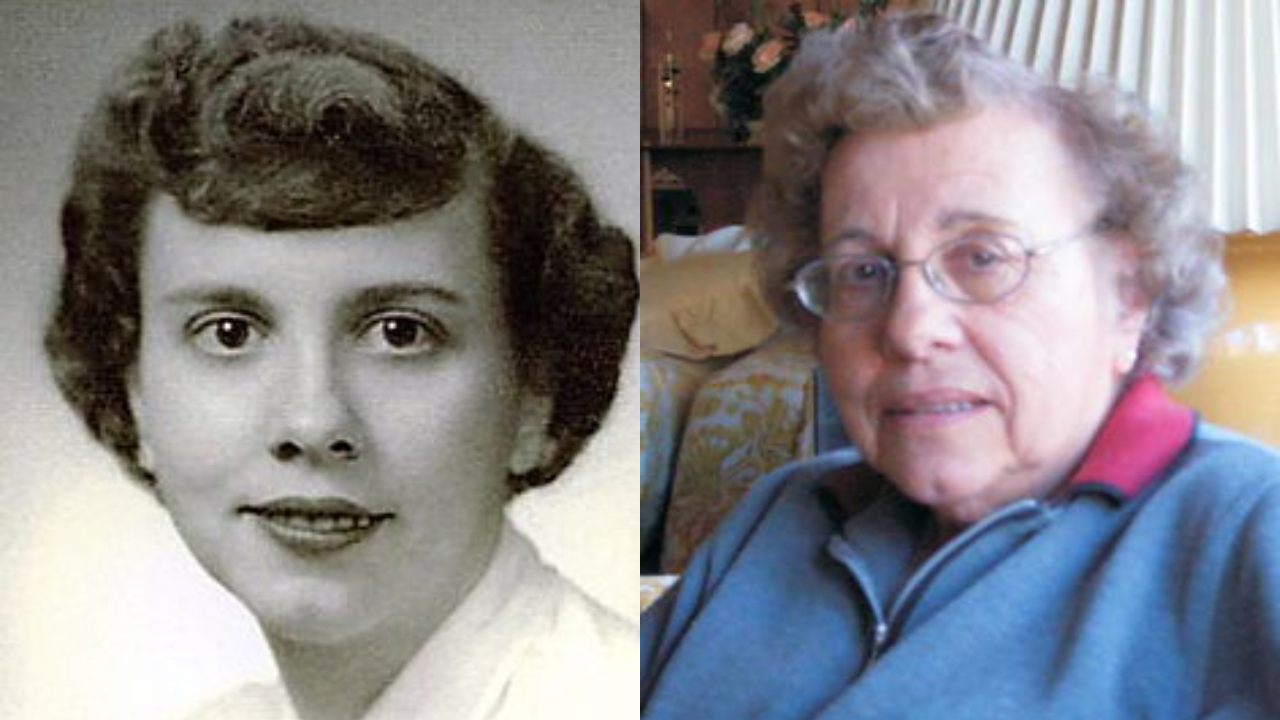
In 1952, a young mathematician sat down in front of an early computer at the Los Alamos National Laboratory. Her name was Mary Tsingou. She didn't just type out instructions. She built the code that cracked open non-linear dynamics, launched the field of numerical simulation, and quietly birthed what we now call modern chaos theory. You might also find this connected story useful: Why The Belgian Chinese Chip Arrest Exposes The Fragile State Of Global Tech Security.
Yet, for decades, her contribution was reduced to a single, polite sentence at the bottom of a famous scientific paper. People called it the Fermi-Pasta-Ulam problem. It took more than fifty years for the physics community to fix that omission and add her name to the acronym.
Let us look at why that happened, what she actually did, and why the standard textbook history of computation is completely backwards. As highlighted in detailed coverage by The Verge, the effects are notable.
The Experiment That Broke Fermi's Intuition
Enrico Fermi was used to being right. By the early 1950s, the brilliant physicist wanted to test how energy distributes itself in a physical system over time. He teamed up with John Pasta and Stanislaw Ulam to study a string of mass points connected by springs.
Classical physics predicted a straightforward outcome. If you put energy into one specific mode of a system—say, plucking a guitar string in a particular way—the non-linear forces should quickly scatter that energy. Within a short period, the system should thermalize. It should spread the energy equally across all available frequencies.
Fermi thought it would take a while. He was wrong. It didn't take a while; it didn't happen at all.
To test this, they needed someone to handle the heavy lifting on the MANIAC machine, the early electronic computer at Los Alamos. Enter Mary Tsingou. She had a degree in mathematics from the University of Wisconsin and had joined the lab as part of a new wave of human computers who quickly realized that electronic mainframes were the future.
Tsingou translated the differential equations governing the vibrating string into machine code. She punched the cards, loaded them into the MANIAC, and ran the simulation step by step.
What the machine outputted stunned the researchers. Instead of randomizing, the energy sloshed back and forth, eventually returning almost entirely to its initial state. The system had a memory. It refused to thermalize. This unexpected result shocked the physics community and laid the groundwork for the study of solitons and deterministic chaos.
Why the Credit Got Lost
If Tsingou did the programming, why did history forget her name for half a century?
Part of it was institutional culture. In the 1950s, programmers were often viewed as high-tech typists rather than independent researchers. The men whose names graced the original 1955 report—Fermi, Pasta, and Ulam—were conceptual giants. Tsingou was a junior mathematician executing their vision.
The famous acknowledgment read simply: "We thank Miss Mary Tsingou for efficient coding of the problems and for running the computations on the Los Alamos MANIAC machine."
That sentence reduced a massive intellectual and technical contribution to mere clerical execution. Writing code for the MANIAC in 1952 wasn't like opening Python today. It meant managing memory constraints, debugging hardware anomalies by hand, and translating abstract physics into raw machine logic. Tsingou wasn't just following a recipe; she was constructing the very lens through which humanity first observed complex non-linear behavior.
Correcting the Record
Decades passed. Chaos theory exploded into popular culture. Books were written about the butterfly effect, complex systems, and computer modeling. The FPU problem became a foundational touchstone in computational physics.
Gradually, historians and physicists started digging back into the archives. They realized that calling it the FPU problem left out the person who made the discovery possible. Without Tsingou’s code, the simulation wouldn't have run. Without her careful handling of data output, the bizarre periodic behavior might have been dismissed as a machine error.
In recent years, the scientific community began shifting toward a new acronym: FPUT, adding the 'T' for Tsingou. It is a rare instance of historical correction in a field that often prefers clean, traditional acronyms over messy truths.
What We Can Learn From the Tsingou Story
If you work in tech, science, or any field involving digital creation, the story of Mary Tsingou hits close to home. We still struggle with recognizing implementation as a creative act. People who build the architecture, write the code, or execute complex systems often get overshadowed by those who pitch the high-level concept.
Honoring contributions accurately isn't just about fairness. It changes how we understand innovation. Innovation happens at the intersection of theory and execution. When you ignore the executor, you misunderstand how the work actually gets done.
Next time you look at a breakthrough simulation, an AI model, or a massive data pipeline, remember that behind every famous set of initials, there is usually a Tsingou sweating over the details, making the impossible run on hardware that has less power than your current smartwatch.