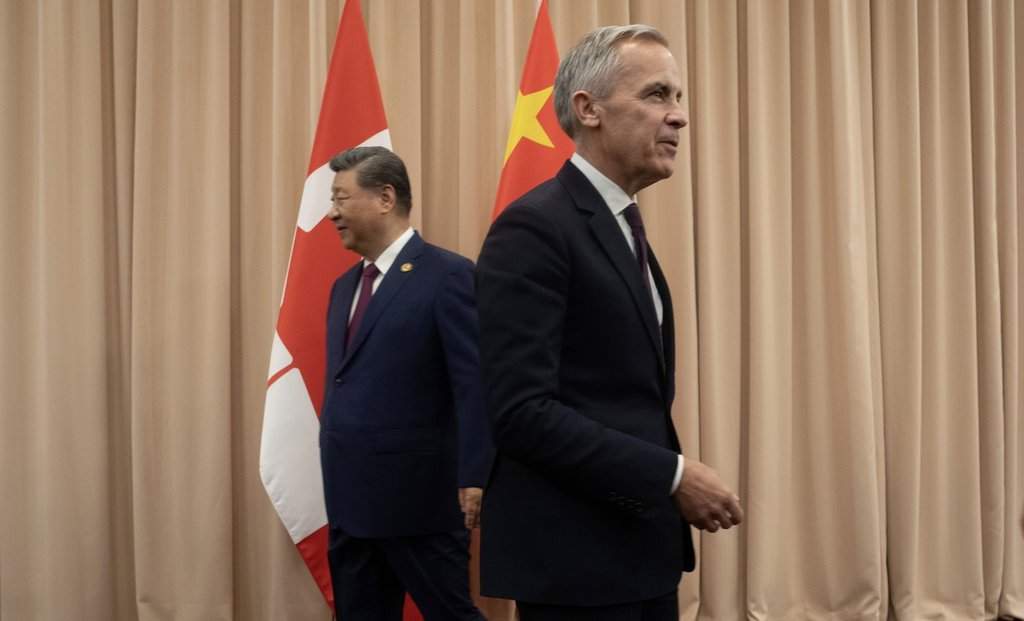
Prime Minister Mark Carney touched down in Shenzhen with a very blunt reality check for anyone watching Canadian foreign policy. Canada isn't tethering its economic future solely to Washington anymore. That strategy worked for decades, but protectionist pressures and unpredictable cross-border negotiations have forced Ottawa to look across the Pacific.
Yet, walking into Beijing's sphere of influence isn't a casual stroll. Carney's November 2026 visit to the Asia-Pacific Economic Cooperation summit and high-stakes sit-down with President Xi Jinping highlights a tightrope walk between economic survival and national security paranoia. Let's break down what's actually happening behind closed doors, why the stakes are higher than ever, and what the risks mean for everyday Canadians.
The Real Drivers Behind Ottawa's Pacific Pivot
Trade diversification used to be a nice political talking point. Today, it's an absolute necessity.
Back in January 2026, Carney made headlines by becoming the first Canadian prime minister to visit China in nearly a decade. That trip wasn't just diplomatic theater. It resulted in a strategic partnership that slashed Canada's punitive 100 per cent tariff on Chinese electric vehicles down to 6.1 per cent, opening the door for up to 49,000 imported EVs annually under strict caps.
Why make that move? Because Canada's economic dependence on the United States leaves domestic industries vulnerable to sudden political shifts down south. Carney has been entirely transparent about this calculation. If trade talks with Washington stall or turn hostile, Canadian exporters need functional alternatives in Asia and Europe.
Shenzhen serves as the ideal backdrop for this push. As a massive tech and manufacturing powerhouse, it represents everything Canada wants to tap into—advanced energy solutions, agri-food exports, and advanced financial services. But getting access to those markets comes with strings attached. Beijing expects reciprocity, and that's where political friction begins.
Security Alarms And The Cost Of Doing Business
You can't talk about closer ties with China without addressing the massive elephant in the room: national security.
Canadian intelligence agencies have repeatedly flagged Beijing for covert political interference and transnational repression targeting diaspora communities. Even Carney himself acknowledged these very threats not long ago, describing China as a major national security concern.
Critics argue that cozying up to an authoritarian superpower while intelligence warnings flash red is reckless. Critics point out that Chinese manufacturing standards, labour practices, and reluctance toward tech transfer put Canadian domestic industries at a distinct disadvantage. If Canadian factories can't compete on equal footing, opening domestic markets to subsidized foreign goods could hollow out local manufacturing.
Carney insists that guardrails are firmly in place. During bilateral talks, he made it clear that raising non-interference issues directly and frankly is part of the deal. He isn't sweeping national security under the rug. But critics remain skeptical. Diplomacy behind closed doors doesn't always translate into real-world behavioral changes from Beijing.
Human Rights And The Diplomatic Tightrope
Foreign policy is messy. Nowhere is that truer than in Canada's dual approach to human rights and trade.
While trade ministers push for energy and agricultural deals, Canadian diplomats continue pushing back against rising authoritarian control in Hong Kong. Earlier in November 2026, Canada joined western allies in condemning harsh ten-year prison sentences handed down to democratic activists and politicians under national security laws, including high-profile figures like Joshua Wong.
Carney walks a narrow line here. He raises human rights issues in private meetings with Chinese leadership rather than launching public tirades. Pragmatists argue this quiet diplomacy keeps trade channels open while maintaining Western values. Idealists argue it's a weak compromise that prioritizes profit over principle.
Meanwhile, global optics at APEC are getting complicated. Alongside bilateral meetings with Xi, upcoming trilateral discussions involving major global players mean Carney has to navigate an increasingly volatile geopolitical chessboard where Russia, the United States, and China are constantly shifting positions.
What This Means For You
If you're wondering how international trade summits affect your everyday life, look at your grocery bill, your electricity costs, and your local job market.
Diversifying trade isn't just about big corporate contracts. It dictates whether Canadian farmers can reliably export canola and pork, whether clean energy technology becomes affordable, and how insulated Canada's economy is when North American trade relations hit turbulence.
The strategy carries genuine risks. If guardrails fail or domestic industries get undercut, the political fallout will be swift. But standing still isn't a viable option either.
Canada is placing a calculated bet that open dialogue and structured commercial engagement yield better results than isolation. Whether that gamble pays off depends entirely on how rigidly Ottawa enforces its red lines over the coming years.
The video above provides visual coverage of Prime Minister Carney's arrival in Shenzhen and captures the high-level diplomatic stakes surrounding his Asia-Pacific visit.