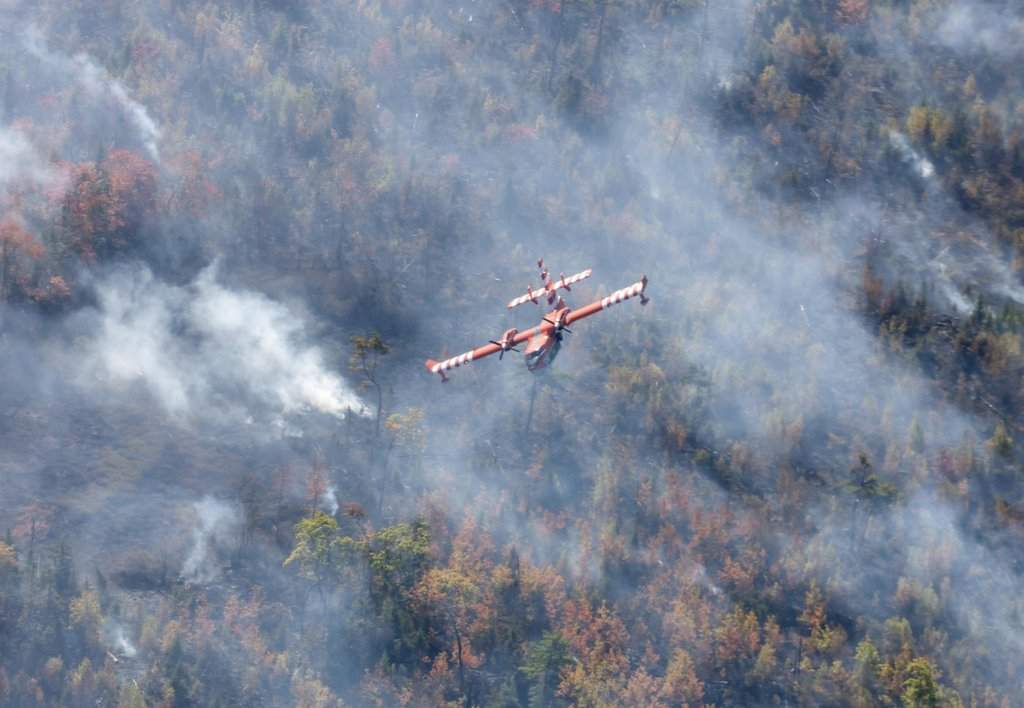
When the Mooseland Road wildfire broke out near Jacket Lake in the Halifax region, ripping through nearly 1,500 hectares of forest and driving roughly 100 households from their cottages and homes, it sent a clear message across Atlantic Canada. Fire season isn't just a western Canadian problem anymore. Wildfires in Nova Scotia and New Brunswick are starting earlier, burning hotter, and encroaching closer to residential communities than ever before.
Yet most advice handed out to homeowners in the Maritimes remains frustratingly generic. You've heard the basic checklist a hundred times. Pack a bag. Keep a hose handy. Check the daily burn restrictions. While those steps aren't wrong, they often miss the real-world mechanics of how wildland-urban interface fires actually spread and how fast panic sets in when smoke rolls over your roof.
If you want to protect your property and family during Atlantic Canada's increasingly unpredictable fire seasons, you need an actionable strategy built on reality, not just basic government pamphlets.
What Maritime Fire Seasons Look Like Now
For decades, residents across Nova Scotia, New Brunswick, and Prince Edward Island treated wildfires as a rare anomaly. The dense, damp acadian forests and coastal moisture felt like a natural shield. That shield has thinned out.
Data from provincial natural resources departments shows a distinct shift over the past few seasons. New Brunswick has already logged over 300 wildland fires early into the season. Nova Scotia has seen hundreds of ignitions, with crew response teams jumping on fires before they scale. Last year's devastating 8,500-hectare blaze in the Annapolis Valley proved that when dry conditions align with high winds and low relative humidity, Maritime forests burn with extreme intensity.
Fire officials across major municipalities like Halifax, Saint John, Fredericton, and Moncton are rapidly adapting. They're putting crews through specialized urban interface training because fires don't stay neatly in the timber anymore—they travel along forest edges directly into suburban developments and rural subdivisions.
Condition Matrix for Fire Ignition
---------------------------------
High Temps + Low Humidity + High Winds = Extreme Ignitibility
A quick rain shower might damp down surface moss for a morning, but hot afternoon winds dry out fine fuels in hours. Jim Rudderham, Nova Scotia's Fleet and Wildfire Management Director, has pointed out that when relative humidity plummets alongside high winds, conditions turn treacherous fast.
Rethinking the 72 Hour Grab Bag
Emergency management officials across New Brunswick and Nova Scotia continuously stress the importance of a 72-hour emergency kit. It's sound advice. But most people build these kits completely wrong.
They throw some canned soup and a rusty flashlight into a tub in the basement, assuming they'll have an hour to sort through things. In a real evacuation scenario, you might have eight minutes.
What Actually Belongs in Your Rapid Evacuation Kit
Forget stocking heavy items you can buy at a grocery store fifty kilometers away. Focus on irreplaceable assets and immediate survival needs.
- Critical documentation: Put birth certificates, property deeds, insurance policies, and passports in a single waterproof, fire-resistant folder near your main entryway. Claude Chouinard from the New Brunswick Emergency Measures Organization notes that missing paperwork is one of the biggest headaches evacuees face when trying to access relief services or file insurance claims after the threat passes.
- Medications and specialized gear: Pack a two-week supply of essential prescription drugs, extra eyeglasses, and medical medical devices.
- Digital backups: Back up your computers to an external hard drive or secure cloud storage beforehand. Keep a physical drive inside your emergency folder.
- Pet logistics: Pack food, leashes, collapsable bowls, and carrier cages right beside your emergency bags. Evacuation shelters often have strict rules regarding animals, and searching for a cat carrier under a bed while sirens blare wastes vital minutes.
- N95 respirators: Smoke inhalation is often hazardous long before flames reach a neighborhood. Standard cloth masks do almost nothing against microscopic wood smoke particulates.
Keep this gear in a high-visibility spot near your garage or front door during peak fire months. If you have to move, load it into your vehicle first before worrying about anything else.
Hardening Your Home Against Ember Attacks
Here's a fact that surprises most property owners: houses rarely catch fire from a wall of flame rolling through the trees. They burn because wind-blown embers land on vulnerable spots hours before or after the main fire front passes.
Embers can travel several kilometers ahead of a wildfire. They settle in rain gutters, blow under wooden decks, and lodge beneath dry roof shingles. Hardening your home means eliminating those ignition traps.
Zone 0: The Immediate 1.5 Meter Perimeter
This is the non-combustible zone immediately surrounding your home's foundation and under all decks. Saint John Deputy Fire Chief Ed Moyer emphasizes that simple maintenance around your yard dramatically cuts ignition risks.
Remove all bark mulch, dry leaves, dead vegetation, and stacked firewood from this immediate zone. Replace organic mulch with river rock, gravel, or stone pavers. Do not store plastic garbage cans, lawn furniture cushions, or propane tanks against your home's exterior walls during fire season.
Zone 1: The 1.5 to 10 Meter Defensible Zone
This area dictates whether an approaching surface fire slows down or gains steam.
Mow your lawn regularly and water key areas if municipal water restrictions permit. Prune tree branches so the lowest limbs sit at least two meters off the ground. This breaks the "fuel ladder," preventing a ground fire from climbing into the tree canopy where it becomes nearly impossible for ground crews to control.
If you have wooden fences connected directly to your house, consider installing a metal gate or non-combustible section where the fence meets the structure. A burning wooden fence acts like a fuse leading straight to your siding.
Understanding Maritime Burn Restrictions
Human error triggers a massive percentage of wildland fires across the Maritimes. Whether it's an unextinguished campfire, a hot ATV exhaust hitting dry grass, or illegal brush burning, individual choices carry huge consequences.
Both Nova Scotia and New Brunswick enforce daily burn restrictions during fire season. These updates aren't suggestions—they are legal requirements backed by heavy fines.
Burn Restriction Breakdown
--------------------------
Green / Burn Permitted: Safe to burn during designated evening hours.
Yellow / Restricted: Burning allowed only under strict conditions/times.
Red / Burn Ban: All open fires, brush burning, and backyard fire pits strictly prohibited.
Checking daily restriction maps online or calling the provincial burn toll-free numbers before striking a match is fundamental safety etiquette. Halifax Fire District Chief John Lowe notes that even when burning is permitted, you must use dry, seasoned wood to reduce flying sparks, keep buckets of water or a charged garden hose right next to the pit, and never leave an open flame unattended by a responsible adult.
Real Actions to Take Before the Smoke Arrives
Don't wait for an alert to sound on your phone. Take these practical steps today to safeguard your home and family.
- Clear your gutters and roof valleys: Remove all pine needles, leaves, and debris that have accumulated over the spring.
- Locate your main shut-offs: Make sure every adult in your home knows how to quickly turn off propane tanks, main gas lines, and HVAC ventilation systems to prevent smoke from being pulled indoors.
- Establish two evacuation routes: Know at least two different ways out of your neighborhood. Forest fires can block main access roads in minutes, forcing traffic onto secondary dirt roads or local highways.
- Coordinate with neighbors: Talk to those living nearby. Check if elderly neighbors need assistance loading vehicles or securing pets during an emergency response.
- Review your home insurance policy: Confirm that your policy covers wildfire damage and temporary living expenses if you are displaced by an official evacuation order.
Preparation isn't about panicking—it's about removing luck from the equation. Taking a few hours this weekend to clear your yard and organize your vital documents ensures that if a fire starts burning near your community, you're ready to act calmly and decisively.