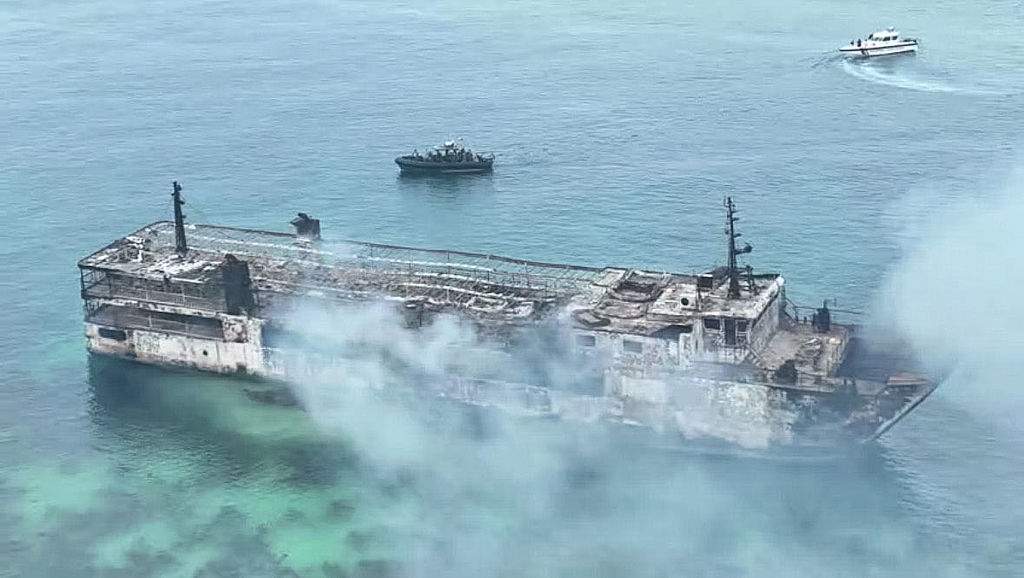
Tragedy struck the waters near Palawan when a sudden explosion tore through a passenger vessel, leaving dozens missing and sparking urgent questions about maritime safety standards in Southeast Asia.
The M/V June Aster was nearing its destination in Coron when disaster struck. Witnesses on board reported a loud blast followed instantly by thick black smoke and wall-to-wall flames. Within seconds, the situation went from a routine overnight voyage to a desperate scramble for survival. You might also find this connected article interesting: Why Washington D.c.'s Ai Powered Property Hunt Has Congress Worried.
Coast guard officials, military boats, and local fishermen rushed to the scene. They pulled dozens of shivering survivors from the water, but the search for the missing remains an uphill battle. High waves, shifting currents, and dense smoke billowing from the scorched hulk have turned rescue operations into a logistical nightmare.
What Went Wrong on the M/V June Aster
Manifests tell a frustrating story. The ship carried 134 people—117 passengers and 17 crew members—well below its legal capacity of over 300. Yet, despite being under capacity, the speed and ferocity of the blaze caught everyone off guard. As discussed in latest coverage by Al Jazeera, the results are significant.
According to initial survivor statements, the fire likely started in the cargo hold. A sudden explosion cut short a 13-hour journey that had originated in Manila. Instead of docking safely in a world-renowned tourist paradise, the vessel drifted miles off course, battered by rough weather and hostile seas.
Heavy black body bags laid out at local ports tell the grim human cost. At least five people lost their lives, while more than 85 individuals remained unaccounted for as daylight faded and search operations paused. Rescuers tried to board the drifting wreckage, but intense heat and toxic fumes forced them back.
The Recurring Nightmare of Philippine Sea Travel
If you follow global maritime news, this story feels painfully familiar. The Philippines is an archipelago made up of over 7,000 islands. Ferry travel is a lifeline for millions of locals and tourists alike. Ferries move people and goods where planes cannot go.
Unfortunately, this reliance on water transit comes with a dark history of lax enforcement, overcrowding, and aging fleets. Overloaded manifests, poor maintenance checks, and sudden tropical weather create a dangerous mix. When a fire breaks out miles from shore, passengers are entirely at the mercy of crew preparedness and response times.
While the M/V June Aster was not at maximum passenger capacity, questions immediately turn to how cargo was stowed and whether safety protocols were strictly followed. Investigators are combing through shipping logs and checking whether foreign nationals were among the casualties, but answers will take time.
Staying Safe on Regional Ferries
If you find yourself traveling through island nations relying on regional ferry networks, you cannot rely entirely on regulatory bodies to keep you alive. Take matters into your own hands before disaster strikes.
- Locate the nearest exits and life-saving equipment the second you step onto a vessel. Do not wait for an emergency briefing.
- Pay attention to where life jackets are stowed in your specific seating zone. In a panic, seconds matter.
- Keep emergency essentials—like a whistle, flashlight, and sturdy shoes—accessible if you are taking overnight or long-haul voyages.
Maritime agencies must overhaul inspection protocols to prevent these disasters, but personal awareness remains your first line of defense when things go wrong at sea.