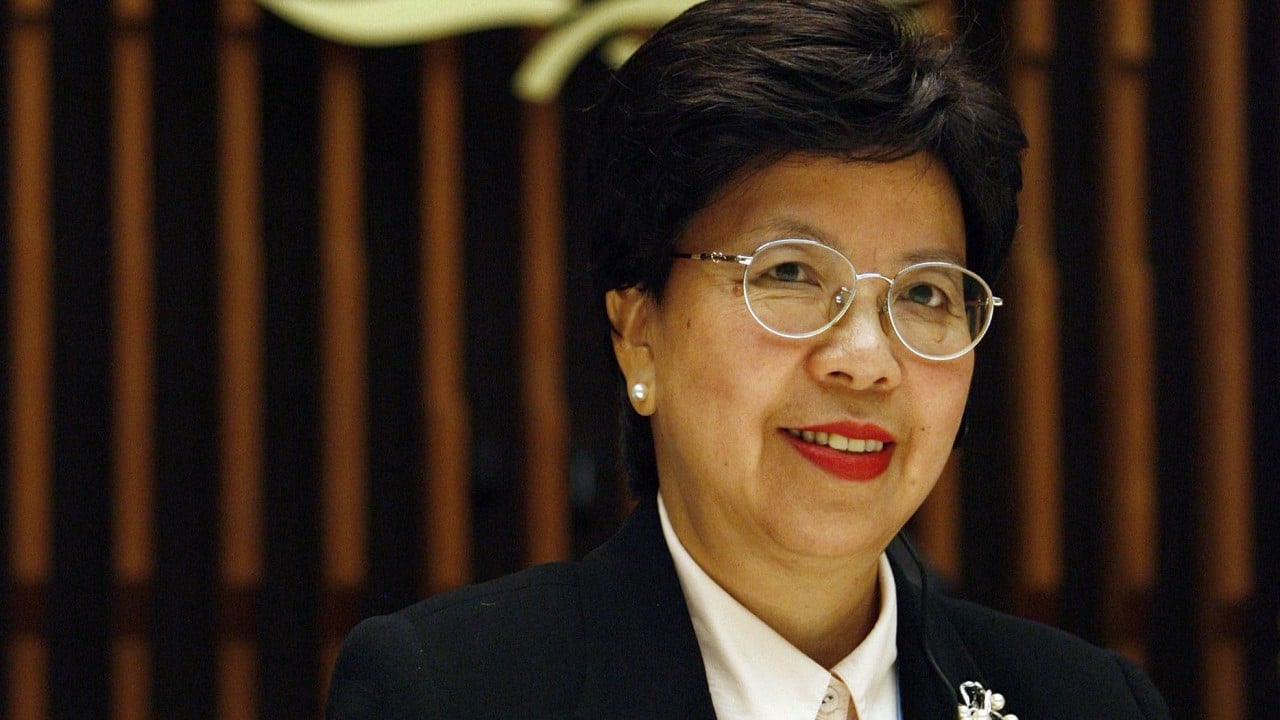
Back in November 2006, the global public health landscape shifted in a way few outside diplomatic circles initially expected. Dr Margaret Chan, a seasoned public health official from Hong Kong, secured the vote to lead the World Health Organization as its next Director-General. It was a milestone moment. Not only was she the first Chinese national to hold the top post at a major United Nations agency, but she also brought a gritty, battle-tested administrative background forged during some of the most intense public health crises of the late twentieth and early twenty-first centuries.
If you want to understand how she got there, you have to look past the glitz of Geneva and examine what actually happened on the ground in Hong Kong years prior.
The Crucible of Hong Kong Public Health
Long before she stood on the global stage in Geneva, Chan was navigating public health nightmares in Hong Kong. Appointed as the city's first female Director of Health in 1994, she didn't spend her tenure pushing paper in a quiet office. She faced the 1997 H5N1 avian flu outbreak head-on.
When poultry markets in Hong Kong started dying off, panic rippled through the densely populated city. Chan made the bold, highly controversial decision to cull roughly 1.5 million chickens in just three days. It was drastic. Farmers screamed bloody murder, economists worried about trade fallout, and critics called it an overreaction.
Yet, public health experts now credit that aggressive move with cutting off a potential human influenza pandemic before it could truly spiral.
Then came 2003. Severe Acute Respiratory Syndrome hit Hong Kong like a freight train. The city became a global epicenter for SARS, terrifying residents and locking down entire apartment blocks like Amoy Gardens. Chan took heavy flak from local media and politicians for how authorities communicated early risks.
Instead of hiding behind PR teams, she absorbed the blows, adjusted tactics, and worked relentlessly alongside international teams. She learned firsthand how fragile global supply chains and cross-border disease reporting really were. That scarring operational experience made her a formidable candidate when the WHO job opened up following the sudden death of Jong-wook Lee in 2006.
Navigating the Geneva Election Race
The race for WHO Director-General in 2006 was crowded and intense. Eleven candidates threw their hats into the ring. Diplomats spent months lobbying behind closed doors in Geneva.
Chan entered the fray with a distinct advantage and a clear handicap. Her background handling SARS and bird flu gave her unmatched street cred in infectious disease management. On the flip side, her handling of the early SARS communications in Hong Kong gave international critics room to raise eyebrows.
Beijing threw its full diplomatic weight behind her nomination. That backing changed the arithmetic of the election. Member states realized that any serious global health strategy moving forward had to actively involve China, a rising economic powerhouse that was rapidly becoming central to global trade and epidemiological surveillance.
On November 8, 2006, the WHO Executive Board nominated her. The full World Health Assembly formalized the vote on November 9, 2006. Chan beat out competitors from Mexico, Spain, Kuwait, and France to secure the ten-year tenure that would eventually span from January 2007 to June 2017.
What Her Decade at the Helm Actually Looked Up To
Stepping into the office in early 2007, Chan didn't get a honeymoon period. Within two years, the 2009 H1N1 swine flu pandemic erupted.
Critics jumped on the WHO's handling of H1N1, accusing the agency of over-hyping the threat and creating panic that benefited vaccine manufacturers. Chan defended the agency's conservative stance, arguing that transparency and early warnings are better than underestimating a novel virus that could mutate into something lethal.
Her tenure also saw massive structural reforms inside the organization. She pushed hard for non-communicable diseases—like diabetes, heart disease, and cancer—to get the same level of global attention traditionally reserved for infectious scourges like malaria, HIV, and tuberculosis.
Yet, her leadership faced its harshest test toward the end of her run. The 2014 West African Ebola epidemic exposed deep structural flaws, slow response times, and bureaucratic paralysis within the WHO. Critics argued the agency reacted too slowly, letting thousands die before declaring a public health emergency of international concern. Chan owned the criticism publicly, acknowledging that the organization lacked an emergency response wing with real teeth and adequate funding.
That disaster forced a complete overhaul of how the WHO handles outbreaks today.
Why 2006 Still Matters Today
Looking back at Chan's election isn't just an exercise in archive dusting. It highlights a recurring theme in global health governance. Navigating international health politics requires a rare mix of clinical backbone, political savvy, and thick skin.
When Chan took the gavel in 2006, she promised to focus heavily on the health of women and people in developing nations, particularly in Africa. While her record remains mixed—cheated by institutional inertia on one side and praised for driving global health agendas on the other—her rise from a local Hong Kong medical officer to the chief of the world's health body remains an extraordinary chapter in modern international relations.
Public health crises don't care about diplomatic niceties. They reward speed, decisiveness, and leaders who have actually stared down a crisis in the trenches. Margaret Chan proved in 2006 that she knew what those trenches looked like.