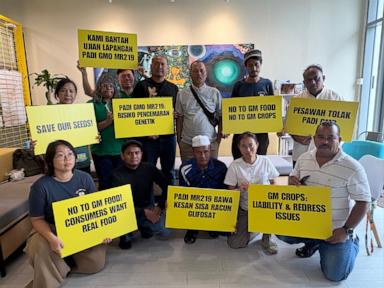
A massive coalition of sixty-one Malaysian farmer networks, consumer associations, and environmental groups has officially drawn a line in the dirt. They are demanding that the government completely reject a proposed confined field trial for genetically modified rice.
At the center of this battle is an application submitted by Zen Cropscience Sdn Bhd to test a genetically modified strain of the popular MR219 rice variety in Kampung Kepayang, Perak. This specific modified strain has been engineered to tolerate glyphosate and resist bacterial and fungal diseases.
If you think this sounds like a local administrative dispute, look closer. This clash exposes the raw tension between corporate biotech ambitions and the everyday realities of the people who actually work the land.
The Threat of Genetic Contamination
Farmers know how crops behave. They don't stay neatly inside imaginary boundaries drawn on application forms.
When you introduce open-air trials of genetically modified grains near conventional or wild rice fields, cross-pollination becomes an urgent hazard. Birds, wind, machinery, and human error can easily carry modified pollen or seeds across property lines.
Once conventional crops suffer genetic contamination, undoing it is impossible. Traditional farmers risk losing their non-GMO certification and market access overnight.
Local agriculture advocates point out a sobering reality. Malaysia's Biosafety Act currently leaves ordinary growers hanging with little to no financial protection if unintended contamination ruins their harvest. The legal framework puts the financial liability squarely on the farmers whose fields get contaminated, not the biotech companies pushing the seeds.
Glyphosate and the Chemical Treadmill
Proponents argue that modifying crops for herbicide resistance makes weed control simpler. Experience tells a different story.
When fields rely heavily on glyphosate-tolerant crops, weeds adapt. They always do. Farmers end up trapped on a chemical treadmill where they have to spray more and more herbicide just to maintain baseline yields.
Furthermore, a glyphosate-resistant rice plant absorbs the chemical rather than breaking it down. Critics worry about chemical residues remaining in the harvested rice grain. That directly impacts food safety for millions of citizens who consume rice as their primary daily staple.
Soil health takes a direct hit too. Heavy reliance on synthetic weed killers damages beneficial soil microorganisms and degrades the delicate biological balance of paddy ecosystems.
We Have Better Options
You don't need risky biotech experiments to fix agricultural bottlenecks. Proven, sustainable alternatives already exist.
Agroecology advocates emphasize methods like the System of Rice Intensification and localized organic farming practices. These methods boost yields and strengthen plant resilience naturally, without introducing foreign genes or synthetic chemical dependencies.
Real food security comes from empowering smallholders, protecting seed sovereignty, and investing in ecological resilience. Forcing untested biotech solutions onto a rice-dependent nation creates vulnerabilities instead of solving them.
Stop treating local farming communities as guinea pigs for corporate profit. Reject the trial and back sustainable agriculture that protects both the soil and the people.