Darkness changes things. When you are nineteen years old, trapped sixty meters underground in an Australian cave with no food, no proper water, and a dead carbide lamp, panic is an easy trap to fall into. That is exactly what happened to Brian O'Brien in December 1953. What started as a quick university caving trip turned into a grueling seventy-five-hour battle for survival in the Yarrangobilly Caves.
Most people know bits and pieces of this story, but they miss the strange poetry of how it all tied together decades later. That lost lamp didn't just sit in the damp limestone dark. It stayed there for sixty-eight years while O'Brien grew up, earned his stripes, and built hardware that flew to the Moon for NASA.
The Seventy-Five-Hour Underground Ordeal
Back in 1953, O'Brien and his caving partner Fred Stewart were students at the University of Sydney. They finished their exams and headed straight to the New South Wales cave system. On December 15, they squeezed into East Deep Creek Cave.
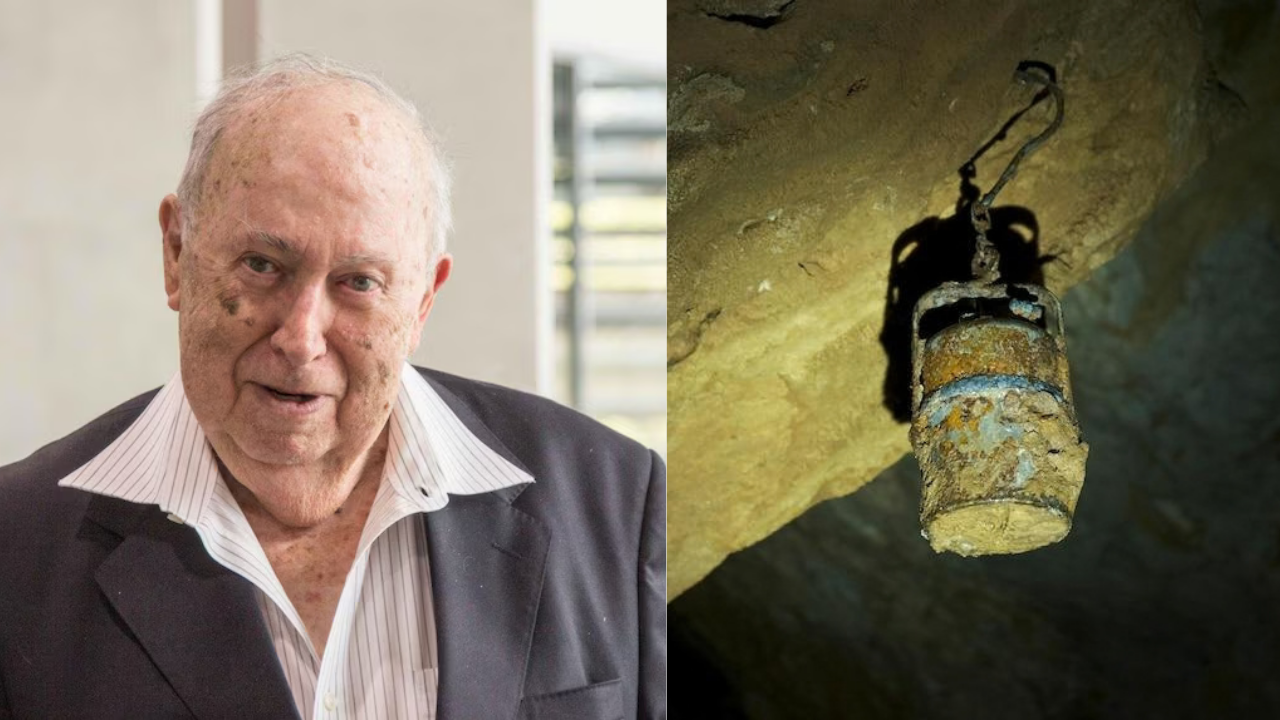
O'Brien got separated from Stewart while poking around a side passage. His carbide lamp failed. He hung it up on a rocky ledge, tried to scramble out in pitch blackness, slipped, and fell. He lost track of the lamp completely.
Rescue teams finally found him after three days of searching. He survived on grit and tiny sips of water. But that carbide lamp stayed behind, tucked away in the shadows of the cave.
From Cave Survivor to NASA Pioneer
You might think surviving a nightmare like that would make someone swear off dark, enclosed spaces forever. O'Brien went the opposite direction. He dedicated his professional life to exploring the unknown.
He didn't just become a regular scientist. He built experiments that NASA put directly onto Apollo missions. He invented the Apollo Dust Detector Experiment, which flew on Apollo 11, 12, 14, and 15 to measure lunar dust accumulation on spacecraft panels. If you have ever looked at footage of astronauts walking on the Moon, you are looking at the legacy of a man who once had to feel his way blindly along cave walls just to breathe another day.
O'Brien passed away in 2020 at eighty-six years old. He spent years hoping someone would find that old carbide lamp. He never got to see it happen.
The Accidental Discovery Decades Later
History likes strange timing. In 2021, two student cavers named Brittany Meers and Lachlan Bailey dropped into the same cave system. Roughly sixty meters underground, they spotted something odd hanging high up on a rock ledge. It was a vintage carbide lamp, remarkably preserved with barely any corrosion after nearly seven decades.
At first, they left it right where it was. They had no idea it belonged to a future space pioneer. Word spread through the caving community. By 2026, a specialized volunteer recovery team—including Meers—braved the narrow squeezes and five-degree Celsius chill to bring the artifact out.
O'Brien's family traveled to witness the recovery. The lamp now serves as a tangible bridge between a teenager's terrifying mistake in an Australian cavern and a scientist's work examining the dust of another world.
Stop waiting for perfect conditions to explore. Check your gear, double-check your routes, and remember that today's mistakes might just become tomorrow's history.