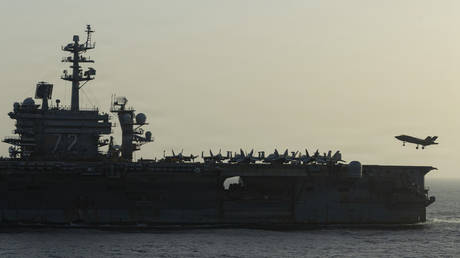
The USS Abraham Lincoln is finally heading home. After nine grueling months of uninterrupted operations, the crew is done. This isn't just another routine rotation. It marks a historic, and frankly exhausting, record for the US Navy.
We need to talk about what actually happened on that ship. The headlines scream about record-breaking days at sea, but they gloss over the human cost. When you keep 5,000 people trapped on a steel island for over 260 days without real port calls, things break. And I don’t just mean the engines.
The Reality Of Extended Naval Deployments
For anyone who hasn't spent time in the military, the logistics of keeping a carrier operational are mind-boggling. You are essentially managing a floating city. When you push that city past its intended cycle, the infrastructure fails.
Reports surfacing from the Lincoln describe plumbing issues, water shortages, and struggles with basic food supplies. If you’ve ever lived in a cramped environment, you know how quickly that grates on your nerves. Now, multiply that by the stress of active military operations. The pressure cooker effect is real.
Why This Matters For Military Readiness
Critics are rightfully pointing toward leadership failures. When sailors are pushed to the point where families back home are terrified for their mental health, you have a retention problem. You have a readiness problem.
The military operates on the belief that personnel are its most valuable asset. But actions speak louder than internal memos. When you stretch a deployment this thin to cover geopolitical demands, you’re gambling with the stability of your crews.
It’s easy for officials to downplay these issues as minor "mental health cases." It’s another thing entirely to look at the retention numbers in five years. You cannot treat people like expendable machine parts and expect them to re-enlist.
Addressing The Leadership Gap
The current debate in Washington over the Secretary of War’s future isn't just political theater. It highlights a fundamental tension in how we project power. Is it effective to keep one carrier on station at all costs? Or does the degradation of that carrier’s crew and material condition make the strategy counterproductive?
The USS Abraham Lincoln was tied up in the US-Israeli campaign against Iran. That’s a high-stress environment. The operational tempo was relentless. Commanders on the ground might argue it was necessary to maintain presence. However, we have to weigh that "presence" against the long-term cost of burning out our best people.
What Real Naval Readiness Looks Like
If we want to avoid these scenarios in the future, we need to stop viewing ships as infinite resources.
- Better Supply Chains: Logistics aren't sexy, but they save lives. Ensuring potable water and adequate food isn't an optional perk. It is the baseline for basic human function.
- Predictable Rotations: When you extend a deployment from a planned six months to nine, you shatter the trust between the service member and the institution. Transparency matters.
- Mental Health Infrastructure: Pretending that 260 days at sea doesn't cause psychological wear is a failure of leadership. We need better ways to support crews before they hit their breaking point.
Moving Forward
The Lincoln is coming home. That’s good. But the lessons from this record-breaking stretch need to be institutionalized. We shouldn't be celebrating the number of days spent at sea if those days were marked by plumbing failures, food shortages, and a broken spirit among the crew.
Stop viewing personnel endurance as a constant that you can squeeze indefinitely. It is a finite resource. If the Navy wants to keep its edge, it needs to treat its sailors like the high-tech, highly trained individuals they are, rather than components in a system that can be run until it falls apart.
Take this as a sign. The era of overextended, under-resourced deployments needs an urgent rethink. If we don’t change the way we manage these ships, we are going to find out the hard way that you can’t buy back the experience of a sailor who has finally had enough.