Fourteen helpless infants died because a hospital nursery turned into a locked concrete box. When a fire broke out in the air-conditioning unit on the third floor of the Mother and Child Health ward at the Pakistan Institute of Medical Sciences (PIMS) in Islamabad, families outside didn't just face the horror of a blaze. They faced iron-tight security doors that kept rescuers out and trapped newborns inside.
Out of fifteen babies inside that critical care nursery, fourteen perished. Only one survived.
The disaster exposes a grim reality about institutional neglect, systemic security paranoia, and crumbling public infrastructure. When routine safety protocols conflict with basic human survival, tragedy is inevitable.
The Anatomy of a Preventable Disaster
The fire started just before dawn, around 6:45 AM. Investigators point to an electrical short circuit inside an air-conditioning unit on the third floor of the PIMS hospital. Thick, black smoke flooded the nursery almost instantly.
Because the room housed vulnerable newborns requiring intensive care, oxygen tanks were heavily present. The oxygen acted as an accelerant, turning a localized electrical spark into an uncontrollable inferno.
Yet, the fire itself wasn't the primary barrier to survival. It was the doors.
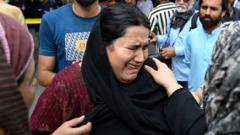
Grieving parents and eyewitnesses immediately pointed fingers at the hospital administration, claiming the ward doors were locked tight when the smoke started rolling in. Mothers like Jaweria stood outside weeping for hours, watching rescue efforts stall because nobody could get past the heavy security barriers.
"For two hours I kept crying and wailing," Jaweria told reporters. "Babies burnt to death there, but nobody could save them."
Security Versus Safety
Hospital management offered a defense that only intensified public fury. Officials claimed access to the nursery was restricted as a longstanding policy to stop infant abductions and keep unauthorized visitors—particularly men—out of the maternity wing.
Security guards manned the entrances. Staff locked secondary exits to maintain strict control over the floor.
Preventing baby theft is a legitimate challenge in overcrowded public hospitals. But trading a security policy for fire escape routes is a catastrophic failure of risk management. When an emergency happens, security measures that cannot be overridden instantly become death sentences.
Witnesses on the ground reported a chaotic scramble. With interior doors locked from the inside, people had to smash windows and break through concrete grills from the outside just to reach trapped patients. Rescue teams arrived only to find themselves locked out of the critical zones, forced to waste precious minutes cutting through barriers while infants suffocated.
Accountability and Immediate Fallout
The political fallout was swift. Prime Minister Shehbaz Sharif ordered an immediate, multi-agency inquiry into the PIMS hospital blaze. Federal Health Secretary Aslam Ghauri was suspended from his post amid mounting public pressure. Two separate investigation committees—one from the Islamabad district administration and another from the prime minister's office—have been tasked with parsing out who authorized the locked exits and why fire safety standards failed so completely.
But suspensions and committees don't bring children back.
Families who trusted state-run healthcare are left mourning three-day-old daughters and sons. They describe a facility devoid of functional fire extinguishers, clear evacuation drills, or present medical staff during the critical opening minutes of the disaster.
Public hospitals across the region face chronic underfunding, lax building code enforcement, and poor oversight. Too often, safety equipment is treated as an optional luxury rather than a mandatory baseline.
What Needs to Change Right Now
If public institutions want to prevent another PIMS hospital tragedy, administrative excuses must stop.
- Emergency Override Systems: Security doors in sensitive hospital zones like neonatal intensive care units must feature automated magnetic release mechanisms tied directly to smoke and fire alarm systems.
- Mandatory Fire Audits: Government medical facilities need unannounced safety inspections focusing specifically on electrical wiring, aging HVAC compressors, and clear, unblocked evacuation paths.
- Staff Training: Medical personnel require regular, hands-on evacuation simulations so they know how to move infants safely when power fails and smoke blinds the corridors.
Locking doors to solve a security problem while ignoring fire safety creates a graveyard. Until public hospitals treat emergency preparedness with the same urgency as patient care, vulnerable lives remain at risk.