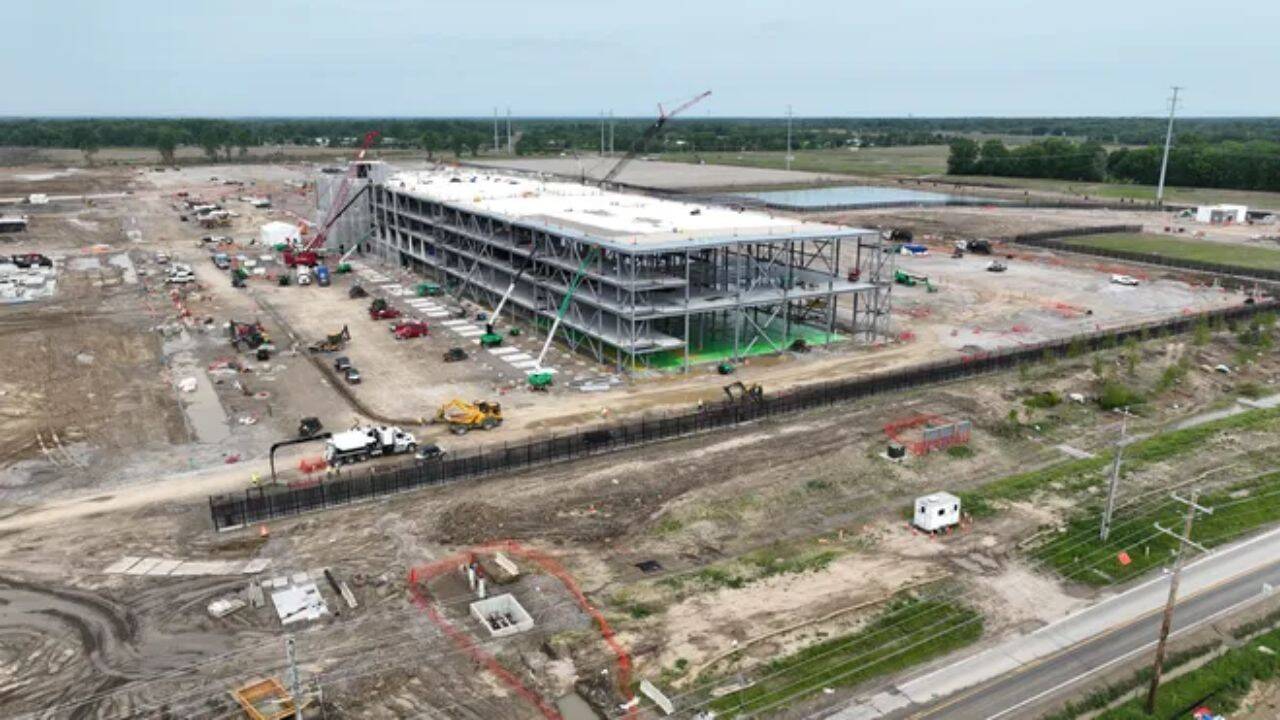
Big tech companies thought they could quietly buy up rural farmland, plug into local power grids, and build massive server farms without a fight. They were wrong. Across the American heartland, ordinary citizens are pushing back against the digital boom. In Ohio, a local truck driver living near a proposed five-billion-dollar Amazon Web Services project has helped ignite a township-wide movement that could permanently block the sprawling facility.
When massive infrastructure projects meet grassroots resistance, the ensuing battles reveal a deep disconnect between corporate ambition and community survival. If you want to understand why big tech is suddenly facing a wall of local opposition, look no further than the small towns of Ohio, where the rush for artificial intelligence infrastructure is hitting a hard reality check. For a different perspective, check out: this related article.
The Battleground Over Rural Farmland and Power Grids
The friction centers on a massive proposal by Amazon Web Services to build an 18-building data center campus spread across 600 acres of farmland in St. Clair Township, situated between Wayne Madison Road and Hawkins Road. To corporate planners, these rural plots look like the ideal blank canvas: cheap land, highway access, and proximity to utility corridors. To the people who actually live there, the project represents an existential threat to their local environment and quality of life.
Leading the pushback is Barry Blankenship, a local truck driver who didn't plan on becoming a political activist. Like many of his neighbors, Blankenship grew alarmed when he realized what an 18-building data center actually entails. We aren't talking about a quiet, low-impact warehouse. These facilities demand staggering amounts of electrical power and millions of gallons of water for cooling, all while relying on roaring diesel backup generators that run frequently during testing and grid stress. Related analysis on this matter has been provided by CNET.
When local residents pressed corporate representatives for answers during public meetings, they found the responses lacking. Blankenship put it bluntly after attending community sessions: they couldn't give good answers, and residents simply didn't want the facilities in their backyards. Joe Deaton, another local resident, echoed the sentiment by clarifying that the community isn't inherently opposed to growth, just developments that drain water supplies, spike utility bills, and blanket the neighborhood in noise and diesel pollution.
From Town Hall Meetings to Ballot Box Rebellions
This localized frustration isn't an isolated incident. It's part of a sweeping wave of pushback redefining local politics across the state. While corporate advocates and organizations like the Ohio Manufacturers' Association argue about whether data centers directly inflate residential electricity costs, voters aren't waiting for economic white papers to settle the debate. They see their utility bills climbing and the grid straining under the weight of artificial intelligence data demands, and they are taking matters into their own hands.
The momentum turned concrete when the St. Clair Township Zoning Commission passed a resolution calling for a complete ban on data centers within its zoning area. That recommendation pushed the issue straight to the Butler County Rural Zoning Commission, setting up a high-stakes public review. While the county commission evaluates the proposal, the ultimate power rests with the three St. Clair Township trustees, who hold the authority to cast the final vote on whether the restriction becomes official.
Similar resistance is paying off elsewhere. In nearby Trenton, voters approved a charter amendment banning data centers larger than 25 megawatts by an 80 percent landslide. Statewide, media reports indicate that at least 14 municipalities and townships across Ohio implemented local restrictions or outright bans on large data centers during the late 2026 election cycle. Amazon even attempted to soothe tensions by hosting a "science fair" style informational event at Edgewood Middle School to share environmental studies with skeptical residents. The corporate outreach campaign failed to sway public opinion, proving that pamphlets and slide decks can't undo deep-seated fears about resource depletion.
What This Means for the Future of Tech Infrastructure
Amazon insists that its long-term investment strategies across Ohio remain unchanged, but the ground rules are shifting underneath them. When local zoning boards and county commissions start blocking multi-billion-dollar projects, tech giants can no longer treat rural communities as easy targets.
If you are watching the intersection of local governance and the technology sector, the takeaway is clear. The era of frictionless expansion for artificial intelligence infrastructure is over. Communities are waking up early, organizing fast, and using every legal and political tool at their disposal to protect their water, their air, and their quiet way of life. The upcoming hearings and trustee votes won't just decide the fate of a single 600-acre tract of farmland; they will set a powerful precedent for how communities nationwide handle the physical footprint of the digital age.