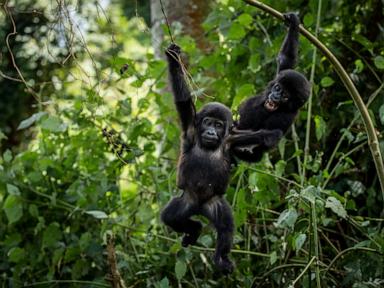
Mountain gorillas are making a comeback. Their numbers have climbed past one thousand individuals, a major victory for conservationists who spent decades trying to pull the subspecies back from the brink. But success brings its own pressure. The gorillas are multiplying, yet Uganda's Bwindi Impenetrable National Park isn't getting any bigger.
That mismatch creates a daily friction point between rare wildlife and the millions of rural residents living right on the park's doorstep. When people need firewood, traditional medicine, or building materials, the ancient forest looks like an open pantry. Protecting an endangered animal doesn't work if the human neighbors can't survive. That's why local initiatives and grassroots organizations are taking a practical route. They're growing buffer zones of trees outside the park so nobody has to sneak inside.
The Crunch Point Between Human Need and Wildlife Protection
Bwindi's mist-shrouded hillsides hold about half of the world's remaining mountain gorillas. Trekking tourism brings in vital revenue, jobs, and international attention, which helps fund protection efforts. Yet tourism dollars don't automatically put firewood on a kitchen stove or medicine in a village clinic.
Christina Katushabe, founder of Change a Life Bwindi, points out the core challenge clearly. You can't ask a growing population to ignore their basic survival needs without offering a real alternative. Local communities need wood, bark, and leaves. If those resources aren't available locally, people cross the park boundaries. Every illegal incursion disturbs the canopy, breaks ground cover, and risks transmitting diseases to vulnerable primates.
Instead of treating local villagers as adversaries, conservation projects are shifting strategy. They are turning communities into the primary guardians of the forest by planting what people need right where they live.
How Community Tree Planting Changes the Equation
The approach relies on supplying specific, high-utility saplings to residents and schools surrounding Bwindi. Groups like Change a Life Bwindi work alongside the Batwa, an Indigenous community with deep historical knowledge of the local ecology, to select the exact plant species that villagers traditionally harvested from the deep forest.
Instead of hunting for medicinal bark or timber deep inside gorilla territory, residents can harvest from community woodlots and boundary plots. The Uganda Wildlife Authority distributes these seedlings directly, ensuring that locals have access to resources without stepping foot inside protected zones.
Joseph Muhindo, an assistant tourism and hospitality officer with the authority, notes that this strategy stops human-wildlife friction at the source. When communities can harvest what they need in their backyards, the gorillas get left alone.
Educating the Next Generation of Conservationists
Real change requires generational buy-in. Programs don't stop at adult woodlots; they reach directly into local schools situated right on the edge of the forest.
Students at institutions like Ruhijja Seed Secondary School take part in planting indigenous trees that their families can utilize in the future. Twenty-year-old student Davis Musinguzi puts it bluntly: planting trees close to home stops people from cutting down the actual forest. When kids grow up tending trees that provide both community utility and wildlife security, conservation stops being a set of abstract government rules. It becomes everyday practice.
What This Means for the Future of Gorilla Conservation
Saving an endangered species takes more than fenced-off boundaries and armed guards. It requires an economic and ecological balance that makes human neighbors stakeholders in the animal's survival.
Projects around Bwindi demonstrate that conservation succeeds when local livelihoods and wildlife habitats support one another. Eunice Owembabazi, a member of a local women's crafts group, explains that when resources are managed properly on the outside, people and gorillas stop inconveniencing each other.
If you want to support or engage with effective conservation work, look toward community-led initiatives that fund tree nurseries and empower local cooperatives rather than top-down restrictions. Support local crafts, back organizations that prioritize Indigenous land stewardship, and recognize that saving a great ape starts with helping its human neighbors thrive.