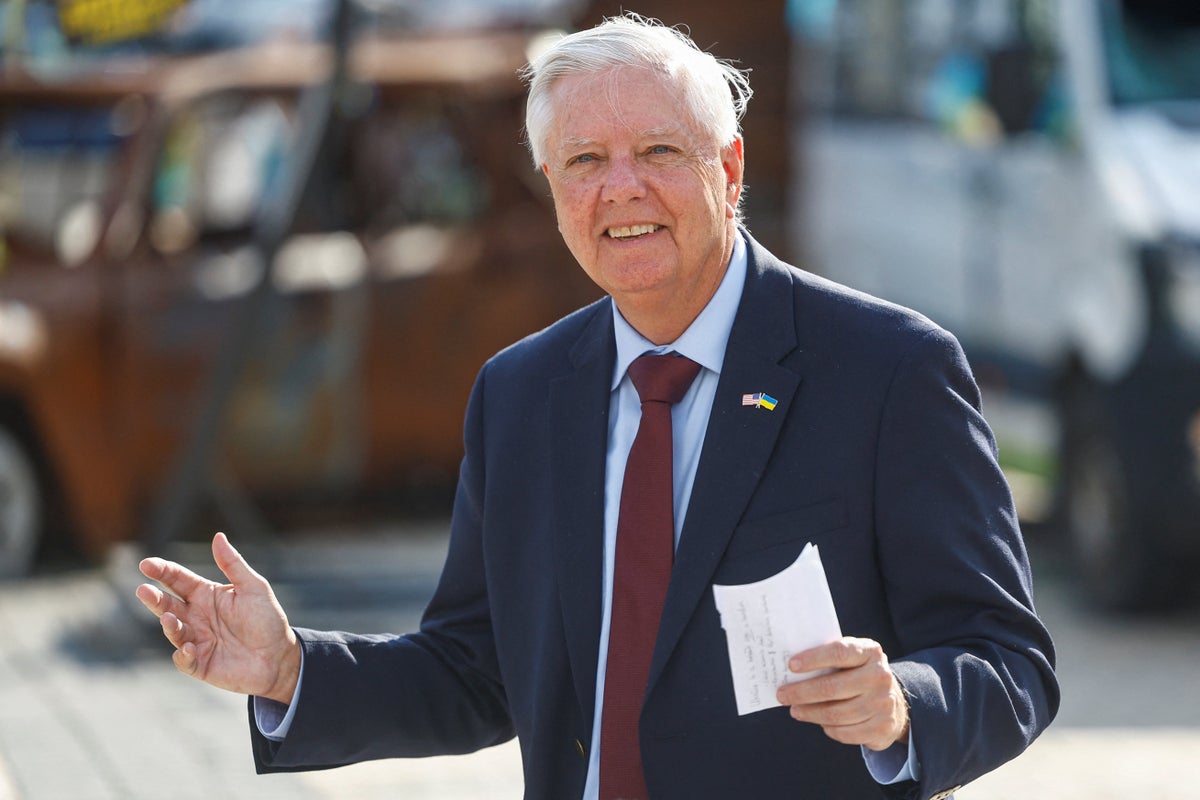
The sudden death of South Carolina Senator Lindsey Graham at age 71 has triggered a rare, unified moment of grief from two world leaders who rarely see eye to eye on global priorities.
Israeli Prime Minister Benjamin Netanyahu and Ukrainian President Volodymyr Zelenskyy both immediately released emotional statements honoring the longtime Republican hawk. For a Washington establishment used to hyper-partisan friction, this cross-continental grief isn't just standard political theater. It highlights how Graham functioned as a unique backchannel and strategic bridge in American foreign policy, especially during the volatile era of Donald Trump. Read more on a connected subject: this related article.
If you are wondering why a single senator from South Carolina commanded this level of intense personal loyalty from Kyiv to Jerusalem, the answer lies in how Graham managed his transition from a classic McCain-style internationalist to Trump's ultimate Capitol Hill confidant. He didn't just survive the populist shift in his party; he weaponized his access to protect America's traditional alliances.
The Odd Couple Diplomacy That Kept Kyiv and Jerusalem Connected
Most political analysts focus on the massive gulf between Ukraine's existential war against Russia and Israel's multi-front conflict in the Middle East. The two nations routinely compete for the same pool of American military aid, artillery shells, and air defense interceptors. Yet, Graham managed to remain the ultimate champion for both camps simultaneously. Further journalism by Al Jazeera delves into related perspectives on the subject.
Zelenskyy pointed out that Graham visited Ukraine 10 times since the 2022 full-scale invasion, including a trip just days before his death. During that final visit, Graham was actively hammering out a new package of Russian sanctions with the Trump administration.
"Lindsey was a true defender of freedom and the values that make our world safer," Zelenskyy shared, emphasizing that Graham was always there "when it was most needed."
Meanwhile, in Jerusalem, Netanyahu's tribute was deeply personal. He lamented the loss of a "beloved friend" who viewed the security of Israel and the United States as completely inseparable.
This dual mourning is a testament to Graham's rarest skill. He convinced skeptics in both nations that supporting one did not mean abandoning the other. He sold a holistic view of global deterrence to an increasingly skeptical Republican base.
How Graham Mastered the Art of the Trump Whisperer
To understand why Graham's death leaves such a massive vacuum, you have to look at how he handled Donald Trump. Following the death of Senator John McCain in 2018, many expected Graham to become the leader of the anti-Trump resistance in the GOP. Instead, he pulled a complete 180-degree turn.
He became a frequent golf partner, a fierce public defender, and a trusted adviser to Trump. Critics called it sycophancy. But foreign diplomats saw something else entirely. They saw a man who realized that the only way to protect NATO, Ukraine, and foreign aid in a MAGA-dominated Washington was to have the president’s ear on the golf course.
- The NATO Shield: While Trump frequently criticized European allies for underfunding their defense budgets, Graham worked behind the scenes to reinforce NATO’s eastern flank. Leaders from Estonia, Latvia, and Lithuania explicitly praised Graham for keeping the U.S. committed to their security.
- The Iran Hawk: Graham backed Trump's aggressive stance toward Tehran, including military strikes on nuclear sites, keeping traditional regional allies like Israel feeling secure.
- The Ukraine Funding Pipeline: Every time Congress threatened to cut off funding for Kyiv, Graham was there to reframe the aid as a smart business deal and an essential blow against America's primary adversaries.
Honestly, it was a high-wire act that few other politicians could play. He managed to break with the administration on specific nuances—like criticizing certain elements of the recent Iran memorandum of understanding—without ever losing his spot as a top-tier Trump insider.
What Happens to U.S. Foreign Policy Right Now
The immediate political fallout of Graham's passing will reshape Capitol Hill instantly. South Carolina Governor Henry McMaster will appoint an interim replacement to fill the vacant Senate seat. Because Graham's seat was already up for grabs in the November 2026 midterms, voters will decide the permanent successor very soon.
But you can't just appoint a replacement for Graham's institutional weight. His absence creates immediate vulnerabilities for international allies.
Without Graham acting as the connective tissue between old-school defense hawks and America-First populists, foreign aid packages are bound to face rougher waters in the Senate. Former Israeli Ambassador to the U.S. Michael Oren noted that losing a voice like Graham's is a severe strategic blow because the number of lawmakers willing to stick their necks out on complex foreign commitments is shrinking fast.
The contrasting reaction from Tehran underscores exactly what kind of player America just lost. While Western allies grieved, Iranian state television openly celebrated his death, labeling him a "warmongering" adversary. It is a stark reminder that Graham was viewed globally as an aggressive, uncompromising force for American power projection.
Your Next Steps to Stay Informed
The shift in Washington's foreign policy dynamics won't take months to materialize; it starts this week. Here is what you should watch closely to understand where the chips fall:
- Watch the South Carolina Senate Appointment: Track who Governor McMaster selects to fill Graham's seat. The pick will signal whether the state GOP favors an isolationist approach or intends to maintain Graham's interventionist legacy.
- Monitor the Next Ukraine Sanctions Bill: Graham had just finalized a fresh Russian sanctions package before his passing. Watch whether his Senate colleagues can carry that package across the finish line without his personal arm-twisting.
- Follow the Senate Budget and Judiciary Fights: Graham held immense sway over federal judicial confirmations and spending priorities. His absence will trigger an immediate scramble for committee leadership roles on Capitol Hill.