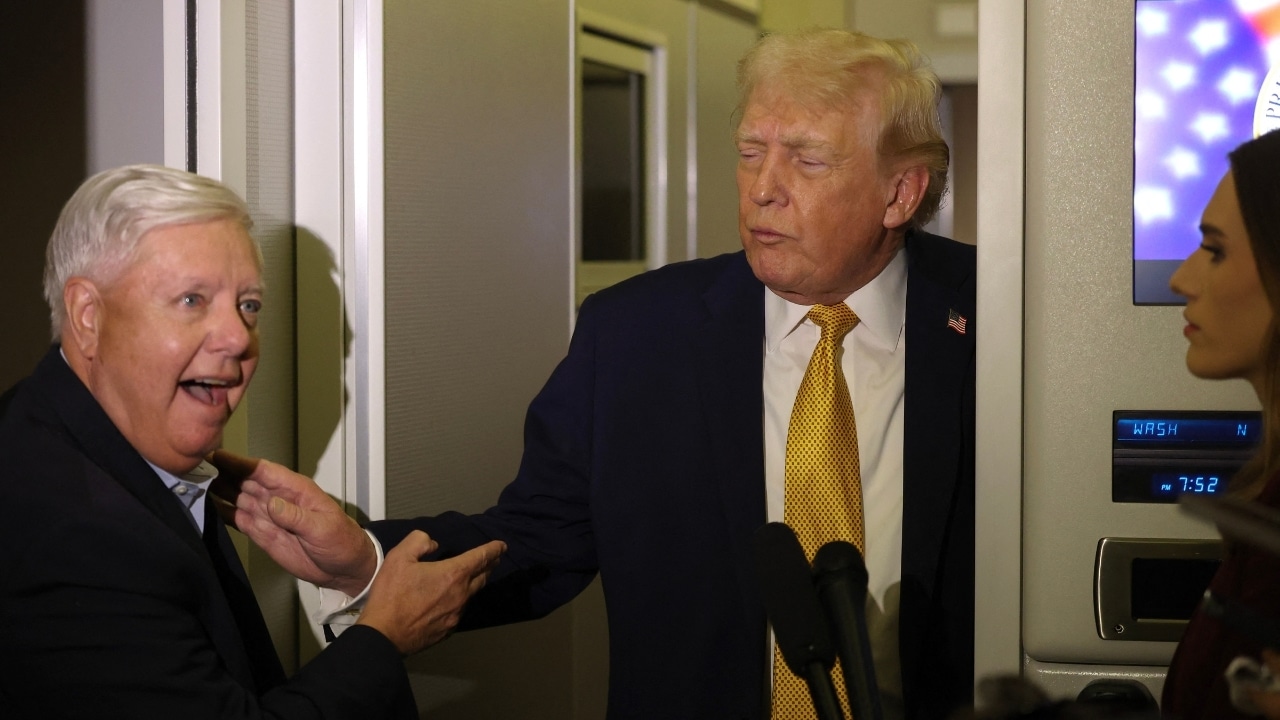
The news broke in the middle of the night, catching Washington completely off guard. Senator Lindsey Graham, the fierce South Carolina Republican who spent over two decades shaping American foreign policy, died Saturday night at the age of 71. His office initially released a sparse statement blaming a "brief and sudden illness". But we now know the grim reality behind those vague words. Emergency responders rushed to his Capitol Hill home around 8:30 p.m. after reports of chest pains. Within twenty-five minutes, CPR was underway. He suffered a fatal cardiac arrest just a day after returning from an official visit to Ukraine.
His passing leaves a massive vacuum in the Senate. Love him or hate him, Lindsey Graham was an undeniable force in American politics. He was the ultimate political chameleon, transforming from Donald Trump's fiercest critic into his most loyal golf partner and advisor. More than that, he was one of the last true defense hawks who believed American military might should be used aggressively across the globe. From the ongoing tensions with Iran to the trenches of Ukraine, Graham never met a foreign conflict he didn't want the United States to influence.
The sudden end of a Washington fixture
It is hard to overstate how active Lindsey Graham was right up until his final hours. On Friday, he was in Kyiv meeting with Ukrainian President Volodymyr Zelenskyy. He was smiling in photos, talking to reporters, and doing what he always did: negotiating geopolitical deals. He had just announced a bipartisan agreement with the White House to slap new sanctions on Russia. He even gave a press conference suggesting that the road to peace in Ukraine actually runs through Beijing.
He flew back to Washington that same day. He was scheduled to appear on NBC's Meet the Press on Sunday morning. He never made it.
Timeline of Lindsey Graham's Final Days:
- Friday, July 10: Meets President Zelenskyy in Kyiv, announces Russia sanctions deal.
- Friday night: Flies back to Washington, D.C.
- Saturday, July 11, 8:30 PM: EMS called to his home for chest pains.
- Saturday, July 11, 8:55 PM: Responders initiate CPR for cardiac arrest.
- Sunday, July 12, 2:02 AM: Office publicly announces his death.
The secrecy surrounding his initial cause of death raised eyebrows, mostly because Washington is already on edge about aging lawmakers. Mitch McConnell has been hospitalized for weeks with undisclosed issues. Other representatives have vanished for months without clear explanations. When Graham's office dropped a vague late-night post on X about a sudden illness, speculation ran wild. The subsequent leak of police scanner audio to reporters revealed the sudden cardiac arrest, cutting through the typical political spin.
The ultimate hawk on the Iran war and global intervention
To understand Lindsey Graham, you have to understand his obsession with American military power. He didn't just support wars; he championed them. He entered politics in the 1990s as a member of the House of Representatives, where he immediately focused on isolating Iran and shutting down its weapons programs.
When the latest conflict erupted in the Middle East a few months ago, Graham was right there on the front lines of the debate. He publicly cheered when military strikes hit nuclear sites last year. He repeatedly called for a devastating, direct military response against Tehran. He believed that weakness invited aggression. If you showed any hesitation, he thought the enemy would exploit it.
His hawkish stance wasn't limited to Iran. He viewed global politics as a permanent struggle between American freedom and foreign autocracy. He wanted a hard line against China, Russia, and any nation that challenged Western dominance. This dogmatic belief frequently put him at odds with a changing Republican party. The newer, populist wing of the GOP wants to pull back from global policing. They want an America First policy that ignores foreign entanglements. Graham openly despised that shift. He used his position as the head of the Senate Budget Committee and foreign policy subcommittees to keep the money flowing to international allies. He used his leverage to force defense spending upward, year after year.
From Trump antagonist to loyal defender
Perhaps the most fascinating aspect of Lindsey Graham's career was his relationship with Donald Trump. It was a political soap opera that lasted a decade.
Back in 2016, Graham ran for the Republican presidential nomination. He failed miserably, dropping out before anyone even cast a ballot. During that campaign, he didn't hold back his contempt for Trump. He called him a jackass. He called him unfit for office. He warned that electing Trump would destroy the Republican Party, and famously said that the party would deserve it. When Trump won the nomination, Graham refused to vote for him, casting a ballot for third-party candidate Evan McMullin instead.
Then, everything changed.
Graham realized that if he wanted to remain relevant in a Trump-dominated Washington, he had to adapt. He didn't just accept Trump; he embraced him completely. He became a fixture at Trump's golf courses. He picked up the phone whenever the president called to gossip or ask for tactical advice. He transitioned into one of Trump's most aggressive defenders during impeachments and congressional investigations.
Critics called him a hypocrite. They said he sold his principles for access to power. Graham countered that he was simply being practical. He argued that by staying close to Trump, he could guide the president's erratic foreign policy. He wanted to make sure Trump didn't abandon NATO or withdraw completely from the world stage. It worked, at least partially. Trump frequently listened to Graham on matters regarding Iran and Middle Eastern strategy.
The bond was real enough that Trump issued a heartfelt statement early Sunday morning on Truth Social. He praised Graham as a true American patriot who was always working. He called him one of the greatest senators he had ever known.
What happens to the Senate balance of power now
The political fallout of Graham's death is immediate and messy. Republicans currently hold a 53-47 edge in the Senate. Losing Graham narrows that majority right at a time when crucial bills are moving through Congress.
Fortunately for the GOP, South Carolina law prevents a total disaster for their party. The state's Republican Governor, Henry McMaster, has the power to make an immediate temporary appointment to fill the vacant seat. That appointee will serve out the remainder of Graham's current term, which ends this coming January.
The real complication is the 2026 election. Graham was actively running for a fifth term this year. He had just won the state's Republican primary last month, securing roughly 57 percent of the vote against businessman Mark Lynch, who pulled in about 29 percent.
With Graham gone, the South Carolina Republican Party has to scramble. They must figure out how to handle the empty ballot spot for November. Do they elevate Mark Lynch as the runner-up? Do they hold a special convention to select a new nominee? State election officials and party lawyers are already huddling to parse the legal codes. South Carolina is deeply conservative, so the seat will likely stay Republican. But the internal factional warfare to claim that seat is going to be brutal. The populist MAGA crowd will try to install an isolationist, while old-school institutionalists will search for someone who shares Graham's globalist perspective.
The complicated legacy of a political survivor
Lindsey Graham spent more than thirty years in Washington. He served in the Air Force as a military lawyer before entering the House in 1995 and moving to the Senate in 2003. He was an institutional beast.
As chairman of the Judiciary Committee during Trump's first term, he did something that altered the country for a generation. He pushed through a massive wave of conservative federal judges. Most notably, he presided over the incredibly contentious, lightning-fast confirmation of Supreme Court Justice Amy Coney Barrett just three weeks before the 2020 election. For conservatives, that feat alone made his career a triumph. For Democrats, it was an unforgivable act of political opportunism that shattered Senate norms.
He was a man of contradictions. He could work across the aisle on immigration reform or climate initiatives one day, and then go on cable news to scream about liberal conspiracies the next. He genuinely loved the theater of politics. He loved the deals, the arguments, the late-night strategy sessions, and the spotlight.
Key Achievements and Roles:
- US Representative from South Carolina (1995–2003)
- US Senator from South Carolina (2003–2026)
- Chairman of the Senate Judiciary Committee
- Chairman of the Senate Budget Committee
- US Air Force Reserve Colonel (legal officer)
Moving forward in a post Graham Washington
The immediate focus shifts to South Carolina and the halls of the Capitol. If you are tracking the political landscape, here are the concrete steps to watch over the next few days.
First, keep an eye on Governor Henry McMaster. He will likely announce his interim Senate appointment within forty-eight hours to ensure the Republican majority doesn't suffer during upcoming votes.
Second, watch the South Carolina Executive Committee. They will issue guidelines on how Graham's name will be replaced on the November general election ballot.
Finally, observe the Senate Foreign Relations and Budget Committees. Graham's death removes a massive roadblock for the isolationist wing of the GOP. Without his loud voice demanding foreign aid and aggressive military spending, the internal balance of the Republican party shifts significantly. The fight over funding the Ukraine war and handling the Iran crisis just got a lot more unpredictable. Washington lost one of its most calculated players, and the repercussions will be felt for years.