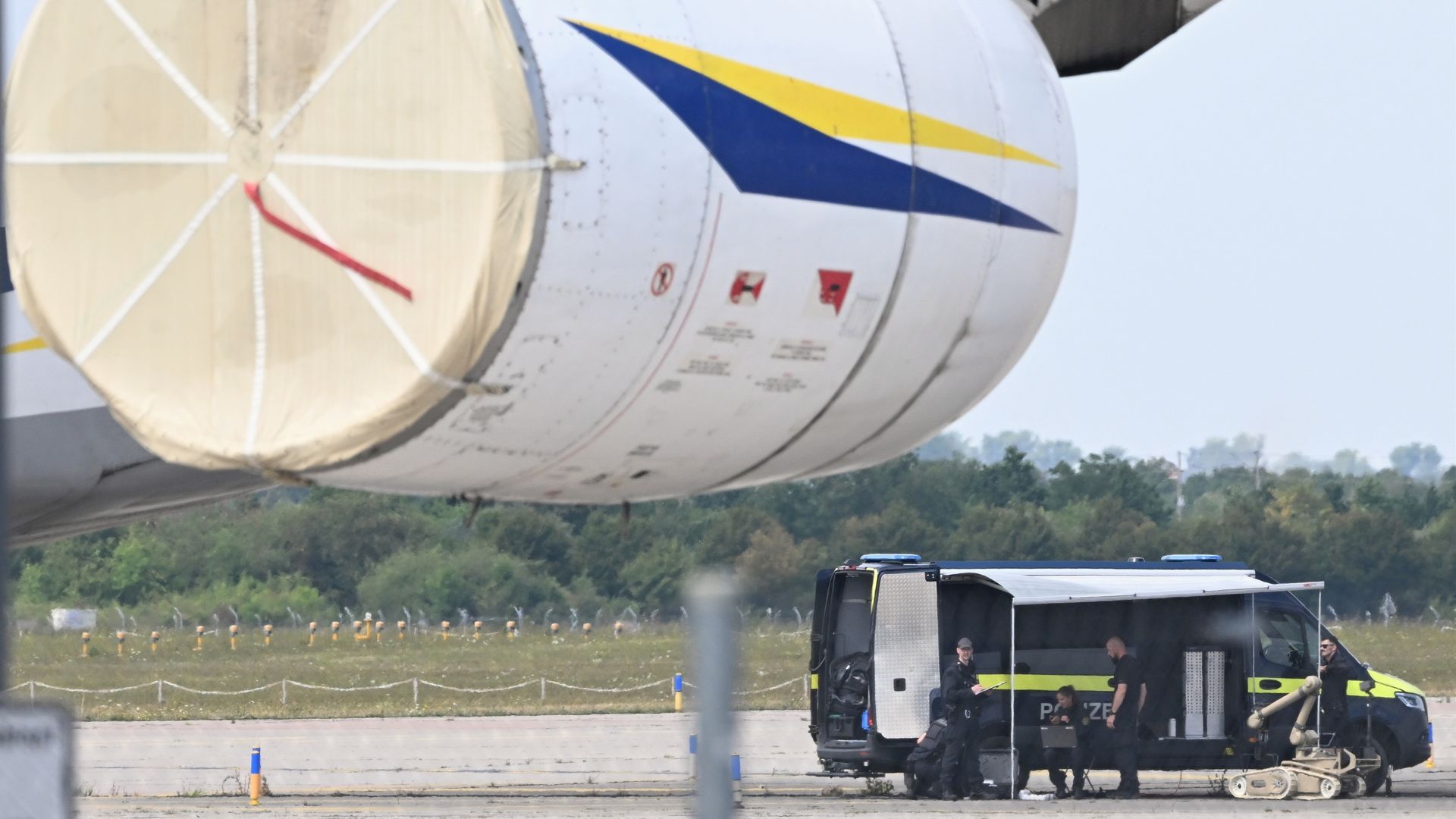
An explosive-laden drone parked mere feet away from a Ukrainian cargo aircraft at Leipzig/Halle Airport marks a massive escalation in Europe's security crisis. German Interior Minister Alexander Dobrindt didn't mince words, calling it a hybrid attack that signals a brand-new level of danger.
If you think this is just an isolated security breach, you're missing the bigger picture. When a commercial drone carrying military-grade Semtex manages to infiltrate a heavily restricted cargo apron next to an active transport hub, standard safety assumptions officially break down.
Inside the Leipzig Security Breach
The incident unfolded overnight when airport staff and sensors flagged anomalies near the southern runway. A modified quadcopter carrying a fist-sized package of explosives sat right beside a Ukrainian Antonov Airlines transport plane.
Confidential police reports leaked via German media outlets later revealed a chilling detail. The targeted Ukrainian aircraft wasn't empty; it was loaded with military ammunition transported from France, sitting alongside full tanks of jet fuel. Investigators believe a technical malfunction or a compromised detonator narrowly averted a catastrophic explosion that could have decimated the facility.
Simultaneously, a DHL cargo flight aborting its landing due to the chaos struck an unidentified flying object overhead, sustaining minor damage before diverting safely to Hanover.
Why This Hybrid Threat Changes Everything
For years, security agencies across Europe have tracked suspicious drone overflights near critical infrastructure, logistics parks, and military installations. Most were dismissed as basic reconnaissance or psychological warfare.
This changes the math completely.
- Physical lethality: Moving from surveillance to an active, armed payload turns passive monitoring into direct kinetic sabotage.
- Critical vulnerability: Major cargo hubs like Leipzig double as vital NATO logistics arteries. They aren't built to fend off localized drone strikes from sophisticated actors.
- Plausible deniability: Hybrid warfare thrives on gray-zone tactics, making immediate attribution difficult while sowing widespread domestic panic.
While German authorities are keeping official cards close to their chest while investigations continue, intelligence experts point directly toward established patterns of foreign sabotage operations aimed at disrupting Western supply lines to Ukraine.
The Immediate Response and What Comes Next
German federal police and bomb disposal units had to deploy specialized robots to neutralize the device on-site, shutting down large parts of the airport and throwing European freight schedules into disarray.
Airports are scrambling to accelerate counter-drone defenses. Traditional radar systems struggle to pick up low-flying, slow-moving commercial quadcopters operating close to massive industrial structures. Relying on luck—or a faulty detonator—is a terrible defense strategy.
Europe's logistics backbone is wide open, and fixing it requires an immediate shift from passive observation to aggressive airspace protection.