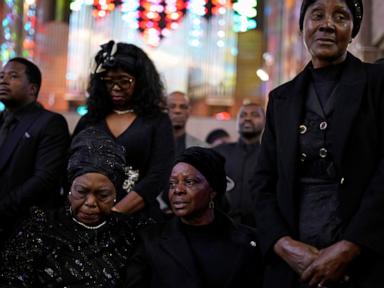
The final wishes of a dead man shouldn't normally trigger a constitutional crisis between two sovereign African nations, but Edgar Lungu was no normal citizen. When the former Zambian president died in South Africa back in June 2025, his passing didn't bring political peace. Instead, it triggered a bitter, year-long courtroom brawl over his corpse.
On June 23, 2026, South Africa’s Supreme Court of Appeal dropped a hammer on the Zambian government. In a majority decision, the court ruled that the Lungu family has the absolute right to bury the former president in South Africa. The decision flatly overturned a lower court order that would have allowed Zambia to forcibly repatriate his remains for a massive state funeral in Lusaka.
This isn't just a bizarre dispute about a burial plot. It is a raw, public manifestation of how deep political wounds can fester, eventually forcing foreign judiciaries to draw the line between state power and human dignity.
The Bitter Feud That Outlived the President
You can't understand why Edgar Lungu wanted to be buried in foreign soil without understanding his toxic rivalry with his successor, Hakainde Hichilema.
When Hichilema defeated Lungu in the 2021 presidential election, the political landscape shifted overnight. It didn't take long for the state apparatus to turn its attention toward the former ruling family. By 2024, Lungu's wife, Esther, and his daughter, Tasila, found themselves facing highly publicized arrests over asset forfeiture and fraud allegations. Lungu felt trapped. The state restricted his movements, and when his health began failing in early 2025, he literally had to buy a commercial ticket at an airport counter just to slip away to South Africa for urgent medical attention. He never came back.
Before he died at 68, Lungu made his wishes crystal clear to his family. He didn't want a state funeral, and he specifically didn't want Hichilema using his death for political theater.
"The ritual intended to bring closure has, instead, pitted family against the state in a hard-fought legal dispute far from the protagonists' home."
— Judge Raylene Keightley, Supreme Court of Appeal
For months, an open, coffin-sized hole sat empty at Embassy Park in Lusaka. That's the national monument where Zambia buries its heads of state, including Kenneth Kaunda and Michael Sata. To Hichilema’s administration, leaving that plot empty was an insult to national protocol. To local caretakers, an empty grave left open for nearly a year was a spiritual curse. But to the Lungu family, that hole represented a political trap.
Inside the South African Supreme Court Ruling
When the Gauteng High Court initially ruled in late 2025 that the Zambian government could take the body home, it reasoned that a foreign court shouldn't stop a sovereign nation from honoring its former leader. The Lungu family refused to back down. They appealed, and the higher court saw things very differently.
Judge Raylene Keightley, writing for the majority, noted that Zambia completely failed to establish any common law or contractual right that could legally override a family's decision.
The court focused heavily on three principles:
- Dignity: The right of an individual to have their final, deathbed wishes respected.
- Privacy: Keeping the intimate decisions of a grieving family out of the hands of state bureaucrats.
- Family Autonomy: Recognizing that next of kin hold the ultimate authority over a relative's remains when no explicit domestic law dictates otherwise.
The court noted that Lungu openly viewed himself as persona non grata in his own homeland. Forcing a state funeral on a family that fears political humiliation isn't an honor; it's an exercise of state overreach.
The Precedent It Sets For African Leadership
Zambia’s legal team argued that state protocol and national sovereignty should take precedence. They wanted to maintain a clean historical record—a physical chronicle of every single Zambian president resting together at Embassy Park.
But the reality is that Zambia doesn't actually have a written law governing presidential burials. The practice of using Embassy Park started as an executive decision back when Levy Mwanawasa died in 2008. The public thinks there is a "Presidential Burial Site Act," but it doesn't exist. It's just a custom.
By prioritizing family autonomy over state custom, the South African court sent a clear warning to sitting leaders across the continent. You cannot mistreat your political rivals while they are alive and then expect to claim their bodies for a public show of national unity when they die.
What Happens Now
The legal battle might have reached its logical conclusion in the appellate court, but the geopolitical fallout is just starting.
- The Final Burial: The Lungu family can now legally move ahead with a private, quiet burial inside South Africa, completely free from Zambian state involvement.
- A Constitutional Appeal?: The Zambian government can technically try to appeal to South Africa’s Constitutional Court. Doing so would prolong the agony, keep a former president’s body in a storage facility even longer, and likely invite more public backlash.
- The Legislative Gap: Lawmakers in Lusaka must now face the fact that their legal framework has a massive gap. If they want future state funerals to be mandatory, they will have to draft actual legislation rather than relying on tradition.
Ultimately, the state's power stops where a family's grief begins. Edgar Lungu’s final act of defiance wasn't a political speech or a policy shift—it was a legal directive from the grave that exposed the limits of state control.