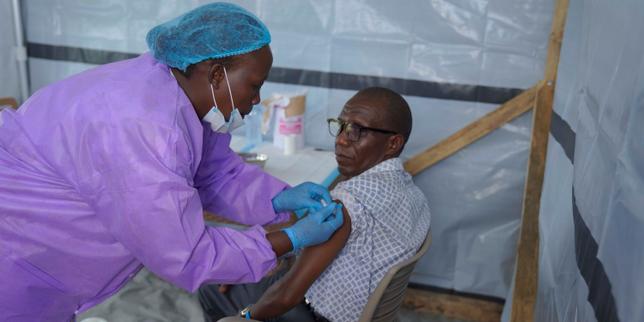
Official statements from Kinshasa claim the devastating Ebola outbreak has finally hit its turning point. Don't pop the champagne just yet.
Health Minister Samuel Roger Kamba announced that daily infections have dropped from a terrifying peak of roughly 120 cases down to 80. On paper, that looks like progress. Over 7,200 confirmed cases and 3,475 deaths tell a much darker story. When you look closely at the data coming out of eastern regions like Ituri, the narrative of a beaten epidemic starts to fall apart. Public health bodies and local legislators are warning that declaring victory right now is dangerously premature.
Why are officials sounding the alarm bells while the government claims control? It comes down to how epidemiological data is gathered in active conflict zones.
The Problem With Early Victory Declarations
Epidemics don't bow to political timelines. When political figures rush to announce that an outbreak has crested, they often lean on incomplete metrics.
Jean Kaseya, director general of the Africa Centres for Disease Control and Prevention, made it clear that current transmission is far from consistently controlled. Local members of parliament in Ituri have openly challenged the government's optimism. They point out a glaring blind spot: a massive percentage of fatalities still happen within communities rather than inside monitored treatment centers.
When up to 70% of deaths occur outside formal healthcare settings, contact tracing breaks down. If epidemiologists don't know where the sick are hiding, infection numbers can look artificially low simply because testing capacity is stretched to its absolute limit.
What Makes This Outbreak Different
This is the 17th time Ebola has struck the Democratic Republic of the Congo since 1976. Yet this specific wave brings unique headaches.
- The Variant: Health authorities are fighting the Bundibugyo strain. Unlike other variants, there is currently no broadly approved, highly effective treatment or licensed vaccine specifically tailored for it, forcing doctors to rely on experimental clinical trials.
- Geographic Spread: The virus isn't locked in one isolated zone. It has jumped across multiple provinces, reaching places like Sud-Ubangi near the borders of Congo-Brazzaville and the Central African Republic.
- The Conflict Factor: Eastern Congo remains plagued by active violence and insecurity. Moving medical supplies or dispatching contact tracers into regions dominated by armed groups is a logistical nightmare.
Tech Solutions Meet Harsh Realities
To map out where the virus might strike next, epidemiologists turned to unusual tools. Researchers partnered with Swedish non-profit Flowminder and local telecom giant Vodacom to use anonymized mobile phone data. By studying aggregated population movements and trade routes—especially around mining hubs in Ituri—specialists can track how human traffic spreads infection risks across borders.
It is smart tech. It gives planners a clearer picture of transit patterns. But digital modeling cannot replace boots-on-the-ground public trust.
Communities are exhausted. Months of living under the shadow of sudden death have bred deep skepticism toward official directives. When families lose loved ones without ever seeing a clear diagnosis or effective medical intervention, government press releases about "turning points" ring hollow.
What Happens Next
If you are tracking this situation, keep your eyes on the ground indicators rather than ministerial press conferences. Watch for a sustained, multi-week decline in community deaths alongside shrinking active transmission zones. Until those metrics align across every affected health zone, this crisis remains volatile.
Support local containment efforts. Follow guidance from boots-on-the-ground organizations actively managing treatment isolation wards. Treat premature claims of a defeated virus with the caution they require.