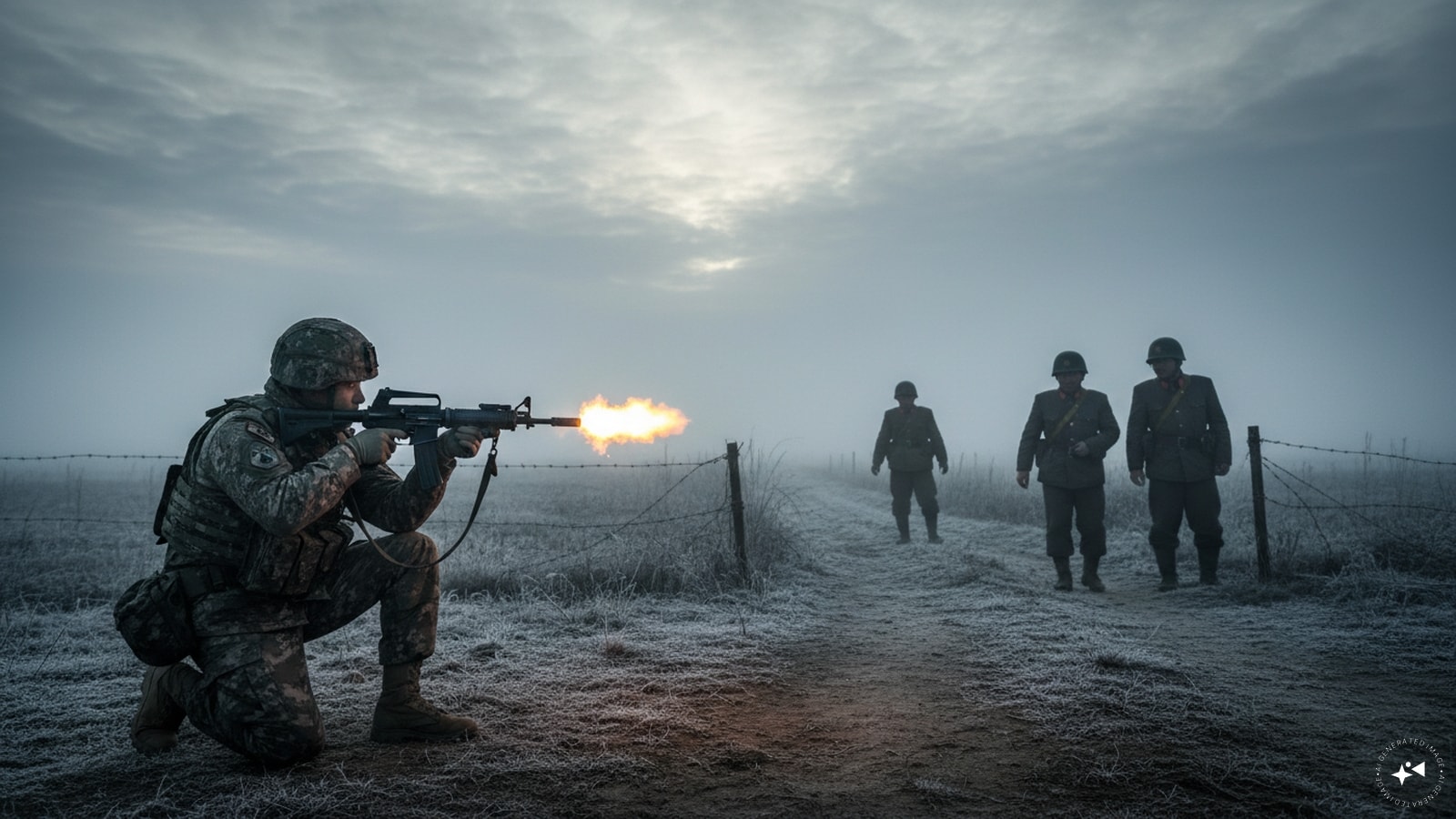
South Korean troops opened fire with warning shots last week after multiple North Korean soldiers breached the heavily fortified Military Demarcation Line.
If you watch the Korean border closely, you know these incidents are never just random accidents. Tensions along the demilitarized zone are always simmering, but actual border breaches carry a unique risk of escalation.
What Happened on the Eastern Front
The Joint Chiefs of Staff in Seoul confirmed that North Korean forces crossed the border line in the eastern sector. South Korean guards responded instantly according to standard operational procedures, blasting warning shots that forced the intruders back north.
Intelligence assessments suggest these soldiers were likely conducting routine patrols in rough terrain. Dense brush, unclear markers, and poor visibility often plague parts of the mountainous eastern front. Even so, Seoul isn't taking chances. Troops remain locked in a high state of readiness.
This marks the first reported violation of its kind for the year. For perspective, North Korean troops crossed or probed the demarcation line roughly seventeen times over the course of last year. Most of those previous breaches ended quietly after similar warning shots or broadcasts, but every single event keeps military commanders on edge.
The Reality of the Korean Border
People often forget that the Korean Peninsula is technically still at war. The 1950-1953 conflict concluded with an armistice, not a permanent peace treaty. That leaves the border—stretching two hundred and fifty kilometers across the peninsula—as one of the most heavily armed strips of land on earth.
When soldiers cross the demarcation line, communication is practically nonexistent in the heat of the moment. Hotline wires between Seoul and Pyongyang have historically suffered from neglect or outright abandonment by the North. Guards on both sides operate on hair-trigger responses.
Why This Incident Differs From Past Skirmishes
While border crossings happen more frequently than public reports suggest, timing defines gravity. Coming during a period of stalled diplomacy and constant missile tests from Pyongyang, any physical breach of territory spikes regional anxiety.
Military analysts look closely at whether these crossings are accidental navigational errors or deliberate probes to test South Korean reaction times. Last year's seventeen recorded violations showed a mix of both. North Korean work crews frequently clear land, plant mines, or build walls inside the demilitarized zone, pushing right up against the invisible boundary line until someone steps over.
Seoul's quick confirmation via the Joint Chiefs of Staff aims to project control and transparency. They want potential adversaries to know that monitoring systems on the eastern front work around the clock, and any physical encroachment triggers immediate pushback.
Keep an eye on regional defense updates over the coming days. If Pyongyang stays quiet and issues no fiery rhetoric through state media, this event will likely fade into another routine statistic of a frozen war. If they react aggressively, expect the security posture along the 38th parallel to tighten even further.