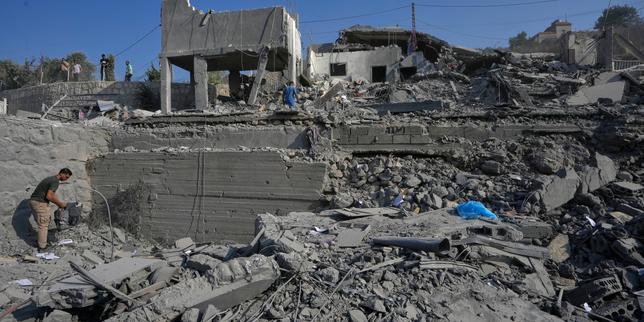
The fragile quiet in southern Lebanon just shattered. At least nine people, including women and children, died overnight when Israeli airstrikes flattened residential buildings in the villages of Ansar and Deir Zahrani.
If you thought the June framework agreement between Beirut and Tel-Aviv had permanently cooled the southern border, today's violence proves otherwise. This is the highest death toll recorded in the region since those diplomatic understandings went into effect.
What Actually Happened on the Ground
The main strike hit a house on the outskirts of Ansar around four-thirty in the morning. Local residents heard the explosion tear through the quiet hours before dawn. When the dust settled, emergency responders pulled seven bodies from the rubble of a single building, including three children and two women.
Another separate strike targeted Deir Zahrani, roughly twenty kilometers away. That attack killed two more people and left nine others wounded, according to the Lebanese Ministry of Health.
To make matters worse, the official National News Agency reported strikes hitting deep into the valley between Ansar and Zarariyeh. This marks the first time since the summer pause that military action has penetrated this far inland. Artillery fire and aerial bombardments also hammered the strategic Ali al-Taher ridge overlooking Nabatiyé.
The Military Justification Versus Local Reality
The Israeli military defends the operation by stating they targeted Hezbollah infrastructure. According to their briefings, these strikes are direct responses to ongoing attacks launched against their soldiers stationed in the southern sector.
Residents tell a completely different story. Mohamed Saab, who owned the targeted property in Ansar, described his destroyed home as a small tourist lodging rather than a military hub. He watched rescue teams pick through the wreckage of cars and a swimming pool instead of any tactical equipment.
The friction highlights the core failure of the June framework. Under that agreement, the Israeli military was supposed to remain deployed until the Lebanese army could take over security and the Hezbollah movement was fully disarmed. Yet Hezbollah outright rejects the terms of that pact, and the Lebanese government views the ongoing military presence as a clear violation of national sovereignty.
Why This Escalation Matters Right Now
Diplomats are scrambling. A representative from the United States Department of State noted that a permanent military footprint in southern Lebanon directly contradicts the spirit of the recent diplomatic framework.
Meanwhile, Prime Minister Nawaf Salam condemned the latest civilian casualties as an unacceptable escalation.
The reality on the ground remains grim for families living near the border. Humanitarian access south of the Litani River stays heavily restricted due to ongoing military operations and persistent evacuation orders.
Watch the upcoming diplomatic talks in Washington closely. If both sides cannot find a way to enforce the buffer zone without turning civilian villages into combat zones, the fragile architecture of the summer agreement will collapse completely.