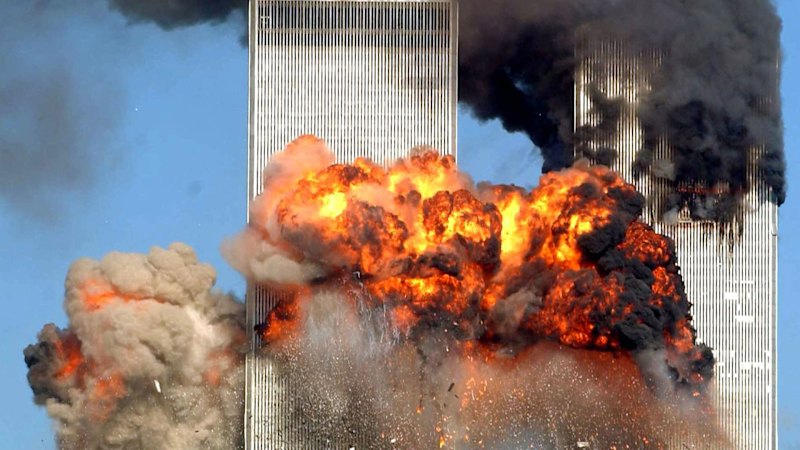
The fragile interim deal between Washington and Tehran didn't just snap; it went up in flames.
Pentagon officials confirmed that a Friday drone and missile strike directly targeted a military outpost in Jordan, leaving two American service members dead and another missing. It is a terrifying escalation in a rapidly widening Middle East theater that has completely abandoned any pretense of ceasefire.
If you think this is just another minor regional skirmish, you're missing the bigger picture. The reality on the ground is shifting fast. Jordan's own air defenses scrambled frantically to down incoming Iranian missiles while sirens blared across neighboring Gulf states. This isn't a proxy war anymore. It's a direct, multi-front confrontation.
A Failed Deal and a Mounting Casualties Count
Just a month ago, a temporary diplomatic understanding offered a brief moment of breathing room. That's entirely gone now. Iran's Deputy Foreign Minister, Kazem Gharibabadi, formally announced that Tehran has suspended all commitments under the interim pact, pointing the finger at American violations.
The cost of this diplomatic collapse is being paid in American blood. The addition of these two fatalities brings the total number of U.S. troops killed since this round of conflict ignited to 14, with 427 others wounded. Alongside the two deaths in Jordan, the search for the missing service member remains a desperate, high-stakes race against time. Furthermore, U.S. Central Command recently acknowledged that 13 other service members—10 soldiers and three sailors—sustained injuries earlier in the week.
The map of the conflict tells an even scarier story. Tehran isn't just hitting American assets; it is striking regional neighbors to project power.
- Kuwait: Iranian strikes hit a critical water desalination plant and a key oil facility. In a desert nation reliant on desalination for 90% of its drinking water, hitting these plants is a direct threat to civilian survival.
- Jordan: Beyond the fatal attack on the U.S. outpost, Jordanian air defenses had to actively intercept missiles tearing through their airspace.
- Iraq: Multi-layered defense systems over Irbil shot down attack drones before they could hit their targets.
Choking the Strait of Hormuz
At its core, this war is transforming into a brutal fight over the Strait of Hormuz—the narrow chokepoint that handles a fifth of the world's crude oil. Tehran claims absolute sovereignty over the waterway, demanding that passing ships pay transit fees.
The White House responded with maximum economic pressure, enforcing a strict naval blockade on Iranian ports to completely choke off their crude exports. To back that blockade up, American forces have executed seven consecutive nights of heavy airstrikes. U.S. Central Command confirmed these strikes blasted underground weapons caches, surveillance outposts, and maritime logistics networks.
The structural damage inside Iran is starting to show. American strikes hit electricity and water infrastructure in the southern Hormozgan province, knocking out key bridges and tunnels leading to Iran's busiest shipping hub, Bandar Abbas. Iran's Energy Ministry has even begged citizens to ration electricity amid brutal summer heat. Yet, instead of backing down, Iran responded by striking back harder, showing that economic pain won't easily break their resolve.
What Happens Next
The escalation cycle is spinning out of control, and tactical adjustments are urgently required to survive the coming weeks.
First, expect an immediate repositioning of regional air defense assets. Outposts in Jordan and western Iraq can no longer be treated as secondary or safe zones. Central Command will likely fast-track additional Patriot batteries and Counter-UAS (C-RAM) systems to these perimeter bases.
Second, the search and rescue operation for the missing service member will dictate the immediate political response. If that soldier is found captured, it forces Washington into an incredibly difficult diplomatic and military corner.
Keep a close eye on global energy markets. While regional oil pipelines are working overtime to bypass the Strait of Hormuz, they don't have the capacity to carry the full load. If the blockade drags on and Iran keeps hitting commercial infrastructure like desalination plants and refineries, global energy prices will spike sharply. Prepare for volatile markets and heightened security alerts across all transit routes in the Middle East.