The United States is turning 250, but nobody is throwing a flawless party. As the country approaches this massive milestone of the 250th anniversary of American independence, the mood feels less like a celebration and more like a collective panic attack. We look at our institutions and wonder if the whole experiment is fracturing.
It turns out that one of the main architects of the nation saw this coming from the very start.
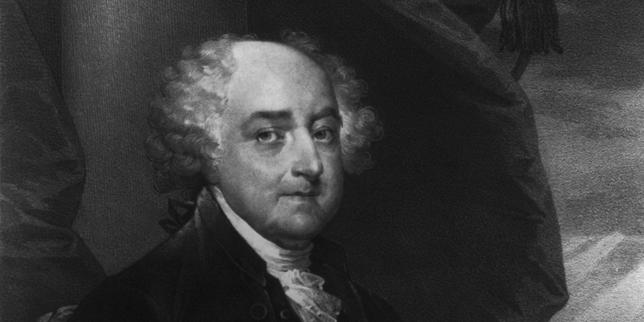
John Adams was never the popular kid among the founding fathers. He didn't have the effortless charm of Benjamin Franklin or the poetic idealism of Thomas Jefferson. He was cranky, blunt, and deeply pessimistic about human nature. While Jefferson looked at the future of the new republic with starry-eyed optimism, Adams looked at it with a warning. In a brilliant, scathing 1814 letter to Virginia delegate John Taylor, Adams dropped a truth bomb that still echoes. He wrote that democracy never lasts long. It soon wastes, exhausts, and murders itself. He claimed there never was a democracy yet that didn't commit suicide.
That is a heavy statement to swallow, especially right now. But if you look closely at how the American system is grinding gears today, you realize Adams wasn't just venting. He was predicting our current reality with terrifying accuracy.
The Myth of the Eternal Republic
We tend to treat the American system of government like a permanent monument. We grow up believing that because the Constitution has survived for over two centuries, it will simply keep rolling along. This is a dangerous mistake. Adams understood that political systems are fragile things made of human choices, and humans are notoriously unstable.
Most people think the founders created a pure democracy because they loved the idea of absolute voter power. They didn't. They actually feared it. The men who gathered in Philadelphia studied history deeply. They looked at ancient Athens and the Roman Republic, and they saw a recurring pattern. Pure democracies quickly turn into chaotic mobs. A charismatic leader steps up, fires up the crowd, and uses the majority vote to crush the minority.
To prevent this, the founders built a republic loaded with speed bumps. They wanted to slow things down. The Electoral College, the Senate, and the Supreme Court were all designed to keep the passion of the crowd from instantly becoming law.
Adams took this skepticism further than anyone. He argued that the flaws of an aristocracy or a monarchy are exactly the same as the flaws of a democracy. Why? Because the underlying operator is the same. Humans run the show. The passions of pride, vanity, selfishness, and ambition don't vanish just because you give everyone a ballot. When unchecked, those passions produce the same old results of fraud, cruelty, and violence.
When the Mob Rules the Feed
Look at how we talk to each other now. Social media has essentially created the exact nightmare scenario the founders tried to prevent. It is a giant, real-time colosseum of pure emotion.
We used to have gatekeepers and institutions that forced a bit of deliberation. Now, an angry tweet or a viral video can shift public opinion in five minutes. We live in an era of hyper-partisan tribalism where the goal isn't to solve problems but to totally annihilate the opposing side. This is precisely what Adams meant when he said democracy exhausts itself.
Think about the sheer exhaustion of modern political life. The constant outrage. The endless news cycles designed to keep your blood boiling. It takes a massive amount of civic energy to sustain a free society, and right now, that energy is being burned up in useless culture wars. When a population gets tired enough, they stop caring about principles. They just want someone to make the noise stop. That is the moment when democracy begins to step off the ledge.
The Problem With Relying on Virtue
Jefferson believed that an educated, virtuous population would naturally sustain a free nation. He pinned his hopes on the idea that people could be enlightened. Adams thought that was wishful thinking.
In his letters, Adams made it clear that you can't build a stable government on the assumption that people will always be good. Power is inherently grasping. If you give a group of people absolute power, they will abuse it, whether they are kings or everyday voters.
"Absolute power intoxicates alike despots, monarchs, aristocrats, and democrats." — John Adams, 1814
If a democracy believes its own hype and thinks it is inherently moral, it becomes blind to its own corruption. We see this when political parties decide that their cause is so righteous that the rules no longer apply to them. They gerrymander districts, change voting laws, and try to undermine the courts, all while claiming they are saving the country. It is a slow, self-inflicted poisoning.
Turning the Ship Around Before the Suicide Happens
So, where does this leave us as we mark 250 years of independence? We can't just throw our hands up and wait for the end. Adams didn't write those warnings to make us give up; he wrote them to keep us awake.
The survival of the American experiment depends on moving away from political idolatry. Stop treating your political party like a religion. Stop assuming that the system will save itself.
Here are the concrete steps required to break the cycle Adams warned about.
Diversify Your Information Diet
If you only read things that make you nod your head in agreement, you are contributing to the mob mentality. Force yourself to read high-quality journalism from opposing viewpoints. Understand the best version of the argument you disagree with.
Focus on Local Governance
National politics is an engineered circus designed to keep you angry and helpless. Local politics is where things actually happen. School boards, city councils, and state legislatures have a massive impact on your daily life, and your voice actually carries weight there. Shift your energy downward.
Demanded Institutional Reform
Support structural changes that reduce tribalism. Look into ranked-choice voting, which eliminates the pressure to choose between the lesser of two evils and forces politicians to appeal to a broader base. Demand independent redistricting commissions to end the practice of politicians picking their voters.
The next 50 years will decide whether Adams was a prophet or just a cynic. The architecture of the republic is creaking under the weight of our collective anger, but the blueprint still stands. The choice to keep it alive belongs to the people using the tools, not the tools themselves. Turn down the noise, look at the historical data, and start doing the hard, quiet work of maintaining a free state.